By Investigative Staff
The digital landscape of West and Central Africa is currently undergoing a silent, systematic transformation—not through technological advancement, but through the calibrated infiltration of local media. A massive leak of internal documents has unveiled "Project Afrika," a sophisticated, well-funded Russian operation designed to weaponize local news outlets, turning them into conduits for Moscow’s strategic geopolitical agenda. From anti-Western sentiment to blatant disinformation regarding the war in Ukraine, the campaign has successfully colonized the information ecosystem of a continent already grappling with digital literacy and media fragility.
The Discovery: Unmasking the "Company"
The investigation, spearheaded by Forbidden Stories and a consortium of international news organizations including FRANCE 24, stems from a cache of confidential documents obtained by the pan-African outlet The Continent. These files provide an unprecedented window into the operational architecture of "Africa Politology"—an entity referred to internally simply as "the Company."
Originally conceived as an extension of the Wagner Group’s influence operations, the Company underwent a strategic transition in 2023. Following the reorganization of Russia’s paramilitary and influence assets, the project was absorbed directly by Russian state intelligence apparatuses. The goal was clear: to move beyond traditional propaganda and embed Russian narratives into the fabric of local, trusted journalism.
Chronology of Infiltration: June to November 2024
The leaked documents reveal a period of intense activity between June and November 2024. During these five months, the Company executed a high-velocity campaign that demonstrated both the reach and the efficiency of its influence operations.
- June 2024: Initiation of the systematic outreach phase. The Company begins identifying media outlets in Francophone Africa that operate on thin profit margins and have a high demand for constant, low-cost content.
- July–August 2024: The "pipeline" is established. Local intermediaries, often journalists or media brokers, are recruited to act as conduits between the Company and regional newsrooms. "Ready-to-publish" content packages are disseminated.
- September 2024: The operation hits its stride. Monitoring shows a surge in articles mirroring Kremlin talking points, focusing on anti-French sentiments and the perceived "failures" of Western intervention in the Sahel.
- October 2024: Expansion into specialized sectors. The campaign begins to target specific regional grievances, tailoring content to exploit local political instabilities.
- November 2024: Final audit of the data reveals 644 articles placed across 35 media outlets, with a total expenditure of $300,000.
Supporting Data: The Economics of Deception
The success of "Project Afrika" relies on a cold, economic reality: many African news outlets, particularly smaller digital sites, are struggling to survive in a volatile advertising market. The Company exploited this vulnerability with clinical precision.
According to the leaked invoices and internal logs, the cost of placing an article ranged from $250 to $700. For a struggling digital news site, this represents a significant influx of revenue. The "ready-to-publish" format is the ultimate convenience; it fills the daily content quota without the need for editorial oversight, fact-checking, or journalistic labor.
The scope of the operation is staggering. By infiltrating 35 outlets, the Company managed to create a feedback loop. When a story is published by one outlet, it is often syndicated or cited by others, creating an artificial consensus that lends legitimacy to the propaganda. The $300,000 spent during this period is a remarkably low "cost per acquisition" for the level of reach achieved, highlighting how inexpensive it is to manipulate public opinion in an underfunded media environment.
The Ground Reality: A Case Study in Dakar
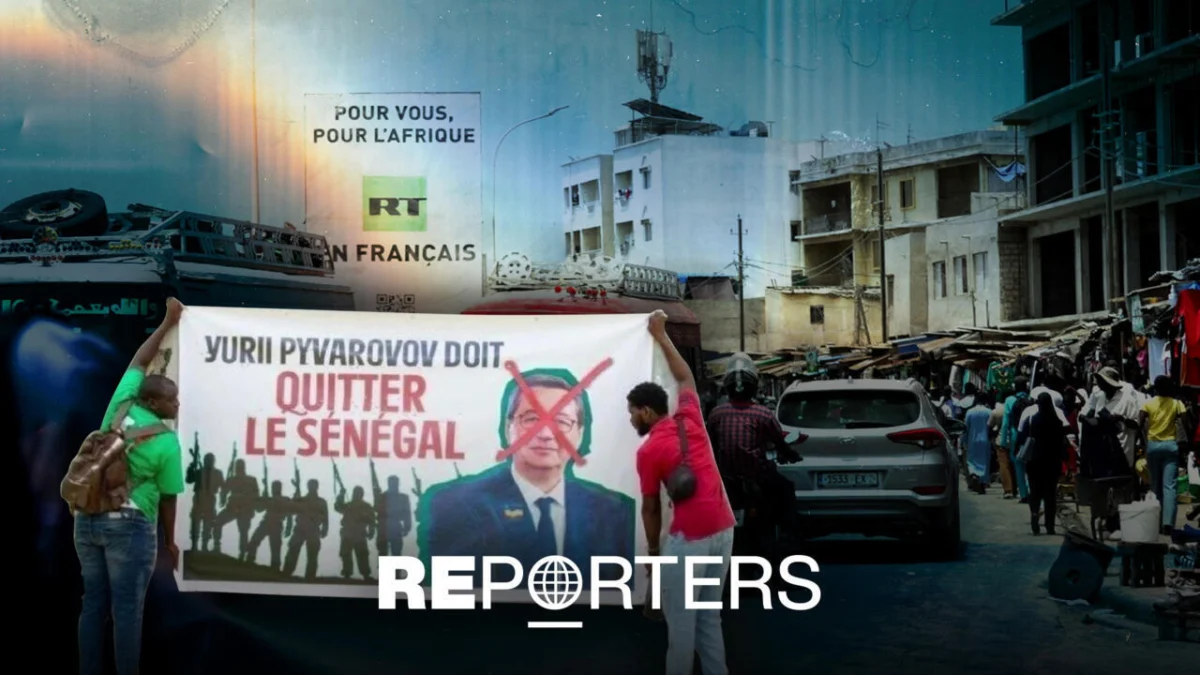
To understand how this functions on the ground, FRANCE 24 traveled to Dakar, Senegal, where the impact of the operation is tangible. Among those who were unknowingly pulled into the web was Ibrahima Lissa Faye, Head of Publication at the prominent Senegalese news site PressAfrik.
Upon being presented with evidence by the investigative team, Faye was stunned to learn that his outlet had published 13 articles linked to the Russian campaign. "When you read articles like this, you definitely get the impression they are intended to manipulate opinion," Faye noted.
The investigation found that the Company frequently used local intermediaries to place these stories. These intermediaries often present themselves as freelancers or independent content agencies. For outlets like PressAfrik, the distinction between a legitimate freelance submission and a state-sponsored disinformation piece is increasingly blurred by the pressure to publish high volumes of content to maintain traffic and ad revenue.
Official Responses and Denials
The investigation identified several key figures involved in the distribution of these materials. Among them is Cameroonian journalist Jérôme Ebossama. When contacted by the investigative consortium, Ebossama was confronted with evidence linking him to 18 articles published in West African media.
Ebossama’s response was a categorical denial. He dismissed the leaked documents, which include detailed invoices and internal communication, as "fake" and "not [his]." He claimed to be the "victim of a manipulation campaign," attempting to turn the narrative back on the investigators. This reaction is emblematic of the "deniability" strategy employed by the Company—if caught, the operative claims to be the victim of a smear campaign by the very Western entities they are actively working to undermine.
Implications: The Erosion of Information Sovereignty
The implications of "Project Afrika" extend far beyond the borders of individual nations. The campaign represents a fundamental assault on the sovereignty of the African information space. By flooding the zone with disinformation, the Russian state is effectively dismantling the ability of local populations to engage in informed democratic discourse.
1. The Death of Editorial Integrity
As media outlets become dependent on "ordered" content, the tradition of investigative and critical journalism is at risk of atrophy. When newsrooms prioritize volume over veracity to keep the lights on, they lose their role as the Fourth Estate and become mere billboards for foreign powers.
2. Strategic Destabilization
The specific focus on anti-France and anti-Ukraine rhetoric is not coincidental. By leveraging existing post-colonial tensions and anti-Western fatigue in the Sahel, Russia is attempting to carve out a permanent sphere of influence. This is not merely "soft power"; it is an aggressive, calculated effort to isolate African nations from Western alliances and pivot them toward a pro-Russian orientation.
3. The Digital Literacy Gap
The effectiveness of these campaigns is amplified by a digital landscape where fact-checking tools are underdeveloped and public trust in traditional institutions is already waning. The "ready-to-publish" nature of these articles allows them to bypass the critical thinking filters that might otherwise flag them as foreign influence operations.
The Road Ahead: Defending the Narrative
The exposure of "Project Afrika" serves as a wake-up call for media organizations across the continent. There is a desperate need for greater transparency in media ownership and funding, as well as a robust effort to bolster the financial sustainability of independent journalism.
If African media outlets are to remain independent, they must find a way to break the cycle of dependency on anonymous, "ready-to-publish" content. Donors, international media unions, and local governments have a role to play in fostering an ecosystem where quality, local journalism can thrive without the need to sell editorial space to foreign intelligence operations.
The fight for the truth in West and Central Africa is no longer just about reporting on local politics; it is about defending the very integrity of the information that shapes those politics. As the "Company" continues to evolve its methods, the journalists and citizens of the region must become more adept at identifying the shadow of the state in the news they consume every day. The battle for influence is being fought in the headlines, and for now, the advantage remains with those who have the capital and the intent to distort the truth.