For prospective homeowners, the question of "when" to enter the housing market is often as complex as the financial commitment itself. While the dream of homeownership remains a cornerstone of the American narrative, the economic volatility of 2026 has transformed the traditional house-hunting playbook. With fluctuating mortgage rates, shifting inventory levels, and a recalibrating economy, buyers are forced to weigh the benefits of market timing against the realities of their own financial stability.
According to recent analysis from Redfin, while there is no universal "golden ticket" for timing a purchase, late summer—specifically August—emerges as the statistical sweet spot for those looking to balance inventory selection with negotiating leverage. However, understanding why this window exists requires a deeper look at the seasonal pulse of the U.S. housing market.
The Strategic Calendar: Understanding Seasonal Market Fluctuations
To demystify the timing of a home purchase, experts categorize the year into three distinct phases. Each phase offers a different set of advantages and challenges, and recognizing these patterns is the first step toward making an informed decision.
Late Spring: The Season of Abundance
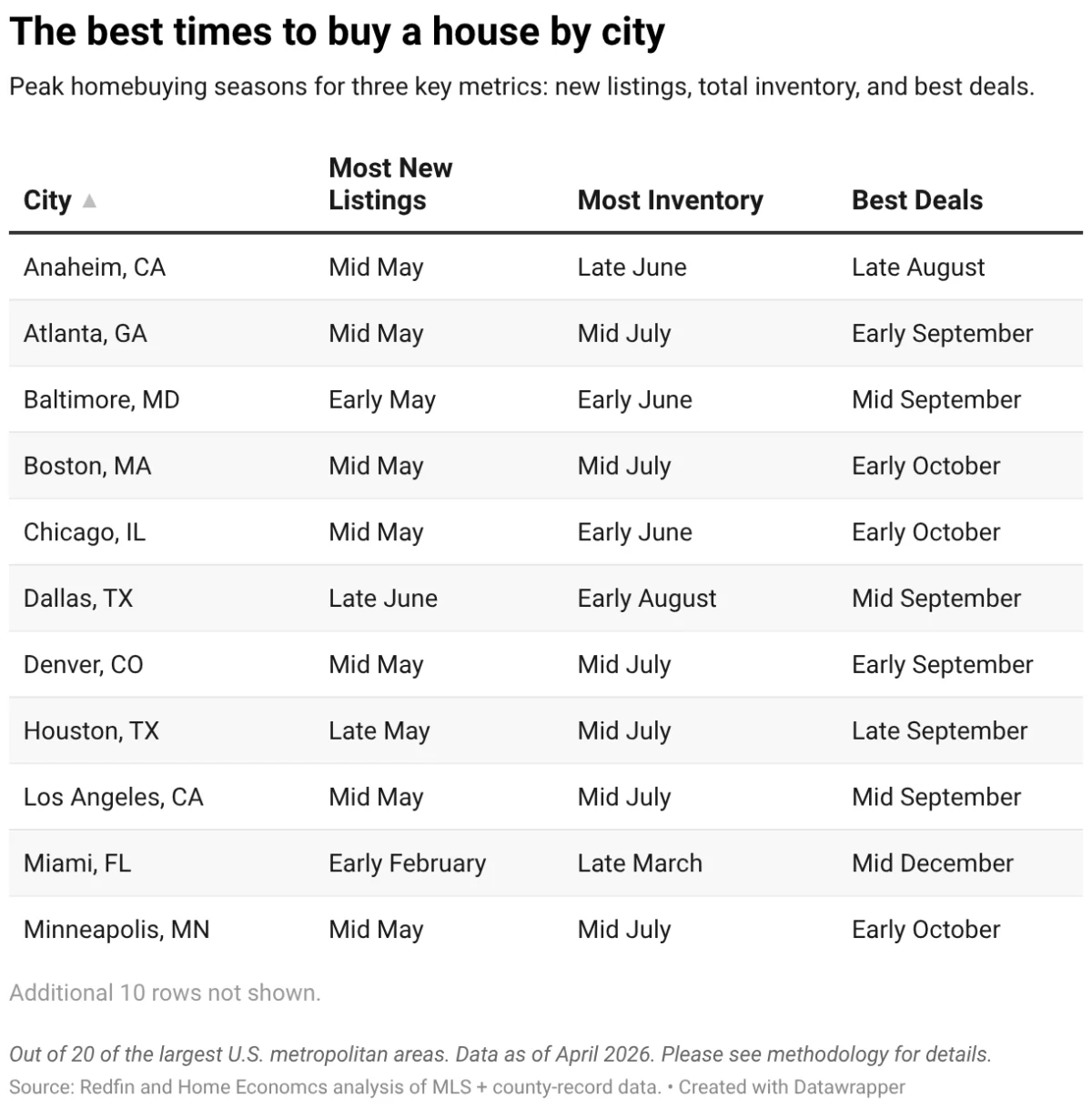
For those whose primary goal is selection, late spring through early summer is unparalleled. During these months, the flow of new listings reaches its annual zenith. Homeowners who have spent the winter preparing their properties for sale finally hit the market, creating a vibrant landscape of options.
However, this abundance comes at a price. Because this is the traditional peak of the real estate cycle, buyer activity is also at its highest. This surge in demand often leads to heightened competition, meaning buyers must be prepared to move quickly and, in many cases, engage in bidding wars for the most desirable properties.
Mid-Summer: The Sweet Spot of Inventory
As the initial frenzy of spring begins to wane, the market enters a transition period. Mid-summer acts as a bridge; the inventory that didn’t sell in the spring remains on the market, while new listings continue to hit the boards. This results in the highest overall volume of available homes. For buyers who feel overwhelmed by the breakneck pace of spring, mid-summer offers a slightly more measured environment where they can compare properties without the same level of immediate, high-pressure urgency.
Early Fall: The Window for Negotiations
As the calendar turns toward autumn, the market shifts in favor of the buyer. Sellers who have not yet secured a contract are often motivated by the impending winter season, which is historically characterized by a sharp drop in buyer activity. Consequently, early fall sees a noticeable spike in price reductions, seller concessions, and flexible terms. This is the optimal time for the "deal hunter"—the buyer who prioritizes long-term value and affordability over having the largest pool of fresh inventory.
Insights from the Chief Economist: A Measured Approach
Daryl Fairweather, Chief Economist at Redfin, suggests that while the data points toward August, the decision to buy is fundamentally personal.
"August is the prime time for homebuyers," Fairweather notes. "Sellers are beginning to offer more concessions, inventory is still well-stocked from spring, and there are still enough new listings to keep things fresh. But buying a house is local and personal. Different priorities produce different timelines. In general, the best time to buy is when you’re financially comfortable, have found the right home, and are ready to move."
Fairweather’s perspective serves as a reminder that market conditions are merely the backdrop; the foreground must be occupied by the buyer’s individual financial health. Attempting to "time the market" perfectly can lead to missed opportunities, as the variables that drive market shifts—such as interest rate changes or regional job growth—are often beyond the control of the average consumer.
The Regional Variable: Why Geography Matters
One of the most common pitfalls for homebuyers is applying national trends to a local market. The U.S. housing market is not a monolith; it is a collection of thousands of hyper-local ecosystems.
Geography plays a significant role in seasonality. In northern climates, where winter weather can be severe, the distinction between peak and off-peak seasons is dramatic. In these areas, the "off-season" is truly quiet, and sellers are highly motivated to close deals before the first snow. Conversely, in the Sun Belt or coastal regions with mild year-round climates, seasonal swings are far less pronounced.
For instance, a buyer in Boston may find that the best deals appear in early November, while a buyer in Tampa might not see similar levels of seller motivation until late in the year. Prospective buyers should consult with local real estate professionals who possess granular knowledge of their specific zip codes to determine when the local tide turns in their favor.
Leveraging the Current Economic Climate
The 2026 housing market presents a unique paradox: while affordability remains a persistent challenge due to high interest rates and median home prices hovering around $400,000, buyers currently hold more negotiating power than they have seen in several years.
Current data reveals that there are approximately 47% more sellers than buyers nationwide. This shift in the supply-demand dynamic has forced sellers to adjust their expectations. No longer can a seller simply list a home and expect a dozen over-asking offers in 48 hours. Today, sellers are increasingly open to:
- Rate Buydowns: Offering to subsidize the buyer’s mortgage rate for the first few years.
- Closing Cost Assistance: Covering fees that would traditionally fall to the buyer.
- Repair Credits: Addressing deferred maintenance items discovered during the inspection process.
For buyers who are financially prepared, these concessions can substantially reduce the "out-of-pocket" cost of homeownership, effectively offsetting some of the sting of current interest rates.
The "Wait and See" Dilemma: Should You Hold Out?
Many prospective buyers are currently sitting on the sidelines, waiting for a "correction"—a significant drop in either mortgage rates or home prices. While this is a logical reaction to high costs, it carries significant risks.
The primary risk is the "bottleneck effect." If mortgage rates were to drop significantly, it is widely expected that a massive wave of pent-up buyer demand would flood the market. This surge would likely lead to a rapid escalation in home prices, effectively canceling out the savings gained from a lower interest rate.
Furthermore, as Fairweather points out, economic uncertainty is the primary driver of current volatility. Until there is a sustained shift in inflation and a significant improvement in the construction of new housing units, a drastic change in home affordability is unlikely. For most, the "best" time to buy remains a function of their personal capacity to handle a mortgage and their intent to stay in the home for the long term.
Practical Steps for the 2026 Homebuyer
If you have determined that you are financially ready to enter the market, consider these actionable steps to maximize your position:
- Get Pre-Approved, Not Just Pre-Qualified: A formal pre-approval carries significantly more weight in today’s market, signaling to sellers that you are a serious, vetted candidate.
- Focus on "Days on Market": Look for properties that have sat for 30, 60, or 90 days. These sellers are the most likely to be open to the concessions that define the current buyer’s advantage.
- Audit Your Budget: With typical housing payments now exceeding $2,600, ensure your monthly debt-to-income ratio remains sustainable. A house is a long-term commitment, not a short-term gamble.
- Prioritize Your "Must-Haves" vs. "Nice-to-Haves": In a market where you have leverage, focus on finding a home that meets your essential needs rather than waiting for the "perfect" home that may not exist.
- Leverage Your Agent: A skilled real estate agent will know the specific history of a property and the motivation of the seller, which is invaluable when negotiating price drops or repairs.
Conclusion: Balancing Data with Personal Readiness
The 2026 housing market is a landscape defined by both challenge and opportunity. While the statistics favor late summer as a period of higher inventory and increased leverage, the reality is that the market is a moving target.
For the average buyer, the pursuit of the "perfect" time to buy can become a source of paralysis. Instead of fixating solely on national averages or the hope of a market crash, buyers should focus on their own fiscal readiness. When you have a stable income, a clear understanding of your long-term housing needs, and the financial discipline to maintain your budget, the "best" time to buy is simply when you are ready to make the commitment.
By staying informed about local market trends, maintaining a disciplined approach to negotiation, and focusing on long-term value, you can navigate the complexities of 2026 and secure a home that serves as both a shelter and a sound financial investment for years to come.