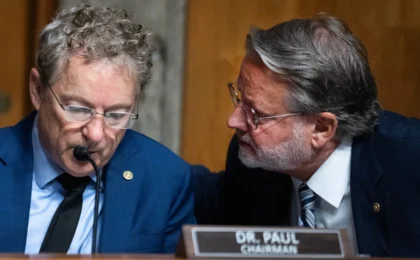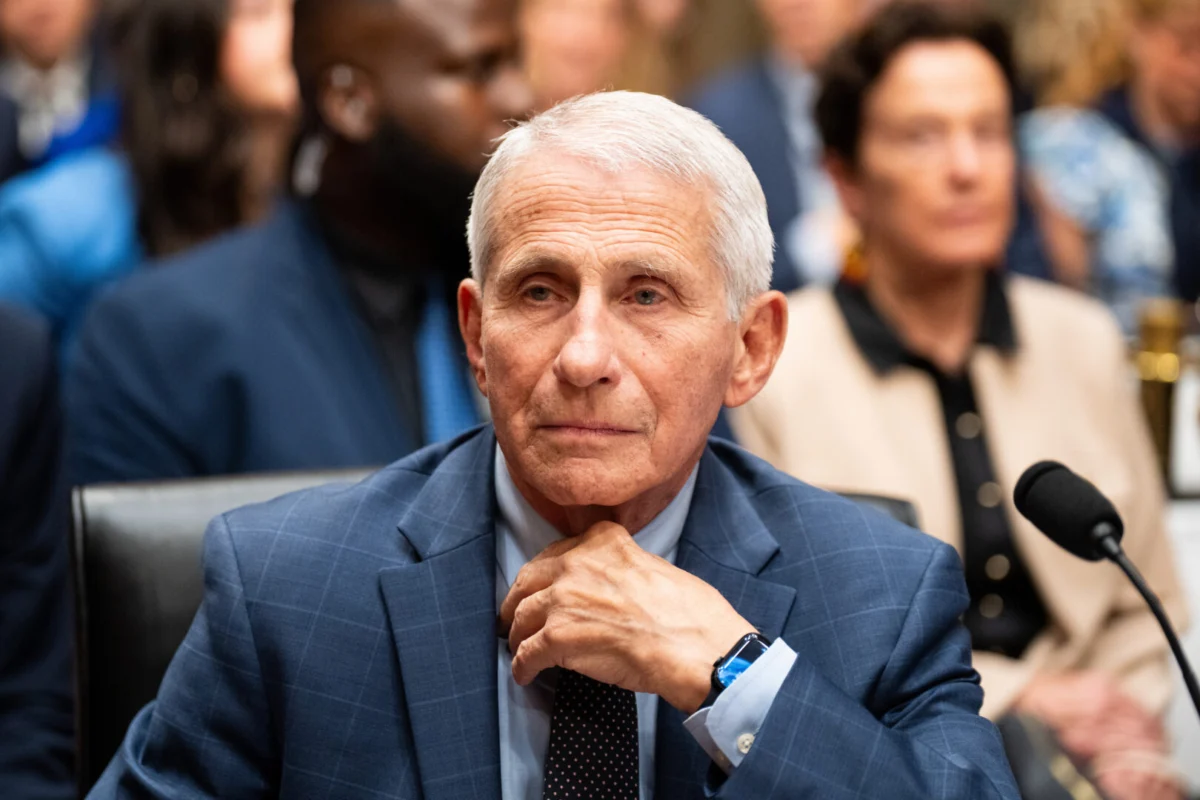
Republican lawmakers have reignited a controversy over the safety of COVID-19 vaccines during pregnancy, accusing former National Institute of Allergy and Infectious Diseases (NIAID) Director Dr. Anthony Fauci of deceiving the public about potential risks. Citing newly released government text messages from January 2021, Sen. Rand Paul (R-KY) and Sen. Ron Johnson (R-WI) alleged that Fauci privately expressed concerns regarding vaccine-induced miscarriages while publicly reassuring the nation that the shots were safe.
The claims rely on a single exchange in which Fauci noted a theoretical risk related to post-vaccination fever during the first trimester. However, medical experts and extensive global data emphasize that this early theoretical concern was quickly dispelled by comprehensive clinical evidence. Multiple large-scale scientific studies conducted over the past several years consistently confirm that COVID-19 vaccination during pregnancy carries no increased risk of miscarriage or other adverse pregnancy outcomes.
Despite this robust scientific consensus, prominent political figures have seized upon the text messages to revive previously debunked allegations, including a long-disproven claim that COVID-19 vaccines resulted in an 82% miscarriage rate. Public health officials and reproductive immunologists warn that recirculating these claims distorts how scientific understanding evolves during a public health crisis and undermines public trust in maternal healthcare guidance.
Main Facts: Resurfaced Texts and the Re-Emergence of Debunked Vaccine Claims
On August 10, Sens. Paul and Johnson made public a series of text messages retrieved from Fauci’s government-issued cell phone dating back to January 2021. The lawmakers pointed to a specific message sent on January 25, 2021, in which Fauci mentioned a theoretical mechanism by which post-vaccination immune responses could affect early pregnancies.
"Privately over text, Fauci admitted concerns about COVID vaccine side effects ‘associated with miscarriage in the 1st trimester,’ yet told the public there was nothing to worry about," Sen. Paul asserted on X (formerly Twitter) on August 11. "Once again, we expose Fauci’s dishonesty."
Sen. Johnson echoed these accusations during an August 12 appearance on Fox News, claiming that safety warnings were ignored by federal authorities. "The safety signals, the red flags, were screaming at these people, and you got Anthony Fauci there lying bold-faced to the American public," Johnson said, later posting on social media that the public "will never know how many babies were miscarried because of Fauci’s lies."
+-----------------------------------------------------------------------------------+
|                        KEY CONTROVERSY AT A GLANCE                               |
+------------------------------------+----------------------------------------------+
| Allegation by Lawmakers            | Scientific & Clinical Reality                |
+------------------------------------+----------------------------------------------+
| Fauci hid private concerns about   | Fauci noted a theoretical risk (fever) in    |
| vaccine-induced miscarriages.      | early 2021; clinical data quickly proved no  |
|                                    | increased risk existed.                      |
+------------------------------------+----------------------------------------------+
| Vaccines caused an "82% rate of    | A mathematical distortion of an early study. |
| miscarriage" in early trimesters.  | Real-world data shows normal baseline rates  |
|                                    | (10% - 15%).                                 |
+------------------------------------+----------------------------------------------+
| Public was misled regarding        | Guidance dynamically evolved as safety data  |
| maternal vaccine safety.           | accumulated from tens of thousands of cases. |
+------------------------------------+----------------------------------------------+
The political pushback expanded beyond Paul and Johnson. Other conservative figures, including Sen. Ted Cruz (R-TX) and Rep. Lisa McClain (R-MI), promoted the claim that research demonstrated an 82% miscarriage rate among vaccinated pregnant individuals. Cruz highlighted the statistic on his podcast before removing the episode and posting a clarification, while McClain repeated the claim during a televised interview on Fox Business.
Public health authorities and independent fact-checkers quickly countered these statements, clarifying that the 82% figure stems from a flawed miscalculation of early vaccine monitoring data published in 2021. Experts stress that Fauci’s early text messages reflected standard, cautious scientific reasoning at a time when real-world maternal data was just beginning to emerge, rather than evidence of a cover-up.
Chronology: How Public Health Guidance and Data Evolved from 2021 to the Present
Understanding the context of Fauci’s text messages requires tracking the rapid evolution of clinical evidence regarding COVID-19, vaccination, and maternal health throughout the pandemic.
          TIMELINE OF MATERNAL VACCINE DATA & PUBLIC GUIDANCE

 Dec 2020    Jan 2021    Feb 2021       Aug 2021          Feb 2026
----|-----------|-----------|--------------|-----------------|---->
   FDA         Fauci      CDC Safety      CDC & ACOG        CDC Final
   grants     Private     Data Shows      Fully Endorse     Data Confirms
  EUAs for    Texts re:    No Miscarriage  Vaccination in    Baseline 10.79%
Vaccines Fever Risk Elevations Pregnancy (Delta) Miscarriage Rate- December 2020: The U.S. Food and Drug Administration (FDA) issued Emergency Use Authorizations (EUAs) for the first COVID-19 mRNA vaccines. Because pregnant individuals were excluded from initial clinical trials—a standard safety protocol in drug development—the Centers for Disease Control and Prevention (CDC) and professional organizations like the American College of Obstetricians and Gynecologists (ACOG) initially recommended that pregnant women weigh risks and benefits in consultation with their healthcare providers, stopping short of a universal endorsement due to limited initial data.
-
January 25–26, 2021: Then-Surgeon General Dr. Vivek Murthy initiated a text thread with Fauci and then-CDC Director Dr. Rochelle Walensky asking if there was any theoretical reason to prefer vaccinating early versus late in pregnancy. Fauci initially replied there was none, but later followed up:
"I asked around a bit more and another issue came up that you need to be aware of. Since many people have significant cytokines storm and fever after the 2nd dose, this theoretically could be associated with miscarriage in the 1st trimester."
The following day, Jan. 26, Fauci summarized his perspective, noting that while clinical trial data in pregnant women was lacking, over 10,000 pregnant women had received the vaccine post-EUA without any reported red flags, and animal developmental toxicity studies were reassuring.
- February 2021: Contemporaneous public statements by Fauci reflected this balanced framing. In national media interviews, Fauci stated that no "red flags" had been observed in vaccinated pregnant individuals, while reiterating that clinical trial data remained limited and patients should weigh the risks of COVID-19 infection against theoretical vaccine risks. On Feb. 28, registry data tracking 35,691 pregnant vaccinated individuals through the Vaccine Adverse Event Reporting System (VAERS) and v-safe showed no elevated risk of pregnancy loss.
- August 2021: As the aggressive Delta variant spread across the U.S., evidence mounted that COVID-19 infection during pregnancy caused severe complications, including pre-eclampsia, preterm birth, ICU admission, and stillbirth. On Aug. 11, backed by extensive observational safety data from tens of thousands of pregnancies, the CDC and ACOG formally recommended COVID-19 vaccination for all pregnant individuals. Fauci publicly supported this consensus on national television, citing the "extraordinary amount of data" confirming safety and efficacy.
- February 2026: A comprehensive final analysis of CDC pregnancy monitoring data evaluated week-by-week miscarriage risks among 12,097 individuals vaccinated prior to 20 weeks of gestation. The study confirmed a miscarriage rate of 10.79%, matching historical baseline rates in the general population and confirming no increased risk.
Supporting Data: Dissecting the Science and Dismantling the ‘82%’ Myth
The core scientific debate centers on two distinct issues raised by lawmakers: the theoretical role of fever and cytokine responses after vaccination, and the persistent claim of an 82% miscarriage rate.
The Science of Fever, Cytokines, and Pregnancy
In his January 2021 message, Fauci referenced the theoretical risk of a "cytokine storm" and fever. In clinical immunology, a cytokine storm represents an extreme, uncontrolled, and life-threatening systemic inflammatory response—a phenomenon seen in severe COVID-19 infections, but not induced by vaccination.
While vaccines do trigger a temporary increase in immune signaling molecules (cytokines) to build antibodies, this response is controlled. However, high fever from any source during the early first trimester has long been recognized as a potential risk factor for certain congenital structural abnormalities.
"In January 2021, when there was very little evidence about the safety of COVID vaccination in pregnancy, it was sensible to be cautious and consider the theoretical possibility that fever associated with vaccination might be harmful," explained Dr. Victoria Male, an associate professor of reproductive immunology at Imperial College London. "Subsequent evidence found no increased risk of pregnancy loss, or any other pregnancy problems that might be caused by fever, following vaccination."
To manage post-vaccination fevers, CDC and ACOG guidance consistently recommended since December 2020 that pregnant individuals who develop a fever after vaccination take acetaminophen (Tylenol), a long-established standard of care.
The Origin of the 82% Miscarriage Calculation
The claim that 82% of vaccinated pregnant women suffered miscarriages originated from a crude mathematical misinterpretation of a landmark study published in the New England Journal of Medicine (NEJM) in April 2021.
                     THE "82%" STATISTICAL FALLACY EXPLAINED

  [ NEJM Study Cohort: 827 Completed Pregnancies Early in Rollout ]

  700 Vaccinated in 3rd Trimester           127 Vaccinated in 1st/2nd Trimester
  -------------------------------           -----------------------------------
  • Delivered healthy full-term infants.    • 104 suffered early miscarriages.
  • Normal outcomes.                        • 23 carried into 3rd trimester.

  -----------------------------------------------------------------------------
  THE FLAWED MATH (Used by Critics):
  104 Miscarriages ÷ 127 (1st/2nd Trimester Enrollees) = 81.8% (~82%)

  WHY IT IS WRONG (Statistical Survivor Bias):
  Women vaccinated in the 1st trimester who DID NOT miscarry were still pregnant
  when the study closed. They could not be counted among "completed pregnancies."
  Counting only completed early pregnancies artificially selects for miscarriages.
  -----------------------------------------------------------------------------
  CORRECT METHODOLOGY (Follow-up September 2021 Study):
  Evaluated all ongoing cohorts -> Miscarriage rate was <15% (Normal Baseline).
The study evaluated 827 completed pregnancies from the CDC’s v-safe registry. Among these, 104 miscarriages occurred. Critics derived the 82% figure by dividing the 104 miscarriages by 127 participants who received their vaccines in the first or second trimester and had finished their pregnancies by the time the preliminary study closed.
Medical researchers emphasize that this calculation represents a classic statistical bias. Because the study was published only months after vaccines became available, women vaccinated early in their first trimester who experienced normal, full-term pregnancies had simply not given birth yet. Consequently, the only people in that subgroup whose pregnancies had completed so early were those who had experienced spontaneous early pregnancy losses.
Dr. Jake Scott, an infectious disease physician at Stanford Medicine, likened the error to "calculating a school’s dropout rate in October by looking only at the students who have already left."
Dr. Eve C. Feinberg, a professor of obstetrics and gynecology at Northwestern University’s Feinberg School of Medicine, characterized the 82% statistic as "pure number manipulation and propaganda," noting it was "a ridiculous claim and simply not observed clinically." Subsequent evaluations published in NEJM in September 2021 and broader observational studies consistently demonstrated that the actual miscarriage rate among vaccinated individuals fell between 10% and 15%—well within the standard global baseline for unassisted pregnancies.
Official Responses: Lawmakers, Health Authorities, and Political Pushback
The re-emergence of these claims drew sharp responses from public health organizations, lawmakers, and independent researchers.
In response to inquiries regarding Sen. Johnson’s statements, Grace Carnathan, communications director for Sen. Johnson, did not directly defend the accuracy of the 82% statistic. Instead, she redirected focus toward federal health oversight:
"The question isn’t what the actual percentage of miscarriage risk is — we probably will never know because of grossly inadequate and negligent, if not corrupt, safety surveillance," Carnathan stated in an email. "The question should be why federal health officials consistently withheld information on safety signals, thereby depriving the public of fully informed consent."
Carnathan maintained that "there is controversy over what the data shows," citing testimony from vocal vaccine critics in the medical community.
Meanwhile, during an August 11 appearance on Fox News, National Institutes of Health (NIH) Director Dr. Jay Bhattacharya remarked that it was "certainly possible" COVID-19 vaccines could be linked to miscarriages and asserted that the debate "rages on in the scientific literature." When contacted for clarification regarding which peer-reviewed literature supported this stance, the NIH did not provide a response. Representatives for Sen. Paul also did not reply to requests for comment.
Reproductive health organizations reaffirmed that clinical consensus is settled. Leading medical associations—including ACOG, the Society for Maternal-Fetal Medicine (SMFM), and international public health bodies—issued updated statements emphasizing that multi-year global surveillance across millions of pregnancies confirms the safety and efficacy of mRNA COVID-19 vaccines.
Implications: The High Cost of Politicized Health Misinformation on Maternal Care
The political battle over early pandemic communications underscores an ongoing challenge for public health agencies: communicating evolving scientific uncertainty during an unprecedented crisis without eroding long-term public trust.
During the initial months of the vaccine rollout in early 2021, health officials faced a complex landscape. While clinical trial data for pregnant populations was initially absent, real-time observational registries were rapidly gathering evidence. Scientists noted theoretical risks, tracked them rigorously, and updated clinical recommendations as real-world data accumulated.
However, the selective juxtaposition of early theoretical internal discussions with later public policy statements can obscure this scientific process. When public health guidance updates dynamically in response to new data, political opponents may characterize those updates as evidence of deception or institutional flip-flopping.
The real-world consequences of vaccine hesitancy among pregnant populations were starkly demonstrated during the 2021 Delta wave. Unvaccinated pregnant individuals who contracted COVID-19 faced significantly higher rates of severe disease, mechanical ventilation, maternal mortality, and stillbirth compared to their vaccinated peers.
By resurrecting disproven claims regarding an 82% miscarriage rate, experts warn that public discourse risks deterring expectant mothers from receiving recommended maternal vaccinations—including vaccines for influenza, Tdap, and COVID-19—which protect both maternal and neonatal health. Medical professionals continue to stress that clinical decisions during pregnancy should be guided by rigorous, peer-reviewed epidemiological data rather than politicized reinterpretations of early scientific dialogue.