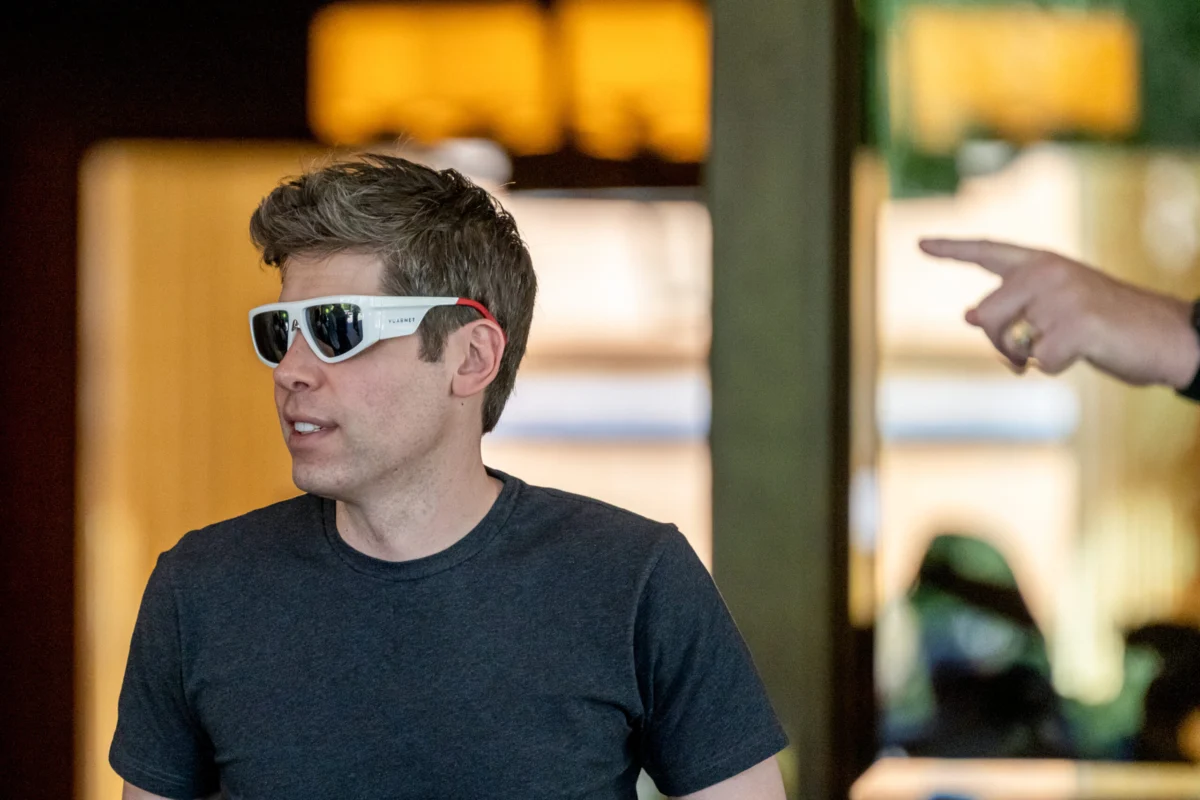
The burgeoning intersection of artificial intelligence and aerospace engineering—a frontier often referred to as "space-compute"—has become the latest battleground for two of the world’s most influential tech titans. Over the weekend of July 11–13, 2026, OpenAI CEO Sam Altman and SpaceX founder Elon Musk engaged in a heated, public exchange on social media, shedding light on a growing skepticism regarding the viability of orbital data centers.
The spat began when Musk leveled accusations against Altman, labeling him a "scammer." Altman fired back with a pointed critique of Musk’s recent business trajectory, writing, "Homeboy, you’re the one selling public market investors on short-term space datacenters."
While the exchange was marked by the informal, combative tone common to the platform formerly known as Twitter, it highlights a profound disagreement regarding the technological readiness and economic utility of moving heavy-duty AI processing into low-Earth orbit (LEO).
The Chronology of a High-Stakes Clash
The public friction between the two executives is the culmination of months of mounting pressure surrounding SpaceX’s ambitious $2 trillion valuation.
- June 10, 2026: SpaceX formally articulates its "three hard-tech moonshots" in its IPO roadshow, with orbital AI inference data centers identified as a primary engine for long-term growth.
- Late June 2026: Institutional investors express mounting concern over the technical hurdles of cooling and powering high-compute clusters in a vacuum.
- July 11, 2026: Elon Musk tweets a series of posts criticizing OpenAI’s governance and profit structures, culminating in the "scammer" label directed at Altman.
- July 12, 2026: Sam Altman responds, directly questioning the business case for SpaceX’s orbital compute strategy.
- July 16, 2026 (Scheduled): SpaceX prepares for the 13th test flight of the Starship vehicle, a pivotal moment that will either bolster or undermine the credibility of their orbital infrastructure roadmap.
The Economics of Orbital AI: Why Experts Remain Wary
The concept of "Space Compute" is seductive: utilizing the cold of space for cooling and leveraging orbital solar energy to power massive inference clusters for AI. However, industry insiders, satellite engineers, and financial analysts are increasingly coalescing around the reality that the math does not yet pencil out.
The Physics Problem
Data centers require massive amounts of energy and, more importantly, a reliable way to dissipate heat. While space is cold, it is a vacuum. In a vacuum, heat cannot be dissipated through convection—the primary method used in Earth-based data centers. Heat must be radiated away, which requires enormous, heavy, and fragile radiator panels.
The Launch Barrier
The fundamental constraint remains the cost-per-kilogram to orbit. Even with SpaceX’s industry-leading launch costs, deploying the massive hardware required for modern Large Language Model (LLM) inference—GPUs that weigh hundreds of pounds and require constant, stable power—remains prohibitively expensive. As noted by engineers at Google’s orbital compute project, the infrastructure needed to support a single high-performance rack in space is orders of magnitude more complex and costly than the equivalent on the ground.
Supporting Data: The "Moonshot" Reality Check
The valuation of SpaceX is currently predicated on the assumption that it can transition from a launch-service provider to an orbital cloud infrastructure giant. Bullish analysts argue that the low latency of satellite-to-satellite laser links could allow SpaceX to create a "neocloud" that beats terrestrial data centers in speed.
However, independent assessments suggest a different narrative:
- Manufacturing at Scale: Currently, the world lacks the capability to mass-produce hardened, high-compute AI satellites. Each unit is a bespoke piece of engineering.
- The Energy Density Gap: Solar panels in orbit provide a fraction of the power required by a modern H100-style GPU cluster. To power a significant data center, one would need to deploy football-field-sized solar arrays, creating massive drag and orbital debris risks.
- The Reusability Dilemma: SpaceX’s S-1 filings reveal that the second stage of the Starship rocket—the vehicle intended to carry these data centers—may not achieve full reusability in the immediate future. If the second stage must be discarded, the cost of sending payloads to orbit will remain too high to justify the operational costs of a data center.
Official Responses and Strategic Deflection
Elon Musk’s defense of the SpaceX roadmap is rooted in the success of the Starship program. His rebuttal to critics, "We start flying them next year," implies that once Starship reaches operational maturity, the cost of orbit will collapse, rendering the skeptics’ math obsolete.
However, SpaceX’s own internal documents paint a more cautious picture. The company has acknowledged that its primary commitments to NASA—such as the Artemis lunar missions—and the ongoing expansion of the Starlink network will consume the vast majority of Starship’s launch cadence for the next several years.
When asked about the feasibility of space compute, SpaceX representatives have pointed to proprietary cooling innovations and "next-generation modular satellite buses" that are currently in the prototyping phase. Yet, these prototypes have yet to be tested in a live, high-compute environment.
Implications: The 2030s Horizon
The disagreement between Altman and Musk is a microcosm of a larger debate in Silicon Valley: the tension between "visionary" engineering and practical, near-term capital deployment.
For Investors
The public market’s infatuation with the "Space-AI" narrative has driven SpaceX’s valuation to stratospheric heights. If the 13th test flight of Starship does not demonstrate significant progress toward rapid, full reusability, investors may begin to discount the "orbital compute" premium baked into the company’s share price.
For the Tech Industry
If the space-compute dream is delayed until the 2030s, as many experts suggest, companies currently pivoting to orbital infrastructure may face a "liquidity crunch." Startups like Starcloud, which recently raised $170 million, are betting that the market will mature within 24–36 months. If the technology requires another decade of development, these firms will likely face severe existential crises.
The Broader Strategic View
Ultimately, the argument between Altman and Musk highlights that while the dream of an orbital internet and compute layer is theoretically sound, the infrastructure—the "rockets and satellites"—must advance by several generations before it becomes a viable competitor to terrestrial cloud providers like AWS, Google Cloud, or Microsoft Azure.
As Musk prepares for the next Starship launch, the eyes of the global market are fixed not just on the rocket, but on the validity of the entire space-compute industry. If the technology cannot be proven within the next three years, the $2 trillion valuation may need to be re-evaluated against the cold, hard reality of physics.
The "homeboy" spat may be dismissed as petty social media theater, but for those with billions on the line, it represents the collision between the limitless ambition of space exploration and the unforgiving constraints of the laws of thermodynamics. Whether space-compute becomes the next great utility or remains an expensive science project will be determined by the success of the very rockets that Musk is currently testing in the Texas heat.