The persistent challenge of global conferences—where language barriers often render keynotes and panel discussions inaccessible to a significant portion of the audience—is about to face a major technological intervention. DeepL, the German powerhouse known for its high-precision neural machine translation, has announced the acquisition of Mixhalo, a San Francisco-based startup specializing in low-latency, real-time audio distribution.
This strategic move marks a significant shift for both companies: DeepL expands its footprint into the physical, live-event space, while Mixhalo secures the backing of an AI giant to solidify its position as the premier solution for multilingual accessibility. By integrating DeepL’s cutting-edge voice-to-voice and voice-to-text translation suite with Mixhalo’s proprietary audio-streaming technology, the two companies aim to eliminate the "translation lag" that has historically plagued international business gatherings.
A Chronology of Innovation: From Concert Stages to Conference Halls
The journey toward this acquisition began long before the current AI boom. Mixhalo was founded in 2016 by an eclectic team: Incubus guitarist and songwriter Mike Einziger, violinist Ann Marie Simpson-Einziger, and CEO Vik Singh.
Initially, the startup’s mission was focused on the music industry. The founders sought to solve a classic concert problem: the "mushy" sound quality experienced by attendees in the back of large venues. Their solution allowed fans to listen to high-fidelity, real-time audio from the soundboard directly on their smartphones, bypassing the acoustic limitations of massive arenas.
However, as the company matured, it recognized a broader utility for its technology. By 2020, the platform had evolved into a robust infrastructure provider for sports and corporate live events, enabling real-time audio streaming that could support everything from play-by-play commentary to simultaneous translation for global audiences. Over its lifespan, Mixhalo raised over $39 million from a heavyweight roster of investors, including Fortress Investment Group, Founders Fund, Defy Partners, and Cowboy Ventures.
DeepL, meanwhile, has spent years establishing itself as the gold standard for text-based translation. In 2024, the company signaled a pivot toward audio, launching voice-to-text capabilities in over 33 languages. By April 2026, the company had taken a giant leap forward with the release of its comprehensive voice-to-voice translation suite, designed specifically for multilingual meetings and professional collaboration. The acquisition of Mixhalo acts as the final piece of the puzzle, bringing DeepL’s sophisticated AI models out of the browser and into the physical world.
The Technological Synergy: Why Now?
The acquisition is not merely a product expansion; it is a defensive and offensive maneuver in an increasingly crowded market. Mixhalo CEO Vik Singh noted that the explosion of voice AI models initially presented an opportunity to experiment with various architectures. By testing multiple models, Mixhalo could ensure its platform provided the best possible user experience. However, Singh also observed that as large model companies began to commoditize voice AI, the competitive landscape became increasingly difficult.
"As model companies grew big, they would start encroaching on the space Mixhalo operated in," Singh explained. "It becomes difficult to win on pricing when the underlying technology you rely on is being offered by the very companies you are competing against."
The partnership between the two firms was, by all accounts, organic. Mixhalo had been a long-time customer of DeepL, relying on its translation APIs for its event services. The acquisition conversation reportedly began at a customer dinner where Singh found himself seated next to Sebastian Weigand, DeepL’s CTO. As the two discussed the technical overlaps between DeepL’s API layer and Mixhalo’s application layer, the potential for a unified offering became undeniable.
Implications for the Events Industry
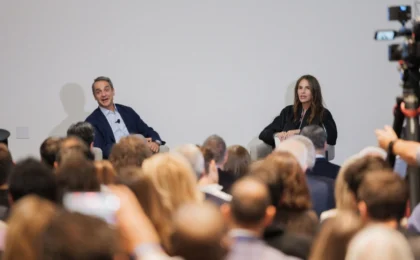
For the global events industry, this acquisition promises to redefine the "attendee experience." Currently, when a speaker presents in a language unknown to a portion of the audience, attendees are often forced to rely on manual, imprecise methods—such as holding their phones up to speakers to catch audio for a third-party app. These methods are frequently plagued by background noise, latency issues, and a lack of contextual accuracy.
By folding Mixhalo into its operations, DeepL gains a "marketing use case" that is as practical as it is impressive. DeepL CEO Jarek Kutylowski emphasized that the platform will serve as a living demonstration of the company’s capabilities. "The platform will allow us to show how DeepL’s tech works in real-time and in environments like conferences where people are present on the ground," Kutylowski said.
The implications are far-reaching:
- Real-time Accessibility: Attendees will be able to select their preferred language on their smartphones and receive audio translation with near-zero latency, directly synced to the speaker’s cadence.
- Globalized Engagement: Panelists can speak in their native tongue without the need for expensive, traditional interpretation booths, which are often limited by space and cost.
- Data-Driven Insights: With the integration of DeepL’s analytics, event organizers can gain better insights into the linguistic needs of their audience, allowing for more inclusive programming.
Expanding the Global Footprint: The U.S. Beachhead
A critical aspect of this deal is the geographical expansion it facilitates. With the acquisition of the San Francisco-based Mixhalo, DeepL is officially establishing a physical presence in the Bay Area. This is a strategic move for the German company, as it positions them closer to the heart of the global technology ecosystem and provides a base for scaling its U.S. operations.
DeepL enters a market that is already seeing significant activity. Competitors such as Wordly AI and the Seven Seven Six-backed Palabra have been aggressively capturing market share in the AI-powered translation space. By combining DeepL’s superior translation engine with Mixhalo’s proven, scalable infrastructure, the company is positioning itself to be the dominant force for enterprise-grade event solutions.
Challenges and Future Outlook
While the promise of seamless, AI-driven translation is high, the companies face several hurdles. Technical challenges include maintaining high-quality audio in venues with varying Wi-Fi stability, ensuring data privacy for corporate users, and managing the inherent unpredictability of live speech—such as idiomatic expressions, technical jargon, and overlapping voices during panels.
However, the consensus among industry analysts is that the marriage of DeepL and Mixhalo represents a "best-of-breed" scenario. DeepL brings the intellectual property and linguistic accuracy, while Mixhalo provides the battle-tested delivery mechanism.
As we look toward the future, the integration of these technologies could signal the end of the "language wall" in international business. If DeepL can successfully scale this technology, the modern conference will no longer be a place where participants struggle to understand the conversation, but a truly global forum where language ceases to be a barrier to innovation.
For the team at DeepL, the acquisition is a testament to their ambition. They are no longer just a translation company; they are becoming a fundamental infrastructure provider for the globalized, multilingual workplace of the future. With the backing of a proven team from Mixhalo, the company is well-positioned to turn this vision into a reality, one conference at a time.