In the evolving landscape of urban mobility, the tension between motor vehicles and cyclists has long been a source of danger and frustration. Among the most common and preventable hazards is the "dooring" incident—a scenario where a car occupant, failing to check their blind spot, swings a door open into the path of an oncoming bicycle or e-scooter. Often resulting in severe injuries or fatalities, these crashes have historically been addressed with passive warnings: a simple blinking light on a side-view mirror or a soft, often ignored, auditory chime.
BMW is now moving to change this paradigm. With the introduction of its next-generation "Neue Klasse" vehicle architecture, the German automaker is rolling out a proactive Exit Warning Assistance System. Unlike traditional systems that merely alert the driver, this new technology takes physical control of the vehicle’s hardware, briefly holding the door closed if its sensors detect an approaching cyclist or vehicle. By integrating this feature as standard equipment rather than a hidden, high-cost option, BMW is signaling a shift toward making active urban safety a baseline expectation for luxury vehicle owners.
The Mechanics of Safety: How the System Functions
The genius of BMW’s new system lies not in its complexity, but in its strategic integration. At the heart of the feature is a sophisticated array of side-facing radar sensors—the same hardware already responsible for managing the vehicle’s driving dynamics and parking assistance.
When a passenger reaches for the door handle, the system initiates a high-speed scan of the vehicle’s flank. It is looking for more than just proximity; it is calculating the velocity and trajectory of approaching objects. If the sensors detect a cyclist, pedestrian, or another vehicle entering the danger zone, the system triggers a momentary electronic block on the door latch.
This hesitation—lasting only a fraction of a second—acts as an effective physical barrier against impulsive exit attempts. It provides the driver or passenger with the vital time needed to realize that the lane is occupied. By moving beyond a simple visual or audible alert, BMW is effectively bridging the gap between human error and technological intervention. The system doesn’t just ask the user to pay attention; it forces a pause that encourages situational awareness.
A New Standard: The Rollout and Integration
The technology is making its world debut on the 2027 BMW iX3. As a flagship for the brand’s "Neue Klasse" philosophy, the iX3 serves as the blueprint for how future BMW models will be engineered. Notably, the automaker has decided to include this feature as a standard component of the vehicle’s safety suite, rather than burying it behind a premium technology package or a complex sub-menu of options.
Following the iX3, the rollout will be swift. BMW has confirmed that the long-wheelbase i3 sedan, the perennial favorite X5, and the high-end 7 Series are all slated to receive the hardware as their production cycles align with the wider implementation of Neue Klasse underpinnings. This mass-market approach to advanced safety features is a departure from historical industry trends, where "life-saving" tech was often reserved for the most expensive trim levels.
The "Superbrain": Behind the Computational Power
The ability to process, analyze, and act upon environmental data in milliseconds requires significant computing power. BMW has developed a new central processor, internally referred to as the "Superbrain of Automated Driving." This unit possesses exponentially higher computational capabilities than the hardware found in previous generations.
This "Superbrain" acts as the nervous system for the vehicle’s active safety features. Beyond the exit-warning system, it manages:
- Reverse Cross-Traffic Assist: A system that monitors the sides of the vehicle while in reverse to detect moving hazards.
- Active Park Distance Control: Now capable of automatically applying the brakes if the system detects an obstacle along the vehicle’s flank, preventing low-speed scrapes in tight parking structures.
- Emergency Brake Assistant: Enhanced to provide steering interventions to avoid wildlife or sudden road hazards.
The efficacy of this integrated approach is already being validated. The new iX3 has secured a five-star rating under the rigorous 2026 Euro NCAP (European New Car Assessment Programme) protocol. This achievement underscores the effectiveness of BMW’s pivot toward high-performance safety software.
The Problem: The High Cost of "Dooring"
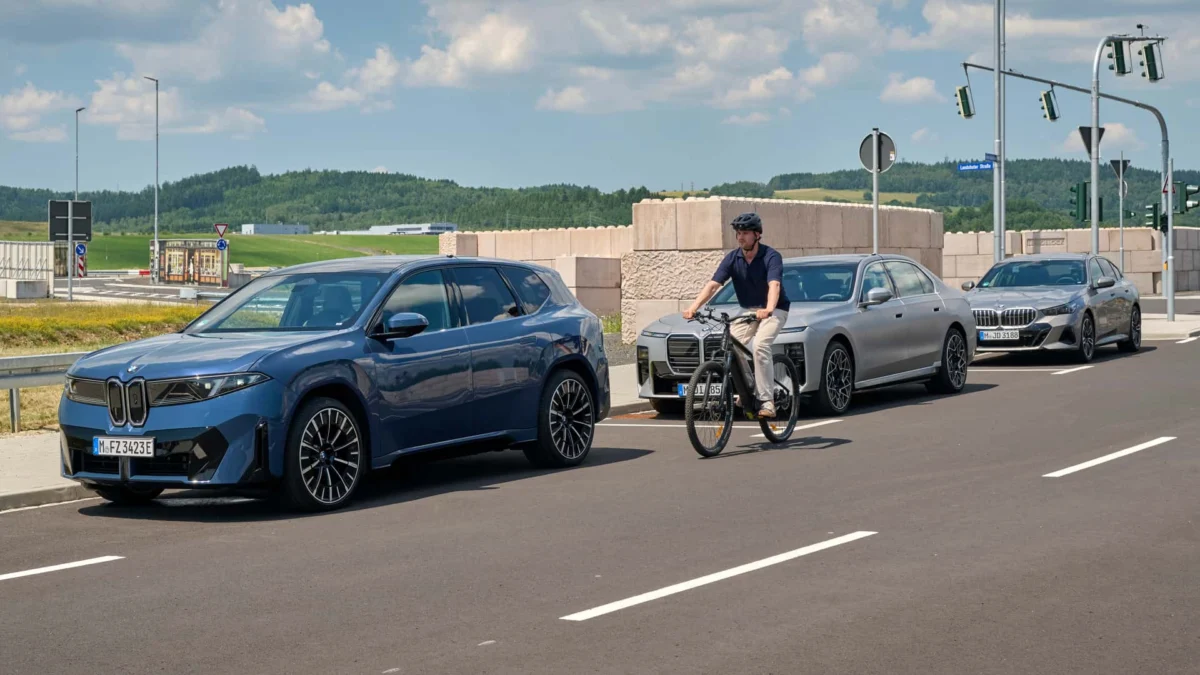
To understand why BMW is investing so heavily in this technology, one must look at the human and financial cost of urban accidents. In dense metropolitan areas—where bike lanes are often positioned between parked cars and moving traffic—the "dooring" phenomenon is a constant, lingering threat.
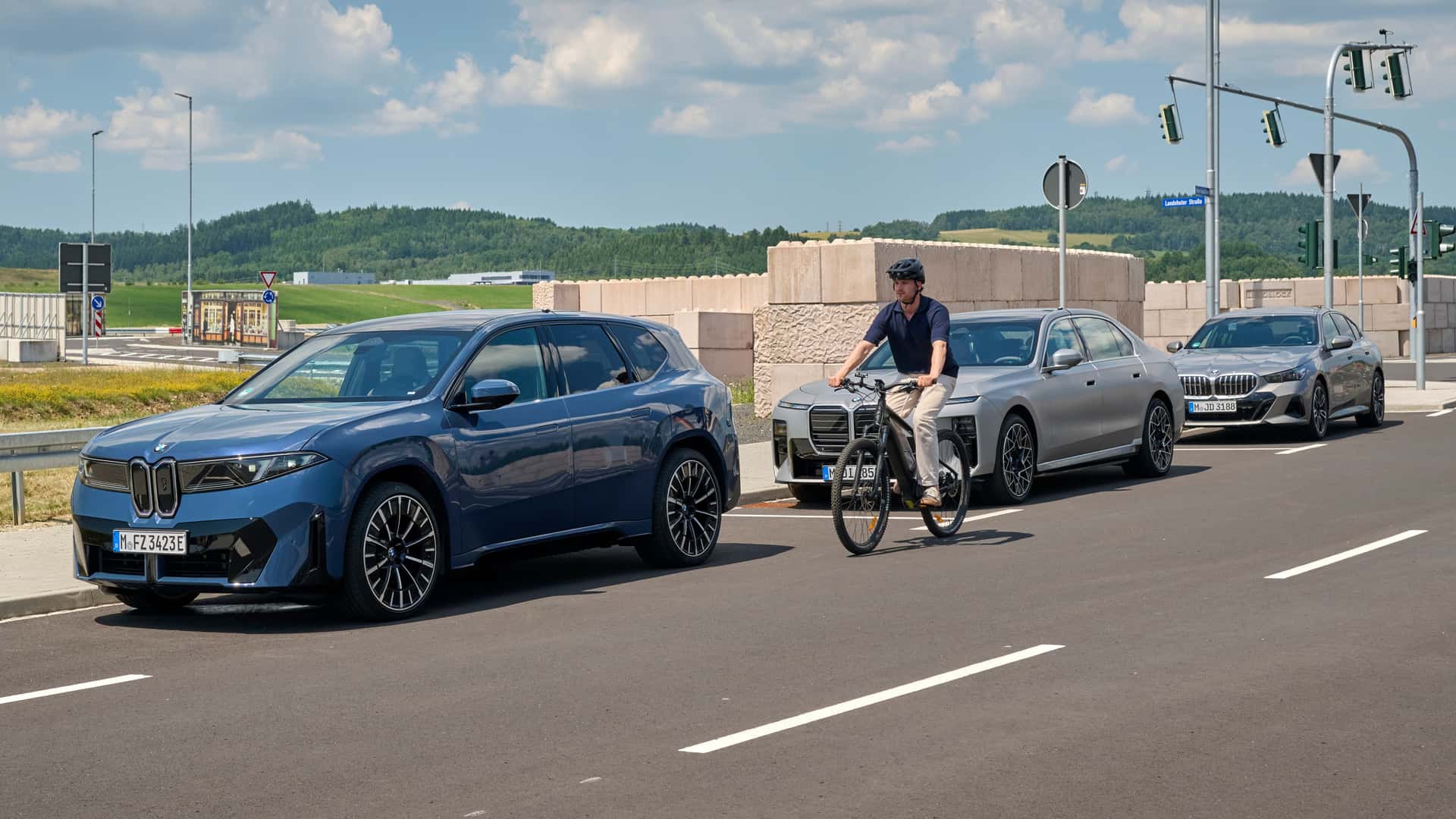
When a door is opened suddenly, the cyclist has almost no time to react. The collision often results in the cyclist being thrown into the path of traffic, leading to catastrophic injuries. Urban planners and local governments have spent decades trying to mitigate this through protected bike lanes and signage, but the responsibility ultimately rests with the vehicle occupant.
By removing the ability of the occupant to inadvertently "door" a cyclist, BMW is attempting to design away a problem that has plagued city streets since the dawn of the automobile. The question now is whether this solution will be adopted by the rest of the industry.
Industry Implications: A New Benchmark for Rivals?
The automotive industry is often a game of "follow the leader" when it comes to safety features. If BMW’s system proves to be a reliable, non-intrusive way to prevent accidents, other manufacturers—from luxury rivals like Mercedes-Benz and Audi to mass-market giants like Toyota and Volkswagen—will face significant pressure to match the capability.
However, the path forward is not without its critics or challenges. Some industry analysts point out that a physical door block, if improperly calibrated, could be seen as an intrusion of freedom or a mechanical failure if the system malfunctions. There is also the "risk-compensation" theory: will drivers become less vigilant if they know the car will "catch" their mistakes?
Despite these concerns, the initial data points toward a net positive. By creating a physical barrier to an unsafe action, BMW is prioritizing the safety of vulnerable road users over the absolute convenience of a frictionless door.
The Future of Urban Mobility
As we look toward 2027 and beyond, the definition of a "safe" car is changing. It is no longer just about how the vehicle protects its occupants in a crash (passive safety); it is about how the vehicle prevents the crash from occurring in the first place (active safety).
BMW’s strategy with the iX3 and the Neue Klasse architecture suggests that the future of driving is highly automated, yet deeply connected to the environment. The "Superbrain" in these cars is not just driving the vehicle; it is scanning the world around it to ensure that the occupants are not a danger to their surroundings.
For the urban cyclist, the news of BMW’s door-hold system is a welcome advancement. For the industry, it is a wake-up call that the days of passive warnings are coming to an end. As sensor costs continue to drop and computing power continues to climb, the industry will likely see a surge in features that act as "guardrails" for human behavior.
Conclusion
The introduction of the exit-warning assistance system is a hallmark moment for automotive safety. By transforming a simple door latch into a responsive, intelligent component of the vehicle’s safety network, BMW has identified a tangible way to save lives.
As these systems become more prevalent, the "dooring" of cyclists could theoretically become a relic of the past. While real-world data will eventually determine the long-term effectiveness of this technology, the commitment from a major manufacturer to prioritize the lives of those outside the vehicle is a trend that deserves recognition. BMW is not just building better cars; they are building a safer city, one door at a time.
The integration of such high-level technology into standard equipment packages confirms that the brand is listening to the challenges of modern urban life. Whether other manufacturers choose to follow suit will likely depend on the success of the iX3’s launch and the subsequent feedback from cyclists and drivers alike. For now, the "Smart Door" stands as a testament to the idea that the best technology is that which works silently, effectively, and—most importantly—in the interest of the common good.