In the modern era, humanity is locked in a desperate struggle to mitigate the environmental catastrophe caused by synthetic, petroleum-based plastics. We look to biodegradable alternatives—specifically polyhydroxyalkanoates (PHAs)—as a beacon of sustainability. However, a groundbreaking study from the Max Planck Institute for Marine Microbiology in Bremen, Germany, reveals that we are late to the party. Long before the first laboratory synthesized a polymer, microorganisms were mastering the art of bioplastic production, and a diverse array of animals across the evolutionary tree have been quietly consuming these materials for hundreds of millions of years.
The Microbial Origins of Bioplastics
To understand the significance of this discovery, one must first look at the tiny architects of these polymers. Bacteria and archaea have evolved to produce PHAs as a survival mechanism. When these microorganisms find themselves in an environment rich in carbon but lacking other essential nutrients, they do not waste the excess energy. Instead, they synthesize PHAs, storing them within their cell walls as a biological "battery" or reserve tank.
For decades, the scientific consensus held that these natural plastics were the exclusive domain of microorganisms to break down. It was assumed that when a microbe died, only other bacteria or fungi possessed the biochemical toolkit—specific enzymes—required to crack the complex polymer chains of PHAs and convert them back into usable energy. This narrow view of the carbon cycle has now been fundamentally rewritten.
Chronology of a Discovery: From a Gutless Worm to Global Insights
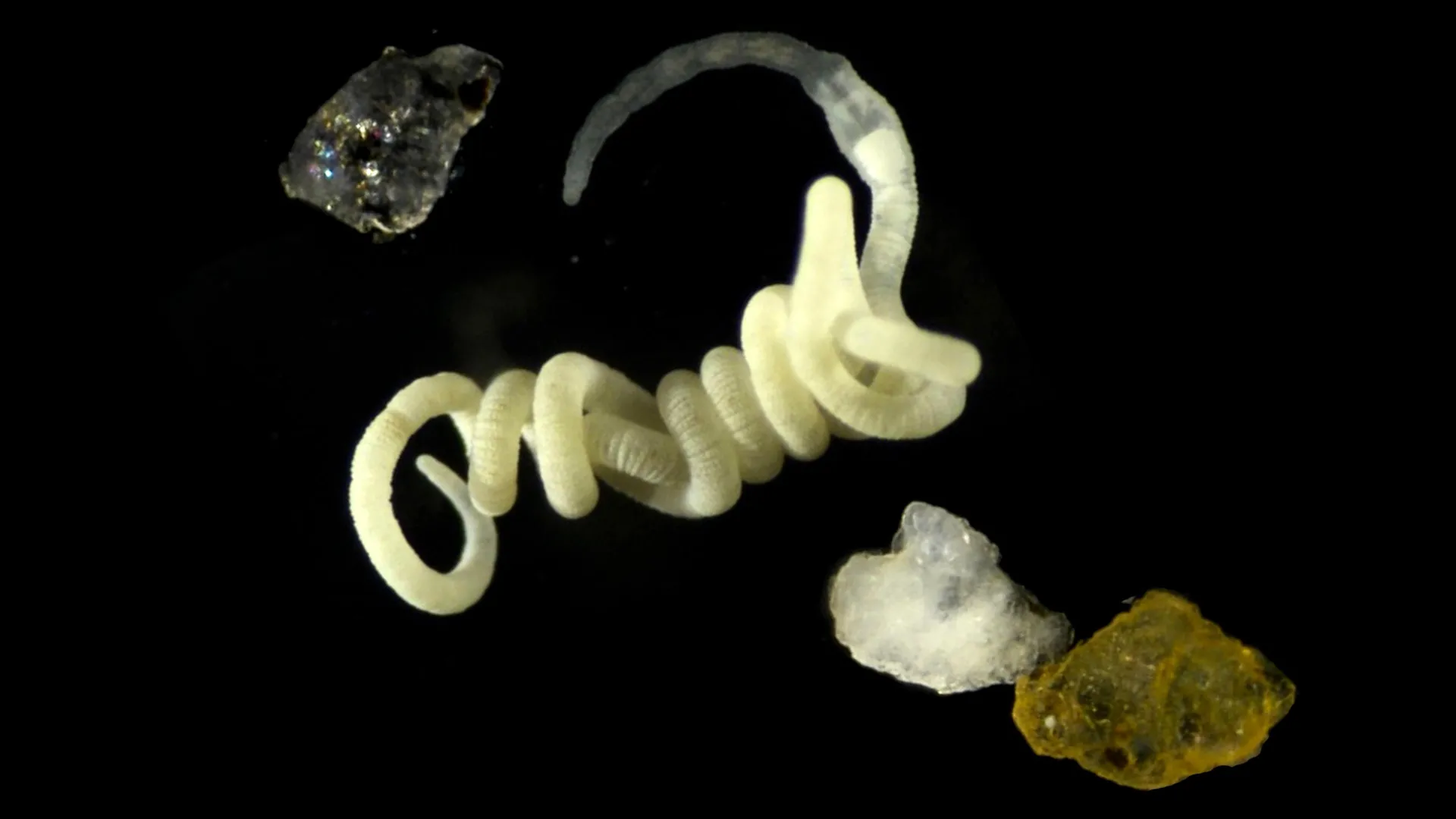
The journey to this paradigm-shifting discovery did not begin in a high-tech industrial lab, but rather with an examination of one of the ocean’s most enigmatic creatures: the marine worm Olavius algarvensis.
The Olavius algarvensis Connection
Olavius algarvensis is a marvel of evolutionary adaptation. Lacking both a mouth and a digestive tract, the worm relies entirely on symbiotic bacteria that live beneath its skin. The worm provides these microbes with a stable home, and in return, the bacteria provide the worm with nutrition.
Researchers at the Max Planck Institute noticed that the symbiotic bacteria within the worm were packed with PHA reserves. "We wondered whether the worm had evolved a way to access this rich energy reserve," explains Nicole Dubilier, Director at the Max Planck Institute and the study’s corresponding author.
Through high-resolution imaging and biochemical analysis, the team identified a specific enzyme within the worm’s tissues capable of breaking down these microbial PHAs into molecules that the worm could metabolize. The enzyme was localized exactly where the worm digests its bacterial partners, proving that the host was effectively "farming" its own symbionts and harvesting their stored bioplastic energy.
Expanding the Scope
What began as an investigation into a singular, exotic organism quickly spiraled into a broader evolutionary mystery. If a gutless marine worm had evolved this mechanism, could other animals do the same?
The research team performed a comprehensive survey of animal genomes, expanding their scope far beyond the ocean floor. The results were staggering. They identified enzymes with the same functional capabilities in more than 66 species spanning nine different phyla. From terrestrial earthworms and springtails to sponges and various marine invertebrates, the ability to degrade PHAs was not a fluke of a single species—it was a widespread, ancient biological capability.
Supporting Data: The Ubiquity of PHA Degradation
The laboratory validation of these findings was as critical as the genomic discovery. By isolating the enzymes identified in the genome sequences, the researchers conducted degradation assays. These tests confirmed that enzymes from distantly related species—creatures that haven’t shared a common ancestor for hundreds of millions of years—could all successfully break down microbial PHAs.
"This was the real surprise," says lead author Caroline Zeidler. "What started as a discovery in a single marine worm turned out to be a widespread capability shared by animals from very different branches of the tree of life."
The data suggests that PHAs are not merely niche bacterial storage units; they are a fundamental, high-energy carbon source embedded throughout the world’s ecosystems. Whether in deep-sea sediments, soil, or freshwater habitats, these bioplastics are present, and the animals living within these environments have evolved the chemical "scissors" necessary to unlock them.
Official Responses and Scientific Perspective
The implications of this study are being felt across multiple disciplines, from marine biology to materials science. The research, published in Nature Ecology & Evolution, has been hailed as a vital piece of the puzzle in understanding global carbon cycling.
"Our study changes our understanding of who can use these microbial carbon stores," says co-corresponding author Maggie Sogin, an Assistant Professor at the University of California, Merced. "Animals have probably been feeding on nature’s original bioplastic for hundreds of millions of years—we’re just now beginning to see it."
This discovery challenges the traditional view of bioplastics as "materials that humans make and microbes break." Instead, it portrays bioplastics as a central, ancient, and recycled currency in the global food web. The scientists emphasize that while we have only just identified this pathway, it has likely been operating silently and efficiently since the early stages of complex animal evolution.
The Industrial and Environmental Implications
While this study provides a fascinating look into natural history, it also carries significant weight for the burgeoning bioplastics industry.
The Role of PHA in Modern Industry
PHAs are prized for their circularity. Unlike petroleum-based plastics, which persist in the environment for centuries and break down into harmful microplastics, PHAs are truly biodegradable. Currently, they are manufactured in large-scale fermentation tanks where bacteria are fed sugars or plant oils to stimulate the production of these polymers.
These materials are already finding their way into:
- Agriculture: Fertilizer beads that release nutrients as the PHA shell degrades.
- Medicine: Resorbable sutures, implants, and drug-delivery systems that the body can safely break down.
- Packaging: Sustainable alternatives to single-use plastics.
However, PHAs still occupy a small share of the global market. As production capacity scales to meet the demand for sustainable materials, understanding how these plastics interact with the environment becomes paramount.
A New Dimension of Circularity
The discovery that animals are active participants in the degradation of PHAs provides a more optimistic view of their role in the environment. If animals—not just microbes—are equipped to process these materials, it suggests that the integration of PHA-based bioplastics into natural systems may be less disruptive than previously feared. It reinforces the concept of "biological circularity," where the material is not just a waste product, but a returning nutrient in the cycle of life.
Conclusion: A Hidden Pathway in the Carbon Cycle
The discovery by the Max Planck Institute serves as a humbling reminder of how much of the natural world remains hidden in plain sight. For millions of years, the carbon cycle has utilized a pathway that scientists simply didn’t know existed.
While researchers acknowledge that they do not yet know the full quantitative impact of animal-driven PHA degradation on the global carbon balance, the finding fundamentally alters our perception of the relationship between microbes and animals. It reveals a sophisticated, ancient, and widespread biological mechanism that allows energy to flow from microscopic reserves into the broader animal kingdom.
As we continue to develop and deploy bioplastics as a solution to our environmental crisis, we can do so with the knowledge that we are imitating a process that nature perfected eons ago. By studying these "hidden" abilities, we gain more than just scientific data; we gain a deeper appreciation for the complex, interconnected, and ancient systems that sustain life on Earth. The gutless worm of the ocean floor, once an anomaly, has become a key that unlocks a new, clearer understanding of the planet’s circular energy economy.