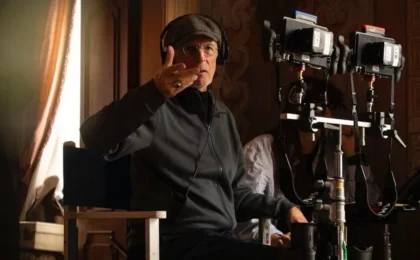
For a decade and a half, Ali Fazal has operated with a singular, driving philosophy: never sit still. In an industry often defined by the comfortable ruts of typecasting and the gravitational pull of mainstream formulas, Fazal has charted a career trajectory that defies easy categorization. From the gritty, blood-soaked bylanes of Mirzapur to the opulent corridors of Hollywood period dramas, Fazal has spent fifteen years systematically dismantling the limitations placed upon Indian actors.
This relentless pursuit, he credits, began at home. Raised in an environment where world cinema was not a luxury but a staple, a young Fazal emerged from his formative years with a conviction that the cinematic landscape was vastly larger than the box he had been presented with. Today, he stands as a bridge between Indian storytelling and the global stage, a performer who insists that his own curiosity must be the primary metric for his success.
The Evolution of an Icon: From Guddu Pandit to Complex Protagonist
At the center of his current resurgence is the return of his most iconic persona: Guddu Pandit. With Mirzapur: The Movie, the Prime Video crime saga is making a bold, unprecedented leap from the digital screen to the theatrical experience. For the Indian film industry, this is uncharted territory.
"I think this is the first time India is doing something like this," Fazal remarks. "It’s an experiment, but I am excited to see if audiences will make the transition from their living rooms to the cinema halls for this scale of storytelling."
Drawing a parallel to the cinematic expansion of Peaky Blinders, Fazal notes that the film’s narrative structure presented a unique technical challenge. Rather than moving the timeline forward from the series’ dramatic conclusion, the film rewinds. For an actor who had spent years inhabiting the hardened, tactical, and physically imposing version of Guddu, this required a psychological reset.
"It was a bit of a memory washout that I had to deliberately do," he explains. "Seasons of a show act like human memories; they accumulate. I had to strip away that hardening to find the character’s earlier, more vulnerable self." Fazal views the character—beneath the veneer of the bodybuilder physique and the gangster posturing—as a quintessential study of India’s "unloved men," a societal archetype that the country produces with alarming frequency and is only now beginning to reckon with through its fiction.
Chronology of a Career: A Tapestry of Global Ambition
Fazal’s filmography reads like a roadmap of an actor uninterested in the path of least resistance. His journey reflects a deliberate oscillation between the local and the global, the independent and the mainstream.
- Early Breakthroughs: Following his entry into the industry, Fazal quickly moved beyond traditional romantic leads, seeking roles that demanded grit and versatility.
- The Global Leap: His international credits, including Stephen Frears’ Victoria & Abdul and Kenneth Branagh’s Death on the Nile, signaled to the global industry that an Indian actor could anchor prestige projects with the same poise as his Western counterparts.
- The Action Pivot: Projects like Furious 7 and the thriller Kandahar solidified his standing as a capable action lead in the high-stakes world of international blockbusters.
- Production and Curation: With the formation of Pushing Buttons Studios alongside his wife, actor-producer Richa Chadha, Fazal moved from being a participant in the industry to an architect of its future. Their debut, Girls Will Be Girls, directed by Shuchi Talati, was a critical triumph, sweeping awards at Sundance and highlighting the potential of Indian independent cinema on the world stage.
Supporting Data: The Infrastructure of Change
Fazal’s critique of the Indian film industry is not born of cynicism, but of an intimate understanding of its structural voids. Through his production banner, he has identified two glaring deficiencies: the total absence of a robust theatrical distribution model for documentaries and the lack of institutional knowledge regarding international festival submissions.
"We have to start championing each other," Fazal emphasizes. He argues that the industry remains dangerously fragmented, broken into silos based on language and genre, with independent filmmakers rarely finding common ground to organize or share resources. His work with Pushing Buttons Studios is, in part, an attempt to bridge these gaps, offering a template for how independent producers can navigate the complexities of global distribution.
Furthermore, Fazal remains a vocal advocate for the modernization of Indian production contracts. He warns that while personal connections have traditionally fueled the bridge between Indian and international projects, these informal ties are insufficient for long-term sustainability. "Access built on personal connections doesn’t translate abroad," he observes. "Our legal and logistical frameworks need to evolve to match global standards if we truly want to collaborate on equal footing."
Official Responses and Strategic Shifts: The ‘Raakh’ Perspective
While Mirzapur dominates the headlines, it is his role in the Prime Video investigative thriller Raakh that highlights Fazal’s commitment to nuanced, working-class storytelling. The project, which chronicles the ascent of Sub-Inspector Jayprakash, delves into the intergenerational trauma of a man caught between his father’s deferential police culture and his own integrity.
The timing of Raakh was serendipitous. "I was actually halfway through prepping for the film when the shooting schedule for Mirzapur: The Movie shifted," Fazal recalls. "I was already deep into the headspace of a different character, and the prospect of jumping into the intensity of Raakh was daunting. But the story was too compelling to pass up."
While a second season of Raakh has yet to be officially greenlit, the optimism surrounding the project is palpable. "The makers are very excited, and Amazon seems very, very happy with the trajectory," he says, hinting that the narrative architecture was intentionally left open to accommodate a deeper exploration of Jayprakash’s world.
Implications: A Future Beyond Borders
As he looks toward the horizon, Fazal’s slate is characteristically eclectic. He is slated for a cameo in the partition drama Batwara, produced by Aamir Khan, and a pivotal segment in the latest installment of Netflix’s Lust Stories, directed by Shakun Batra. Perhaps most intriguing is his upcoming English-language project in London, which he describes as a corporate drama—a stylistic collision between the sharp, cutthroat dialogue of Glengarry Glen Ross and the psychological dread of Severance.
The implications of Fazal’s career are clear: he is proving that an Indian actor does not need to choose between regional relevance and global prestige. By refusing to "sit still," he is forcing the industry to adapt to his pace. He is not merely waiting for the right scripts to land on his desk; he is actively building the studio infrastructure, the creative partnerships, and the global network required to facilitate the stories he wants to tell.
In a climate where many actors are content to be the faces of a franchise, Ali Fazal is intent on being the engine. He doesn’t have a magic solution for the fragmented nature of Indian cinema, nor does he have a perfect map for the future of international co-productions. But with a stack of scripts ready for production and a portfolio that continues to expand into new territories, he isn’t waiting for permission to change the game. He is, quite deliberately, playing it by his own rules—one project, one experiment, and one "memory washout" at a time.