Introduction: A Global Climate Watch
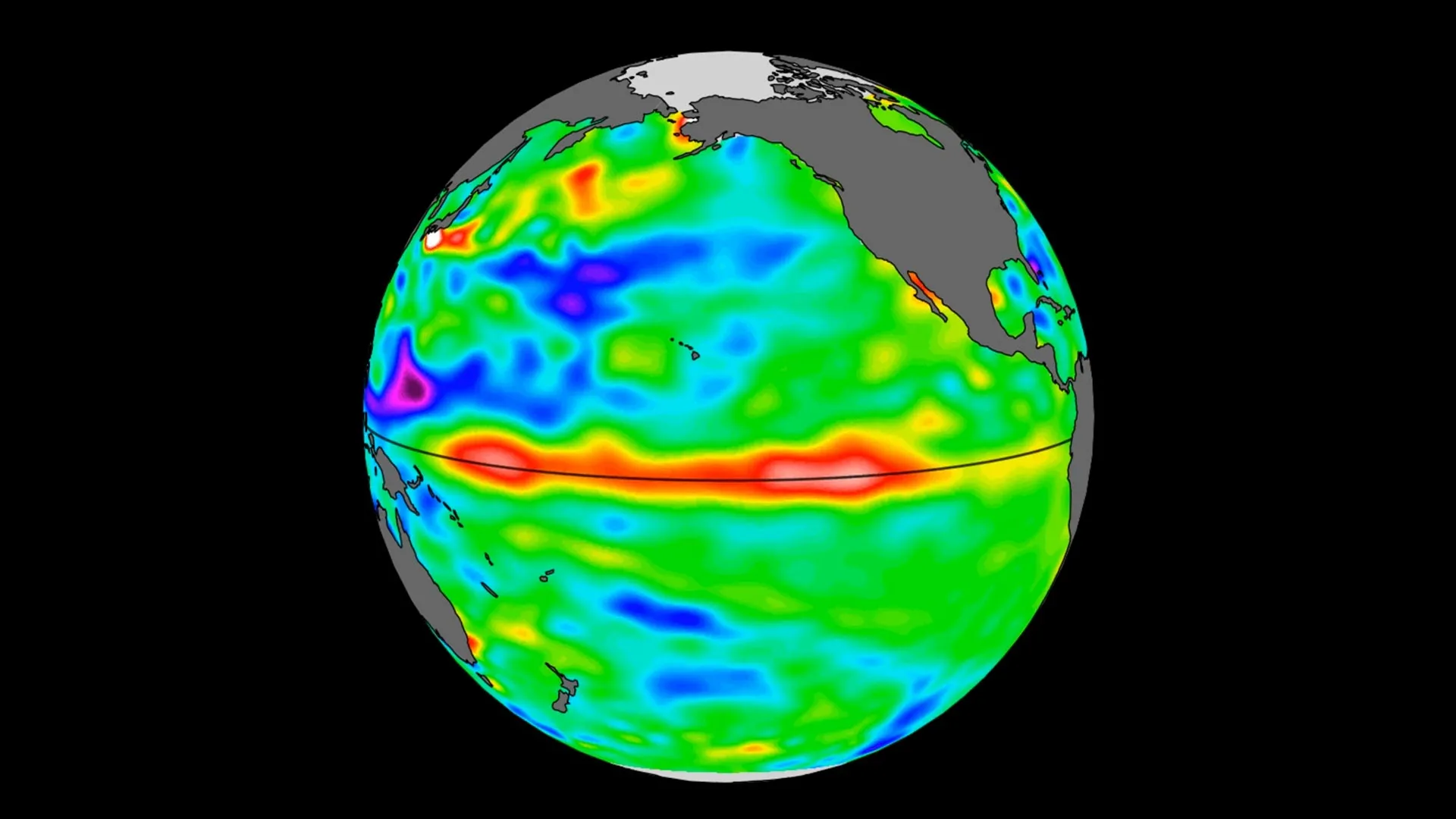
As the climate continues to shift, the eyes of the global scientific community are fixed on the expansive, shimmering surface of the Pacific Ocean. NASA, in close partnership with the European Space Agency (ESA) and international atmospheric organizations, is tracking a significant buildup of warm water that signals the potential arrival of a major El Niño event later this year. By utilizing the cutting-edge Sentinel-6 Michael Freilich satellite, researchers have identified a broad, hundreds-of-miles-wide expanse of unusually warm water migrating toward the South American coastline.
This phenomenon is not merely a localized aquatic event; it is a primary driver of global weather patterns. Because water expands as it warms, scientists use satellite altimetry—measuring the height of the sea surface with millimeter-level precision—to "see" heat stored deep beneath the surface. As this thermal energy moves eastward, it threatens to disrupt agricultural cycles, transportation networks, and water security on a global scale.
The Mechanics of a Climate Disruptor: Kelvin Waves
To understand why the Pacific is currently being monitored with such intensity, one must look at the physics of the ocean. The development of an El Niño event is often heralded by the appearance of "Kelvin waves"—massive, warm-water oscillations that traverse the Pacific Basin.
The Role of Atmospheric Reversals
Typically, equatorial winds blow consistently from east to west, pushing warm surface waters toward the western Pacific and keeping the waters near South America relatively cool. However, when these wind patterns falter or reverse—shifting into westerly gusts—the equilibrium is broken. This weakening of the easterly "trade winds" allows the built-up reservoir of warm tropical water in the western Pacific to surge eastward.
Tracking the Wave
This movement creates a wave of warm water that travels across the ocean over several weeks. As it approaches the coasts of Colombia, Ecuador, and Peru, it causes a measurable rise in local sea levels. When multiple Kelvin waves occur in succession over a period of months, the thermal accumulation becomes significant enough to trigger an El Niño event, fundamentally altering the interaction between the ocean and the atmosphere.
Chronology of the 2024-2025 Observations
The current monitoring effort has provided an unprecedented look at the gestation period of this climate phenomenon.
- Late January: Sentinel-6 Michael Freilich detects the formation of a small, preliminary Kelvin wave near the vicinity of Micronesia. While this wave eventually dissipated by mid-February, it served as a critical early warning sign for researchers.
- Early March: A second, more robust wave began to take shape. Unlike its predecessor, this wave maintained its integrity and began a steady, eastward migration across the Pacific.
- Mid-May: The data confirmed the impact of this movement. Sea levels near the Peruvian coast were recorded at more than 5.9 inches (15 centimeters) above long-term averages, a stark indicator of the thermal influx reaching the South American continent.
According to researchers at NASA’s Jet Propulsion Laboratory (JPL), while the current event began slightly later in the calendar year compared to the historic El Niño events of 1997 and 2015, the rate of development is beginning to mirror those extreme instances.
Scientific Perspectives: Insights from the Experts
The precision with which we can now observe these shifts is a testament to decades of international collaboration.
Josh Willis, a sea level researcher at JPL and project scientist for the Sentinel-6 mission, notes the complexity of the current situation. "While this year’s event started a bit later than the big El Niños of the past, it’s beginning to catch up," Willis explained. "We are in a period of observation where the scale of the impact remains to be seen. Every event has its own unique signature, but the data is clear: the energy is accumulating."
Nadya Vinogradova Shiffer, lead program scientist at NASA Headquarters, emphasizes the broader societal utility of this research. "NASA’s observation of El Niño uses sea level satellites to track massive Kelvin waves, capture changes in Earth’s ocean thermodynamics, and improve forecasts of weather extremes. This data is vital for helping communities prepare for coastal hazards and resource volatility. We are effectively reading the ocean’s story as it unfolds in real-time."
Implications: A Global Ripple Effect
The term "El Niño," meaning "The Boy" or the Christ Child, was coined in the 1600s by South American fishermen who noticed that the waters off the coast grew warmer around the Christmas season, often coinciding with a collapse in local fish populations. Today, we know the consequences are far more pervasive.
Altering the Atmospheric Highway
When surface temperatures in the central and eastern Pacific rise, they act as a massive heat engine, shifting the position of the jet stream. The jet stream essentially acts as a highway for storm systems; when it is pushed out of its normal track, the resulting weather patterns are drastically altered.
Regions that usually experience mild weather may find themselves subject to prolonged, catastrophic rainfall, while other areas—which depend on regular precipitation—may face severe, multi-year droughts. The intensity of these impacts is directly correlated to the strength of the El Niño. A moderate event might cause regional flooding, but a strong event, like that of 2015-2016, can trigger global consequences, from drought in sub-Saharan Africa to intense flooding in the western United States.
The Human and Economic Cost
The economic implications are profound. Agriculture is perhaps the most vulnerable sector, as crop yields for staples like wheat, rice, and corn depend on predictable rainfall patterns. Furthermore, changes in sea surface temperatures disrupt marine ecosystems, impacting the global fishing industry. As water levels rise and storm tracks shift, infrastructure in coastal regions—already stressed by climate change—faces increased risk from storm surges and erosion.
The Sentinel-6 Legacy: A Continuity of Science
The ability to track these developments is not the result of a single mission, but a decades-long commitment to space-based oceanography. The Sentinel-6 Michael Freilich satellite serves as the current "reference mission," anchoring a data record that began in 1992 with the TOPEX/Poseidon mission.
A Multilateral Technological Marvel
The Sentinel-6/Jason-CS mission represents the pinnacle of international cooperation. It is a joint effort between:
- NASA: Providing critical instrumentation and launch services.
- ESA: Leading the mission under the E.U. Copernicus Programme.
- EUMETSAT: Managing the operation and data processing.
- NOAA: Providing ongoing support and integration.
- CNES: Contributing essential technical and performance expertise.
The instrumentation aboard these satellites is incredibly sophisticated. JPL contributed three primary instruments: the Advanced Microwave Radiometer (to account for water vapor in the atmosphere), the Global Navigation Satellite System (for precise positioning), and the Laser Retroreflector Array (for ground-based laser tracking).
Looking toward the future, the mission is designed for longevity. The launch of Sentinel-6B in November 2025 ensures that this vital stream of data will continue uninterrupted, with the newer satellite expected to assume primary mission control by the end of 2026.
Conclusion: Preparing for an Uncertain Future
As we move into the latter half of the year, the world awaits the final form of this El Niño. While researchers can track the Kelvin waves and model the sea level rise, the exact manifestation of the weather patterns remains a complex, evolving puzzle.
"Every El Niño is different," notes Severine Fournier, deputy project scientist for the mission. "But they almost always make for a hot year and big changes in rainfall in parts of the globe."
By combining the historical record of the last thirty years with the real-time, high-precision data provided by the Sentinel-6 fleet, scientists are better equipped than ever to provide the warnings necessary to mitigate the impacts of these powerful climate cycles. As the ocean continues to store and release this vast amount of heat, the mission continues—a silent, orbital vigil over the pulse of our planet.