Week Ending June 26, 2026: White House Derails Bipartisan Housing Bill, Sending Shockwaves Across Capitol Hill
Posted June 26, 2026, at 4:53 PM
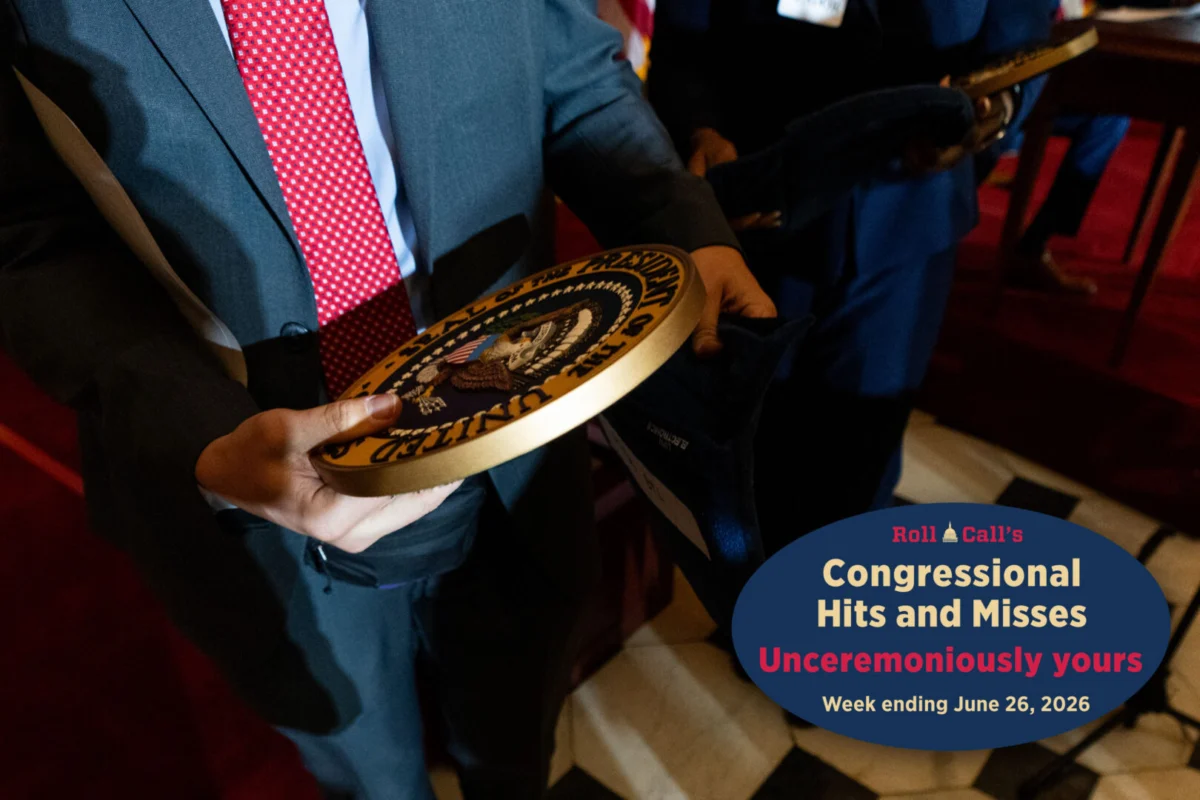
Capitol Hill was plunged into disarray this week following President Donald Trump’s stunning and abrupt cancellation of a scheduled signing ceremony for "The National Affordable Housing Infrastructure Act of 2026." The bipartisan bill, hailed as a monumental legislative achievement addressing a deepening national housing crisis, was moments away from becoming law when the White House issued a terse statement announcing the President would not sign it, effectively derailing months of painstaking negotiations and legislative effort. The unexpected move has ignited a firestorm of criticism, raising profound questions about executive reliability, the future of bipartisan cooperation, and the fate of critical legislation designed to bring relief to millions of Americans.
The cancellation, which occurred mere hours before lawmakers, housing advocates, and industry leaders were set to gather in the East Room, left a palpable sense of bewilderment and frustration in its wake. The bill, a rare example of significant bipartisan consensus in a deeply divided Congress, aimed to unlock federal funding, streamline regulatory processes, and incentivize the construction of millions of affordable housing units across the nation. Its sudden demise marks a significant setback for both parties and a sobering reminder of the volatile political landscape in Washington.
Main Facts: A Signature Moment Turned Sour
On Friday, June 26, 2026, at approximately 10:30 AM EST, the White House Press Office issued an unexpected advisory: President Donald Trump’s scheduled 2:00 PM signing ceremony for "The National Affordable Housing Infrastructure Act of 2026" was canceled. No immediate explanation was provided beyond a vague reference to the President needing "further review" of the legislation. This sudden reversal came after weeks of public anticipation, with both Republican and Democratic leadership lauding the bill as a triumph of compromise and effective governance.
The legislation, which had passed both chambers of Congress with overwhelming majorities – 78-22 in the Senate and 310-125 in the House – represented a consensus-driven approach to tackling a housing affordability crisis that has steadily worsened over the past decade. It proposed a multi-pronged strategy, including the expansion of Low-Income Housing Tax Credits, federal matching grants for states that streamline restrictive zoning laws, and a new infrastructure fund specifically earmarked for community development projects related to housing. Economists and housing experts had projected the bill could facilitate the construction or rehabilitation of over 3 million affordable housing units within five years, creating an estimated 1.5 million jobs and injecting billions into local economies.
The cancellation, announced as congressional leaders and bill sponsors were already en route to the White House, sent a ripple of confusion and anger through the halls of power. Invitations had been sent, celebratory remarks prepared, and the stage set for what many hoped would be a rare moment of unity and progress. Instead, the event transformed into a stark illustration of political unpredictability, leaving the future of a vital piece of legislation hanging precariously in the balance.
Chronology: The Road to a Near Miss
The journey of "The National Affordable Housing Infrastructure Act of 2026" was a long and arduous one, born out of years of escalating crisis and persistent advocacy.
Years of Mounting Crisis (2018-2025): The seeds of this legislation were sown in the growing realization that America’s housing market was fundamentally broken for a significant portion of its population. Data consistently showed a widening gap between wages and housing costs, leading to increased homelessness, severe housing insecurity, and an exodus from major urban centers. Rent burdens for low-income families often exceeded 50% of their income, and the national shortage of affordable housing units was estimated to be in the tens of millions. Previous attempts at comprehensive housing reform often faltered due to partisan disagreements over federal spending, regulatory oversight, and the role of local governments.
Bipartisan Incubation (Late 2024 – Early 2025): Recognizing the urgency, a bipartisan working group formed in late 2024, spearheaded by Senator Maria Rodriguez (D-CA) and Representative John Harrison (R-TX). Both lawmakers represented diverse districts grappling with acute housing challenges, from urban homelessness to rural housing scarcity. Their initial framework focused on areas of common ground: incentivizing private sector investment, reducing bureaucratic hurdles, and empowering local communities with flexible federal resources. Crucially, the bill avoided direct federal construction, a point of contention for many conservatives, instead focusing on market-based solutions augmented by strategic federal support.
Legislative Gauntlet (Mid-2025 – May 2026): Over the next year, the bill, initially dubbed the "Community Housing Revitalization Initiative," underwent numerous revisions, committee hearings, and markups. It navigated fierce lobbying from various interest groups, including real estate developers, environmental organizations, and local government associations. Key compromises included a cap on certain federal matching grants to ensure fiscal responsibility and the inclusion of specific provisions addressing housing needs for veterans and rural communities. The final version, rebranded "The National Affordable Housing Infrastructure Act of 2026," emerged as a carefully balanced package that garnered broad support.
Passage and Celebration (May – June 2026): The bill’s passage through the House in late May and the Senate in early June was met with widespread relief and cautious optimism. Lawmakers from both sides of the aisle, along with President Trump, had publicly praised the legislation as a testament to what could be achieved when Washington set aside partisan differences for the common good. White House officials had even participated in some of the final negotiation rounds, signaling strong executive support. Preparations for the signing ceremony began immediately, with a date of June 26th selected to cap off a successful legislative week before the July 4th recess.
The Day of Cancellation (June 26, 2026): The morning of the scheduled signing began with a buzz of excitement. Congressional staffers and White House aides were making final arrangements. Senator Rodriguez and Representative Harrison, along with dozens of their colleagues, were dressing for the occasion, many having already traveled to the White House complex. Housing advocates who had fought for decades for such legislation were converging on Washington, eager to witness history. Then, at 10:30 AM, the advisory landed: "Due to unforeseen circumstances and a need for further presidential review, the signing ceremony for H.R. 3456, The National Affordable Housing Infrastructure Act of 2026, has been canceled. A new date will be announced if and when appropriate." The news spread like wildfire, instantly transforming anticipation into dismay and confusion. Phones began ringing off the hook, as bewildered legislators and press scrambled for answers that were not forthcoming.
Supporting Data: The Nation’s Housing Imperative
The urgency surrounding "The National Affordable Housing Infrastructure Act of 2026" was underscored by stark realities facing the nation in 2026. The bill was not merely a legislative preference but a response to a critical societal need.
The Scale of the Crisis: According to a 2025 report by the National Low Income Housing Coalition, there was a deficit of approximately 7.3 million affordable rental homes for extremely low-income renters nationwide. This figure had grown by nearly 15% since 2020. The median rent in major metropolitan areas had increased by over 30% in the last five years, far outpacing wage growth. Homeownership, particularly for younger generations and minority groups, was becoming an increasingly unattainable dream, with the national median home price exceeding $450,000, while the average first-time homebuyer’s salary stagnated.
Economic Ramifications: The housing crisis wasn’t just a social issue; it was an economic drag. Businesses in high-cost areas struggled to attract and retain workers who couldn’t afford to live near their jobs. Long commutes exacerbated environmental concerns and reduced productivity. Furthermore, the lack of affordable housing contributed to increased healthcare costs, poorer educational outcomes for children, and higher rates of poverty. The bipartisan bill aimed to mitigate these ripple effects by stimulating construction, stabilizing communities, and fostering local economic growth. The Congressional Budget Office (CBO) had projected that the bill’s provisions would lead to a net economic gain of $150 billion over ten years, primarily through increased construction activity, job creation, and reduced social welfare costs associated with homelessness and housing insecurity.
Political Climate: The political landscape in 2026 was marked by an upcoming midterm election cycle, with both parties keenly aware of voter frustrations over economic issues, including housing. President Trump, in his second term, had often touted his administration’s focus on "American prosperity" and "getting things done." The housing bill was seen by many as a tangible win that could appeal to a broad cross-section of voters, demonstrating effective governance despite the often-contentious political environment. Its bipartisan nature was particularly significant, offering a counter-narrative to the prevailing narrative of gridlock. The fact that such a widely supported bill could be derailed at the eleventh hour has injected a new layer of uncertainty into an already volatile political year.
Official Responses: A Cascade of Disappointment and Outrage
The immediate aftermath of the cancellation was characterized by a flurry of confused communications, angry denunciations, and calls for clarity.
The White House’s Evolving Explanation: Initially, the White House offered no specific reason for the cancellation, citing only "further presidential review." By late afternoon, however, Press Secretary Sarah Jenkins held an impromptu briefing, attempting to clarify the situation. "The President," Jenkins stated, "upon final review of the bill’s intricate details, determined that certain provisions did not align with his vision for aggressive deregulation and maximizing private sector efficiency. Specifically, he believes the current framework includes overly bureaucratic grant processes and insufficient incentives for market-driven solutions. He is committed to addressing the housing crisis, but only through legislation that truly unleashes American ingenuity without government overreach." When pressed for specifics, Jenkins remained vague, suggesting the President felt the bill was "too incremental" and preferred a "more transformative approach." This explanation, however, directly contradicted previous statements of support from the administration and offered no immediate path forward.
Congressional Leadership Reacts: The reaction from Capitol Hill was swift and largely condemnatory, cutting across party lines.
- Senator Maria Rodriguez (D-CA), Lead Sponsor: "I am utterly stunned and deeply disappointed. We spent months, years, building a bipartisan coalition around a bill that would deliver real relief to millions. For the President to pull the rug out from under us at the eleventh hour, without even a courtesy call to the bill’s sponsors, is an act of political cowardice and a profound betrayal of the American people. This isn’t about policy; it’s about ego and a disregard for the legislative process."
- Representative John Harrison (R-TX), Lead Sponsor: "This is not how we govern. This bill represented the best of Washington – Democrats and Republicans coming together to solve a real problem. The President’s actions today undermine every effort to find common ground and make it incredibly difficult to trust future White House commitments. My constituents, and millions of others, were counting on this. We demand a full and transparent explanation, and a clear path forward."
- Senate Majority Leader Mitch McConnell (R-KY): In a rare public rebuke of a President from his own party, McConnell issued a statement expressing "serious concern" and "disappointment" over the cancellation. "The Senate worked diligently to craft a responsible, bipartisan solution to a pressing national issue. The executive branch’s sudden reversal on a bill that garnered such broad support, and with which the administration had previously engaged constructively, creates an unfortunate precedent and complicates future legislative efforts."
- House Speaker Nancy Pelosi (D-CA): "President Trump’s capricious decision to abandon ‘The National Affordable Housing Infrastructure Act’ is an affront to democracy and a cruel blow to families struggling to keep a roof over their heads. This is not about ‘further review’; it is about a President who prioritizes political theater over the welfare of the American people. We will explore every avenue to ensure this vital legislation ultimately becomes law."
Stakeholder Outcry: Housing advocacy groups, industry associations, and local government leaders expressed profound frustration and alarm.
- David Chen, CEO of the National Housing Alliance: "Today’s cancellation is a devastating blow to the millions of families on the brink of housing insecurity. This bill was our best hope in a generation. The President’s vague excuses do not justify abandoning a bipartisan solution to a national crisis. We urge Congress to override this decision or find another path to enact this essential legislation."
- Sarah Miller, President of the Association of American Cities: "Our cities are on the front lines of the housing crisis. This bill provided desperately needed tools and resources. The President’s decision undermines local efforts and leaves communities scrambling. We need federal partners, not political obstruction."
- Construction Industry Leaders: Many in the construction and real estate sectors, who stood to benefit from the bill’s incentives, also voiced disappointment, noting the lost economic opportunity and uncertainty for planned projects.
Implications: A Cloud Over Washington
The abrupt cancellation of "The National Affordable Housing Infrastructure Act of 2026" carries far-reaching implications for the legislative agenda, inter-branch relations, and the broader political landscape.
Future of the Housing Bill: The most immediate question is whether the bill can be salvaged. Without the President’s signature, the bill is effectively dead in its current form. Congress could attempt to override a presidential veto if he were to officially veto it, but that would require a two-thirds majority in both chambers, a high bar even for a popular bill. The more likely scenario is that lawmakers will attempt to negotiate a revised version, but the trust deficit created by this episode makes such a path exceedingly difficult. Any new negotiations would likely involve the White House making specific demands, potentially gutting key bipartisan compromises and reigniting partisan divisions. Housing advocates fear that the momentum gained over years could be lost, leaving the nation’s housing crisis to fester further.
Damage to Bipartisan Cooperation: This incident serves as a stark warning to lawmakers contemplating future bipartisan efforts. If a bill that passed with such overwhelming support, and with initial White House endorsement, can be summarily canceled at the last minute, it casts a long shadow over the reliability of executive commitments. Lawmakers, particularly those in the minority party, may be less willing to invest political capital and compromise on future legislation if they perceive a high risk of presidential capriciousness. This could further entrench partisan gridlock, making it even harder to address other critical national issues, from infrastructure to healthcare.
Erosion of Executive-Legislative Trust: The lack of communication and the last-minute nature of the cancellation have severely strained relations between the White House and Congress. Congressional leaders, who felt blindsided, are likely to approach future negotiations with deep skepticism. This erosion of trust could manifest in more aggressive oversight, increased reluctance to grant executive priorities, and a general cooling of inter-branch cooperation, especially as the 2026 midterm elections approach.
Political Fallout for President Trump: For President Trump, the move could have mixed political consequences. While his base might applaud a decision framed as standing firm against "government overreach" or "bad deals," it risks alienating moderate voters and even some within his own party who championed the bill as a substantive achievement. The narrative of "getting things done" could be undermined by the perception of creating chaos. Opponents will undoubtedly seize on the incident as evidence of instability and a disregard for established processes, potentially impacting the midterms and any future political ambitions.
Broader Policy Implications: Beyond housing, the cancellation signals a potential shift in the administration’s approach to legislative victories. It suggests an increased willingness to exercise executive prerogative, even at the cost of bipartisan goodwill, and to demand more stringent adherence to specific ideological tenets, even on bills that have already passed both chambers. This could lead to a more unpredictable policy environment, where legislative outcomes are less certain until the very last moment.
As the week closes, Capitol Hill remains reeling from the unexpected turn of events. The dreams of millions for more affordable housing have been deferred, and the path forward for bipartisan governance appears more treacherous than ever. The focus now shifts to whether Congress can muster the will to resuscitate "The National Affordable Housing Infrastructure Act" or if this will be remembered as a landmark opportunity lost to the unpredictable currents of Washington politics.