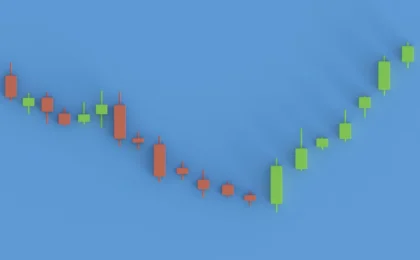
The mantra of "buy low, sell high" stands as the bedrock of sound financial theory, yet it remains one of the most difficult disciplines for human investors to master. When the markets are calm, the logic seems infallible. However, when the floor drops out of a portfolio or a sudden rally ignites the fear of missing out (FOMO), logic frequently surrenders to the primitive, emotional impulses that have guided human survival for millennia. For retirees, this emotional volatility is not just a psychological nuisance; it is a direct threat to the longevity of their life savings.
The Psychology of the Panic Sell
Financial history is littered with cautionary tales of investors who allowed emotion to dictate their strategy. The year 2020 serves as a stark, modern example. As the global pandemic sent shockwaves through the financial markets, a significant cohort of investors abandoned their long-term strategies, liquidating equity holdings in favor of the perceived safety of money market accounts.
While the move offered temporary comfort during the initial crash, the subsequent rapid recovery left these investors on the sidelines. By the time they realized the market had stabilized, they had missed the rebound, locking in their losses and failing to participate in the ensuing recovery. This phenomenon, often termed "emotional capitulation," turns temporary market fluctuations into permanent capital loss.
The Anatomy of Market Volatility
Volatility is the natural state of the financial markets, fueled by an endless cycle of unpredictable catalysts. From geopolitical instability and regional conflicts to natural disasters, government shutdowns, and surprising election cycles, there is always a headline capable of inducing fear.
Chronology of Market Uncertainty
The impact of these events is rarely uniform. For instance, midterm elections historically create a unique period of uncertainty. Investors often brace for volatility in the lead-up to the polls, reacting to political rhetoric and policy speculation. While data suggests that markets, on average, perform well in the aftermath of midterm elections, this historical trend offers little solace to an individual investor watching their retirement account value dip by double digits in a single quarter.
The primary issue is not the occurrence of these events, but the investor’s reaction to them. When individuals view their portfolio through the lens of daily news cycles rather than long-term objectives, they inevitably drift toward reactionary decision-making.
Risk Tolerance vs. Financial Reality
A critical disconnect often exists between an investor’s perceived risk tolerance and their actual financial capacity for loss. Younger investors, who may have three decades of earning potential ahead of them, can afford to treat a market crash as a "buying opportunity." They have the luxury of time, allowing their portfolios to recover naturally from cyclical downturns.
For retirees, the landscape is fundamentally different. They are no longer in the accumulation phase; they are in the distribution phase. They are systematically withdrawing funds to cover essential living expenses, often during the exact moments when the market is depressed. This creates the "sequence of returns risk"—the danger that a significant market downturn will occur during the early years of retirement, significantly reducing the sustainability of a portfolio that is being continuously depleted.
The "Bucket" Strategy: A Tactical Defense
To mitigate the impact of volatility, many financial planners advocate for a "bucket" strategy. This method involves categorizing assets into distinct groups based on their purpose and time horizon:
- The Liquidity Bucket: This represents short-term needs, typically covering one to two years of living expenses. These funds are held in cash or high-quality, short-term instruments. Because this money is "protected" from market swings, the retiree does not need to sell growth-oriented assets during a market crash to pay for their groceries or utility bills.
- The Income Bucket: This segment is designed for medium-term goals, typically spanning three to seven years. It is often comprised of bonds, dividend-paying stocks, or fixed-income products that offer a balance between growth and stability.
- The Growth Bucket: This represents long-term assets intended for the later stages of retirement or estate planning. Because this money is not needed for several years, it can withstand the higher volatility of the equity markets, allowing it to grow and combat the erosive effects of inflation.
By compartmentalizing assets, the retiree changes their perspective. When the market drops, they are no longer looking at their entire life savings being "at risk"; they are looking at only a portion of their assets, while their immediate living expenses remain secure in the liquidity bucket.
The Role of Professional Guidance
The inherent difficulty in managing one’s own money during a crisis is that the investor is too close to the situation to be objective. This is where the role of a professional advisor becomes paramount.
Much like a medical professional, a financial advisor’s effectiveness depends on the quality of the information they receive. A holistic view of an individual’s financial picture—including assets, liabilities, tax considerations, and legacy goals—is essential. Advisors often utilize sophisticated tools and risk-assessment questionnaires to quantify an investor’s "pain threshold."
Interestingly, these assessments often reveal that married couples have vastly different tolerances for risk. One spouse may prioritize growth, while the other prioritizes capital preservation. Bridging this gap is essential to avoid the "emotional tug-of-war" that can occur when a portfolio experiences a correction. An advisor acts as a mediator, ensuring both parties are comfortable with the strategy and committed to the plan, even when the markets become volatile.
Evaluating the Implications of Market Swings
The consequences of poor decision-making during market volatility are profound. Consider the aftermath of the 2008 financial crisis: the S&P 500 required more than five years to return to its pre-crash peak. For a retiree who withdrew significant sums during that recovery period, the impact on their portfolio’s lifespan could be devastating.
However, "staying the course" does not mean being passive. It means being prepared. It implies that before the next storm hits, the investor has already:
- Stress-tested their portfolio against various economic scenarios.
- Aligned their asset allocation with their actual capacity for loss, not just their desire for returns.
- Established a "cash buffer" that prevents the necessity of selling assets at depressed prices.
Conclusion: Setting Aside Emotion for Long-Term Success
Market volatility is not a bug in the system; it is a feature of the market. It is the price investors pay for the opportunity to achieve long-term growth. While no one possesses a crystal ball capable of predicting the exact timing of market peaks and troughs, investors can control how they prepare for them.
By transitioning from an emotional, reactive mindset to a structured, goal-oriented strategy, retirees can navigate the complexities of the financial markets with confidence. The goal is not to eliminate risk—which is impossible—but to manage it in a way that allows the retiree to sleep at night.
In the final analysis, the most successful investors are often those who spend less time obsessing over the daily ticker and more time focusing on their personal financial plan. When you have the right team in your corner and a clear, logical structure in place, the ups and downs of the market become secondary to the realization of your long-term retirement objectives.
Disclaimer: This article presents the views of the contributing adviser and does not necessarily reflect the position of the editorial staff. Always verify the credentials of any financial professional through the SEC’s Investment Adviser Public Disclosure (IAPD) website or FINRA’s BrokerCheck. All investment involves risk, including the loss of principal.