The landscape of college football shifted dramatically this weekend, as a chaotic slate of games decimated the stability of the AP Top 25. After an opening weekend that largely adhered to the script—with heavy favorites flexing their muscles and few surprises—Week 2 proved that the preseason hierarchy was built on fragile foundations. As the dust settles on a Saturday defined by upset bids, late-game heroics, and defensive masterclasses, the task for AP voters has transitioned from simple oversight to an exercise in complex evaluation.
The King is Dead, Long Live the King: Texas Ascends
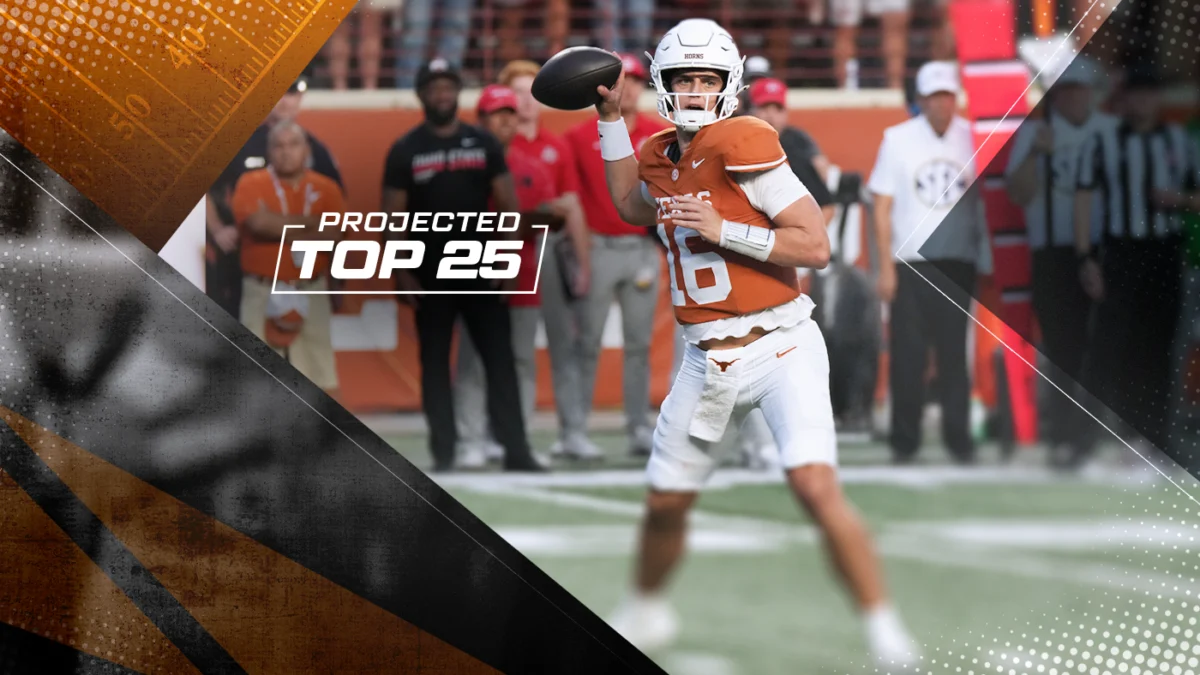
The headline of the weekend—and perhaps the defining moment of the early season—occurred in a top-five clash that lived up to the massive anticipation. Texas, trailing for much of the contest, orchestrated a masterful 21-point fourth-quarter surge to topple the No. 1 ranked Ohio State Buckeyes.
In a showdown that functioned as an instant classic, the Longhorns displayed the kind of championship pedigree that voters crave. Steve Sarkisian’s squad, fueled by a breakout performance from Arch Manning, effectively snatched the belt from the reigning monarchs. The narrative shift is profound: Texas is now the team to beat, while Ohio State faces the uncomfortable reality of falling from grace. While the Buckeyes aren’t expected to plummet, the loss creates a vacuum at the top of the polls, signaling that the road to the College Football Playoff remains as treacherous as ever.
A Chronology of Chaos: Week 2 Highlights
The volatility of the week wasn’t limited to the top-tier matchup in Austin. Across the country, programs that were once considered pillars of consistency saw their footing slip.
- The Oregon Collapse: Perhaps the most shocking result of the weekend took place in Stillwater, where Oklahoma State stunned the Oregon Ducks. Having been a darling of the preseason polls—with over a dozen voters tabbing them as the nation’s top team—the Ducks now find themselves at 1-1. This loss snaps an impressive streak of top-eight appearances for Oregon dating back to October 2023, leaving voters to debate whether the Ducks deserve a "mulligan" or if they are truly flawed.
- The Michigan Resurgence: If consistency is the goal, Michigan has defied the narrative. After a dismal opening performance that saw them kicked out of the rankings entirely, the Wolverines roared back to secure a gritty 17-10 victory over the No. 11 ranked Oklahoma Sooners. The win forces a re-evaluation of both programs: Michigan looks like a team that has found its identity, while Oklahoma’s early-season struggles suggest a potential cratering of their playoff aspirations.
- SEC Dominance and Survival: While some favorites stumbled, others asserted dominance. Georgia continued to look the part of a titan, dismantling Western Kentucky 70-0. Elsewhere, Alabama avoided an upset scare against Kentucky, relying on a 32-0 second-half shutout to remind the nation that their high-end talent can flip a game’s momentum in an instant.
Supporting Data: By the Numbers
The statistical anomalies from this weekend underscore why the AP poll will undergo significant revisions.
Miami’s offensive output was nothing short of historic. In their most recent victory, the Hurricanes recorded 42 first downs and 856 total yards—both single-game school records—while Darian Mensah solidified his Heisman candidacy with a near-perfect 14-of-15 passing performance. This level of offensive efficiency, coupled with the regression of teams like Oregon, makes a strong case for Miami to climb significantly in the coming days.
Similarly, the turnover battle proved decisive for Texas A&M, who utilized a +3 turnover margin and two defensive pick-sixes to overcome Arizona State. While the win wasn’t "aesthetic," it served as a functional victory that allows the Aggies to hold their ground in a crowded top 10. Conversely, Tennessee’s path to victory was paved by the ground game; DeSean Bishop’s 190-yard, two-touchdown performance provided the necessary spark to navigate a challenging road environment against Georgia Tech.
Evaluating the Voters’ Dilemma
The central challenge for voters this week is the tension between reputation and performance. In the past, top-tier teams were often granted a "grace period" following an early-season loss. However, with the expanded playoff format, the margin for error is shrinking.
"Voters are tasked with rewarding performance over reputation," says one industry analyst. "But there is usually a human element of forgiveness for programs that have shown excellence in the past. The question is: at what point does a ‘speed bump’ become a trend?"
The case of Michigan illustrates this perfectly. They were punished heavily for a poor Week 1, but their bounce-back win against a ranked Oklahoma team provides voters with a clear, objective reason to reward them. In contrast, Oregon’s loss to Oklahoma State, while arguably a quality defeat, forces voters to reconcile their preseason expectations with the reality of a 1-1 record.
Projected AP Top 25 Rankings
Based on the weekend’s outcomes, here is the projected hierarchy for the upcoming poll:
- Texas: The new standard-bearer after a legendary fourth-quarter comeback.
- Georgia: Unbeaten and dominant, awaiting a true power-conference test.
- Notre Dame: Efficient, clinical, and increasingly difficult to ignore.
- Indiana: Their offense remains a juggernaut, steamrolling opponents with ease.
- Miami: A record-breaking offensive display vaults them into the top five.
- LSU: A slow start was corrected with a decisive win over Louisiana Tech.
- Ohio State: A minor fall from the top spot, but they remain a formidable threat.
- Ole Miss: Handled their business against Charlotte with ease.
- Texas A&M: Held serve in a physical, turnover-heavy matchup.
- Alabama: Proved they can close out games with a dominant second half.
- USC: Remained undefeated with a solid offensive performance.
- Texas Tech: Survived a road scare to remain in the top 15.
- BYU: Earned a massive quality win against Arizona to spark their conference campaign.
- Penn State: A steady, status-quo performance keeps them climbing.
- SMU: Continues to handle business efficiently.
- Tennessee: Overcame a shaky passing performance with a dominant run game.
- Michigan: A triumphant return to the rankings after a statement win.
- Utah: An encouraging smash-win in Salt Lake City boosts their stock.
- Missouri: A dominant performance in the "Border War" impresses voters.
- Iowa: Survived a rivalry test; voters remain cautious but appreciative.
- Oregon: A significant drop, but they possess enough talent to remain ranked.
- Houston: Steady, awaiting a major test next week.
- Louisville: Impressive offensive showing keeps them in the conversation.
- Virginia: Consistent play over two weeks earns them a spot.
- Boise State: A statement win over Memphis pushes them into the Top 25.
The Long-Term Implications
As we look ahead, the implications of this weekend are far-reaching. The fall of Oklahoma and the rise of programs like Boise State and Michigan highlight the fluidity of the 2026 season. For teams like Oregon and Ohio State, the focus shifts to internal adjustments and the necessity of winning out. For Texas and Georgia, the goal is simple: maintain the standard and avoid the complacency that claimed the No. 1 spot this weekend.
The road to the postseason has been laid bare as a gauntlet. Voters will continue to weigh the "eye test" against the "win column," but if this weekend taught us anything, it’s that in modern college football, no lead is safe, no ranking is permanent, and every Saturday presents a new opportunity for the hierarchy to be rewritten.