Introduction: A Region Under Siege
The humanitarian landscape in the Russian-occupied territories of Ukraine’s Kherson region has deteriorated into what international observers are now describing as a full-scale crisis. According to a scathing report released Thursday by Human Rights Watch (HRW), thousands of Ukrainian civilians remain effectively imprisoned in frontline settlements, caught between the crushing reality of Russian occupation and the indiscriminate dangers of ongoing kinetic warfare.
The situation, particularly in towns like Oleshky, Hola Prystan, and the Zburivka communities, is characterized by a complete breakdown of essential infrastructure, pervasive food and medicine shortages, and a lethal landscape dominated by landmines and short-range drone strikes. As the front lines remain static and volatile, the plight of those unable or unwilling to leave has become a focal point of international human rights concern.
Chronology: The Erosion of Safety
The trajectory of the suffering in Kherson can be traced back to the early days of the full-scale invasion in February 2022.
- February 2022: Russian forces occupy key administrative centers in the Kherson region, including Oleshky, establishing military control and checkpoints.
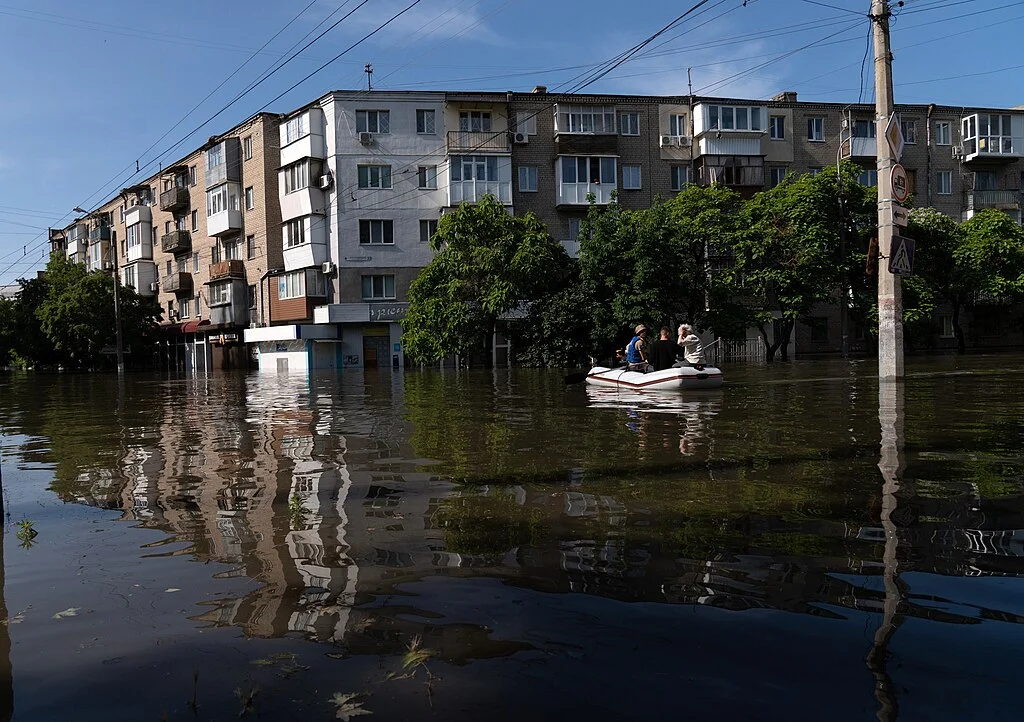
- June 2023: The destruction of the Kakhovka Hydroelectric Power Plant causes massive flooding, displacing thousands and permanently altering the local environment, leaving many areas uninhabitable and infrastructure crippled.
- Late 2023–Early 2024: Frontline dynamics stabilize, turning the region into a "grey zone" where civilians are trapped between Russian defensive positions and Ukrainian counter-offensive efforts.
- May 2026: The UN Human Rights Monitoring Mission in Ukraine (HRMMU) records the highest monthly civilian casualty toll since April 2022, signaling a violent escalation in the region.
- June 2026: Human Rights Watch and the UN report that approximately 6,000 civilians remain trapped in frontline settlements, with negotiations for humanitarian corridors currently yielding no results.
Supporting Data: The Scale of the Crisis
The data provided by international monitors paints a harrowing picture of life in the occupied south. The UN Human Rights Monitoring Mission in Ukraine has confirmed that May 2026 was the deadliest month for civilians in over four years. During this period, at least 275 civilians were killed, and a staggering 1,763 were injured. Investigators identified the Russian military’s use of high-impact weaponry in dense urban environments as the primary driver of these figures.
The demographic breakdown is particularly alarming. Of the 6,000 civilians estimated to be living in these frontline "pockets," more than 180 are children. These residents are effectively cut off from the outside world. The HRMMU also highlighted a disturbing trend: a significant increase in civilian casualties caused by short-range, "first-person view" (FPV) drones. These drones have turned daily survival tasks—such as seeking water or medical aid—into high-risk activities, as operators often fail to distinguish between combatants and non-combatants.
For those attempting to flee, the journey is fraught with peril. Displaced persons who managed to escape Oleshky have recounted "unpredictable procedures" at Russian checkpoints, where individuals are subject to arbitrary detention, interrogation, and physical abuse. Many who attempt to navigate the terrain independently are killed or maimed by the dense network of antipersonnel mines strewn across the landscape.
Official Responses and International Obligations
The international community, led by Human Rights Watch and the United Nations, has issued urgent calls for both Russia and Ukraine to adhere to the tenets of international humanitarian law.
The Human Rights Watch Position
Human Rights Watch has been explicit in its demands: "Russian and Ukrainian forces should immediately cease using antipersonnel mines and take all feasible measures to protect civilians from mines—including by issuing effective warnings, sharing information about contaminated areas, and providing mine risk education."
HRW emphasized that under the Geneva Conventions, the occupying power—in this case, Russia—bears the legal burden for the welfare of the civilian population. This includes the guaranteed provision of food, medical care, and electricity. "Russia, as the occupying power, has an obligation to ensure that civilians in occupied territory have access to food, medical care, and other goods and services essential for survival," the organization stated.
The Ukrainian Ministry of Foreign Affairs
The Ukrainian government has echoed these concerns, noting that in towns like Hola Prystan, Stara Zburivka, and Nova Zburivka, the basic requirements for human life have vanished. The Ministry of Foreign Affairs has reported receiving over 220 direct, desperate pleas for evacuation. Kyiv has argued that Russia’s failure to grant safe passage or allow international humanitarian organizations access to these zones constitutes a clear violation of human rights and a deliberate policy of neglect.
The Stalled Diplomatic Track
While there have been reported discussions between representatives from Kyiv and Moscow regarding a localized ceasefire to facilitate the evacuation of civilians, no concrete agreements have been reached. The lack of a "humanitarian window" means that those remaining in these settlements are essentially waiting for the next round of artillery fire or drone attacks.
Implications: A Humanitarian Vacuum
The implications of this ongoing crisis are profound, affecting not just the immediate survival of the population but the broader legal and moral fabric of the conflict.
The Threat of "Grey Zones"
The Kherson region serves as a microcosm of the danger posed by static front lines. When a territory becomes a frontline, it often enters a "humanitarian vacuum" where neither side takes full responsibility for the civilian population. This is exacerbated by the use of mines, which creates long-term hazards that will persist for decades after the fighting stops, threatening future returnees and reconstruction efforts.
The Failure of Protection Mechanisms
The persistent failure of the occupying power to ensure the safety of civilians raises significant questions regarding accountability. International legal bodies, including the UN, have previously criticized Russia for its systemic failures in protecting human rights in occupied Ukraine. The current situation suggests that these failures are not merely incidental but are indicative of a broader strategy that treats civilian populations as collateral in a war of attrition.
The Need for Humanitarian Access
The inability of aid organizations like the International Committee of the Red Cross (ICRC) to access these regions means that civilian aid is almost entirely absent. Without pressure from the international community to force the creation of humanitarian corridors, the mortality rate among the elderly and the infirm—who are often the ones left behind—is expected to rise.
Conclusion
The situation in the Russian-occupied Kherson region is a grim testament to the high cost of modern conflict on civilian life. With thousands still trapped in the crossfire, the urgent need for a localized ceasefire and the facilitation of humanitarian access cannot be overstated. As the international community watches, the residents of Oleshky and surrounding villages continue to endure a reality defined by hunger, fear, and the constant threat of sudden death. The path toward a resolution remains blocked by political intransigence, leaving the most vulnerable to bear the weight of a war they did not choose.