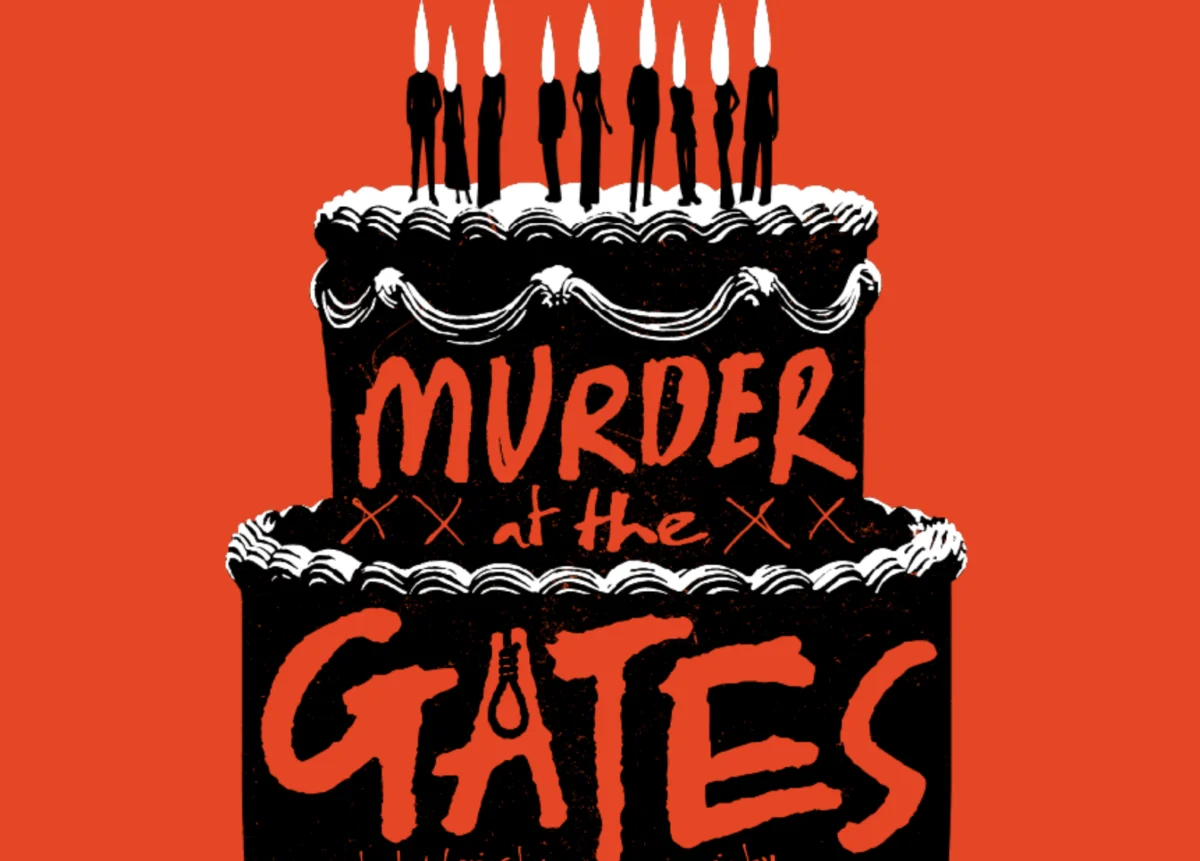
The intersection of Broadway pedigree and pop-rock sensibilities has long been a fertile ground for innovation, but the upcoming concept album Murder at the Gates promises to push those boundaries into darker, more chaotic territory. Helmed by the Tony, Grammy, and Olivier Award-winning playwright Steven Sater—famed for his transformative work on Spring Awakening—and multi-Platinum musician James Bourne, the project is set to arrive on July 1, 2026.
Ahead of the album’s full release, the creators have unveiled a high-energy, irreverent single, "Fuckin’ Scream," featuring the distinct vocals of Stranger Things breakout star Gaten Matarazzo. The track serves as a sonic manifesto for a show that has been gestating for over a decade: a black-comic murder mystery that dissects the modern, gated-community experience through the lens of a generation grappling with existential dread and technological isolation.
The Genesis of a Darkly Comic Vision
The narrative of Murder at the Gates is deceptively simple, echoing the tropes of classic whodunits while subverting them with a distinctly Gen-Z aesthetic. The story centers on Cameron, a young woman attempting to navigate the wreckage of her life on her birthday. Following a year defined by the sudden, traumatic loss of her mother and a gut-wrenching breakup with her “soul-mate,” the poet-rebel Ethan, Cameron is subjected to a forced celebration by her father.
Set on a dark and stormy night within the confines of an affluent, gated community, the party is populated by friends dressed in elaborate costumes. The veneer of festive normalcy quickly evaporates when the party’s namesake “murder” occurs—and this time, it is not part of the game. As the high-tech security system seals the perimeter, trapping the guests inside, the farce turns into a desperate, claustrophobic struggle for survival.
Steven Sater, reflecting on the project’s thematic DNA, notes the connection to his earlier masterwork. “Back in the day, when I was first conceiving Spring Awakening, I was urged to update the story to contemporary times,” Sater explains. “As I suspected, that didn’t work. But that energy spilled into Murder at the Gates, a black comic look at how totally effed life can be as a young person today.”
A Decade-Long Evolution: From Workshop to Concept Album
The journey of Murder at the Gates has been a long-term labor of love, marked by iterative development and artistic refinement. The project first surfaced in 2013 at New York University’s prestigious Tisch School of the Arts. Over the following years, the creators sought to capture the perfect balance between Sater’s lyrical depth and the melodic, pop-infused urgency of James Bourne.
In 2019, the show moved across the Atlantic for two rehearsed readings at The Other Palace in London, a venue renowned for fostering new musical theater. These sessions provided the necessary feedback to sharpen the characters and deepen the mystery. Most recently, in 2024, the project underwent a rigorous workshop with Madison Wells Media in New York City, further solidifying the structure and tone of the piece.
For James Bourne, the project is more than just a musical; it is a testament to personal resilience. A co-founder of the bands Busted and Son of Dork and a songwriter of significant acclaim, Bourne faced personal health challenges that necessitated a hiatus from touring last summer. “Unfortunately, my illness prevented me from touring last summer,” Bourne shares, “but it allowed me to complete this project of my dreams, Murder at the Gates.”
A Star-Studded Cast: Bringing the Mystery to Life
The concept album boasts a formidable roster of talent, drawing from both the Broadway elite and screen stars who have successfully transitioned into the musical theater space. The inclusion of Gaten Matarazzo is a major draw, but the ensemble cast is equally impressive.
The full list of performers appearing on the tracklist includes:
- Milo Manheim: Best known for Disney’s Zombies series, Manheim brings a versatile energy to several pivotal tracks.
- Isa Briones: A star of The Pitt, Briones anchors the emotional core of the story as Cameron.
- Joy Woods: Fresh off her Tony and Grammy-nominated performance in Gypsy, Woods adds vocal powerhouse status to the record.
- Helen J Shen: Currently turning heads in Maybe Happy Ending.
- Mason Alexander Park: A standout from the recent revival of Cabaret.
- Casey Likes: Known for his work in Back to the Future: The Musical.
- Ramin Karimloo: A veteran of Les Misérables and a titan of the international musical theater scene.
This assembly of talent suggests a high-production value that transcends the typical limitations of a concept album, effectively acting as a "cast recording" for a show that has yet to hit the stage in its final form.
Tracklist and Narrative Arc
The tracklist for Murder at the Gates serves as a roadmap through the mystery, mapping the emotional and physical trajectory of the characters as the party devolves into chaos.
- "Something That’s Sure" – Isa Briones
- "The Mirror Sighs" – Milo Manheim and Isa Briones
- "A Fine Rigor Mortis" – Milo Manheim featuring Mason Alexander Park
- "Love, Cream, & Sugar" – Joy Woods
- "Our Country Bleeds" – Gaten Matarazzo and Casey Likes
- "Lady Fingers" – Helen J Shen
- "Mortified" – Milo Manheim
- "Put Another Love to Bed" – Mason Alexander Park
- "It’s Nothing" – Ramin Karimloo and Milo Manheim
- "Girl Went Down" – Joy Woods
- "Cameron the Lonely" – Isa Briones
- "Fuckin’ Scream" – Gaten Matarazzo
- "No One Sits On High" – Isa Briones
The song titles themselves—ranging from the morbid "A Fine Rigor Mortis" to the poignant "Cameron the Lonely"—suggest a sophisticated blend of humor and pathos. The inclusion of "Fuckin’ Scream" as a late-album centerpiece suggests a climactic moment of realization or breakdown, perfectly suited to the vocal intensity of Matarazzo.
Implications for the Modern Musical Landscape
The release of Murder at the Gates as a concept album before a full-scale stage production is a calculated risk that reflects a growing trend in the industry. In an era where streaming platforms and social media can dictate the popularity of a show before it even opens on Broadway or the West End, building an audience through a high-quality, star-studded concept album is a powerful strategy.
By choosing to release the music first, Sater and Bourne are effectively beta-testing the narrative resonance of the show with a global audience. If the album gains traction, it provides empirical evidence to investors and producers that there is a built-in fan base for the theatrical production.
Furthermore, the subject matter—a "Gen-Z, gated-community" murder mystery—speaks directly to the anxieties of the digital age. The isolation of the characters, trapped by a digital security system while navigating the performative nature of their friendships, mirrors the real-world experiences of a generation that grew up in the shadow of constant surveillance and social media curation.
Conclusion: A Future Classic?
With the pedigree of Steven Sater, whose work defined the early 2000s, combined with the pop sensibilities of James Bourne, Murder at the Gates is positioned to be one of the most intriguing theatrical events of the coming years. The project manages to balance the gravitas of professional musical theater with the rebellious, unpredictable spirit of a modern rock record.
As the July 1, 2026, release date approaches, the anticipation surrounding the project continues to build. Whether it succeeds as a stage production remains to be seen, but the strength of the songwriting and the caliber of the ensemble cast suggest that Murder at the Gates is already a significant contribution to the contemporary musical canon. For now, audiences are invited to listen, speculate, and perhaps prepare for the moment when the party stops and the real nightmare begins.