In a landscape defined by escalating geopolitical conflict in the Middle East, the looming shadow of quantum-enabled cyber warfare, and controversial shifts in market transparency, the global economy stands at a critical juncture. From the proposed "two-tiered" information structure of Trump Media & Technology Group to the "harvest now, decrypt later" strategy of international hackers, the premium on data—and the speed at which it is delivered—has never been higher. As oil prices surge past $90 per barrel amidst active hostilities in the Strait of Hormuz, investors and policymakers are grappling with a world where traditional market safeguards are being dismantled just as new, existential threats emerge.
Main Facts: Information Asymmetry and the Erosion of Transparency
The primary development shaking Wall Street is a dual-pronged proposal from Trump Media & Technology Group (TMTG) that critics argue could fundamentally "rig" the American equities market. The proposal involves the creation of a "Truth API," a high-speed data feed that would allow paying subscribers to access President Trump’s posts on Truth Social milliseconds before they are released to the general public. In a market where high-frequency trading (HFT) algorithms capitalize on micro-fluctuations, a millisecond advantage on market-moving rhetoric is seen by many as a legalized form of front-running.
Compounding this concern is a secondary TMTG proposal to eliminate quarterly earnings reporting to the Securities and Exchange Commission (SEC). Currently, the standard for public companies involves rigorous 10-Q filings every three months. The move to less frequent reporting, combined with the Truth API, has led experts like Tyler Gellasch, CEO of the Healthy Markets Association, to warn of a "two-tiered market." In this scenario, insiders and wealthy institutional players possess a significant information advantage, while retail investors are left to trade on "stale" or delayed data.
Simultaneously, the cybersecurity world is facing a paradigm shift known as "Harvest Now, Decrypt Later" (HNDL). As quantum computing inches closer to commercial viability, state-sponsored actors—most notably China’s "Salt Typhoon" operation—are stealing vast quantities of encrypted data that they cannot currently read. The strategy is based on the premise that within the next seven to twenty years, quantum processors will render current encryption standards (such as RSA and ECC) obsolete, allowing these "harvested" archives to be unlocked. This poses an immediate threat to long-term financial records, personal identities, and national security secrets.
Chronology: A Nine-Day Descent into Conflict
The current economic instability is inextricably linked to the rapid escalation of military action in the Middle East. The following timeline outlines the descent into the current crisis:
- July 11, 2026: Tensions peak following a series of diplomatic breakdowns regarding maritime boundaries and regional influence.
- July 12, 2026: The United States commences a series of targeted airstrikes against strategic assets in Iran.
- July 15, 2026: Casualties mount as three American service members are killed in retaliatory strikes in Iraq and Jordan.
- July 18, 2026: The Islamic Revolutionary Guard Corps (IRGC) issues a formal vow to close the Strait of Hormuz, a chokepoint through which approximately 20% of the world’s oil passes.
- July 19, 2026: Iran claims to have struck two commercial vessels in the Strait. The U.K. Maritime Operations Centre confirms at least one ship is on fire off the coast of Oman.
- July 20, 2026: Oil prices break the $90 per barrel threshold. Despite the ongoing nine-day bombing campaign, both U.S. and Iranian officials suggest that back-channel diplomatic talks remain active, though casualties are estimated to have exceeded 10,000 on the Iranian and Lebanese sides.
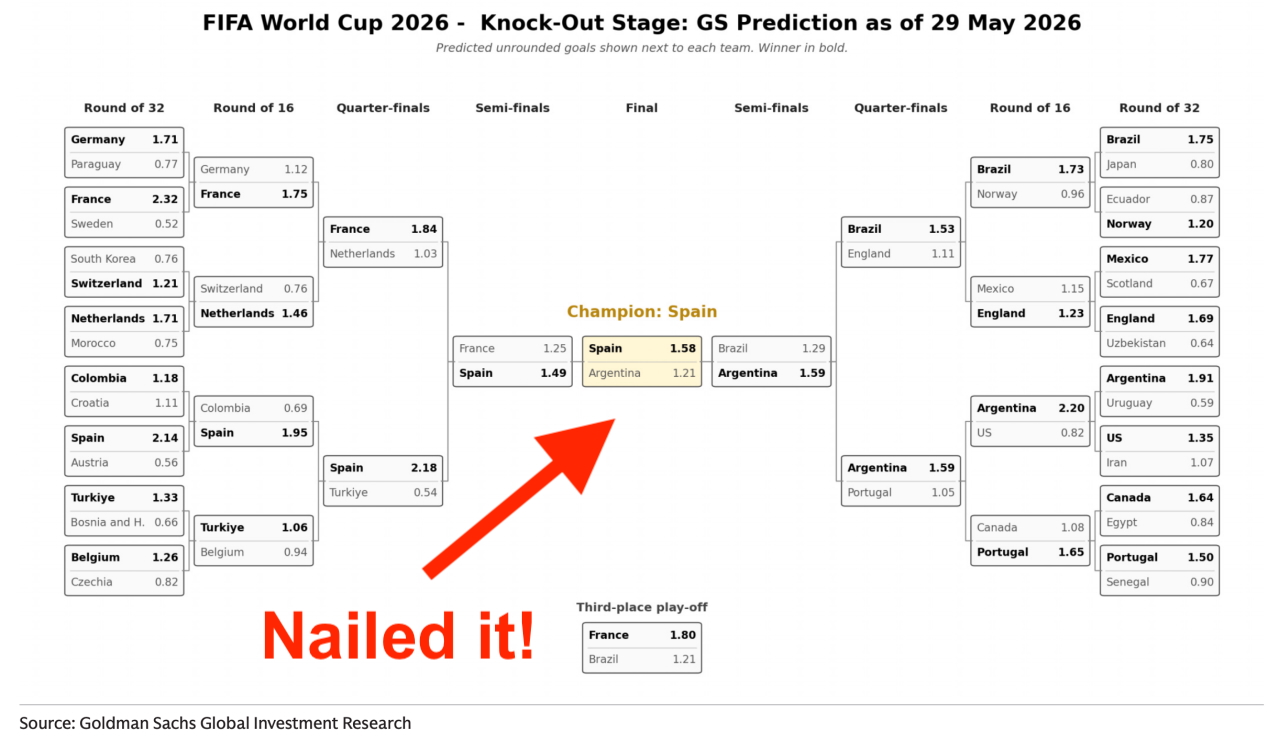
In a separate but notable chronological success, Goldman Sachs’ analytical team, led by Jan Hatzius, concluded a month-long predictive exercise regarding the World Cup. On June 2, the bank’s complex modeling was met with skepticism; however, by July 20, the model proved eerily accurate in its final prediction: Spain defeating Argentina in the final. While the bank missed several mid-tier upsets—such as Norway’s shock victory over Brazil in the Round of 16—the accuracy of the final pairing underscores the increasing power of big-data analytics in forecasting complex human systems.
Supporting Data: The Cost of Living and the AI Economy
As the world navigates these crises, several data points highlight the shifting economic reality for both corporations and individuals.

The Energy and AI Nexus
Bank of America’s recent analysis of the "Big Four" cloud service providers (Amazon, Microsoft, Google, and Oracle) reveals a staggering $2 trillion in "remaining performance obligations" related to AI. These are contracts for future work that have been signed but not yet fulfilled. This massive backlog suggests that despite geopolitical instability, the corporate world is doubling down on AI infrastructure. This is further evidenced by Netflix’s recent disclosure that it used AI to produce 17 minutes of a documentary at 50% of the traditional cost and in half the time—a necessary efficiency as the company’s content spending approaches $20 billion annually.
The Human Cost: Wages and "Cheap Dates"
While the high-tech and energy sectors see massive capital flows, the average worker is falling behind. New reports indicate that the U.S. federal minimum wage has reached its lowest real value in 70 years. When adjusted for inflation, the current wage floor is officially classified as a "poverty wage," unable to sustain a single individual above the poverty line in any major metropolitan area.
This disparity is highlighted by Deutsche Bank’s "Cheap Date Index," which tracks the cost of a standard night out (jeans, dinner, movie, wine, and a taxi). Geneva, Switzerland, currently holds the title of the world’s most expensive city for romance, followed closely by New York and Oslo. The rising cost of these "insignificant" social interactions contributes to what therapist Esther Perel calls "social atrophy."
Official Responses: Warnings from the Front Lines
The response from leaders and analysts across various sectors suggests a growing sense of unease regarding the trajectory of 2026.
On Market Integrity:
Tyler Gellasch of the Healthy Markets Association was blunt in his assessment of the Truth API: "When you have a market that looks like that, it looks rigged." The sentiment among SEC watchdogs is that the move toward "darker" markets—with less frequent reporting and pay-to-play information access—undermines the foundational principle of American capitalism: fair access for all participants.
On Quantum Security:
Nicolas Sauvage, President of TDK Ventures, emphasizes that the threat is not theoretical. "We understand that there are a lot of hackers who are downloading our information today… if your data is still valid by the time they hack it, they have access to everything." Sauvage’s fund is currently aggressively seeking to invest in "quantum-resistant" cryptography, estimating that we are only seven years away from a total decryption event.
On Geopolitics:
The Iranian Revolutionary Guard Corps (IRGC) maintained a defiant stance regarding the Strait of Hormuz: "This passage will not be safe for the transit of petrochemical products, nor even a single drop of oil and gas." Conversely, U.S. Senator Marco Rubio has signaled that the door to diplomacy is not entirely shut, stating that the U.S. remains open to talks even as the military campaign enters its second week.
On Workplace Culture:
Esther Perel warned executives that the move to remote work and blurred Zoom backgrounds is eroding organizational health. "You can only handle difficult and important conversations as a leader if you’ve built up a foundation of small, insignificant ones first," she told Fortune. She argues that the lack of physical proximity is causing a "social atrophy" that AI-driven efficiencies cannot fix.
Implications: A Fragmented Future
The convergence of these events suggests three major implications for the remainder of 2026 and beyond.
First, the "Balkanization" of Information. If the Truth API model is successful, we may see other influential figures and corporations move toward proprietary information streams. This would end the era of the "public square" in financial markets, replacing it with a fragmented system where speed and wealth determine one’s ability to participate in the economy.
Second, the Quantum "Zero-Day" Scenario. The "Harvest Now, Decrypt Later" phenomenon means that even if we achieve peace in the Middle East and stability in the markets, a ticking time bomb exists within our digital archives. The moment a commercial quantum computer is brought online, decades of private communications, bank records, and state secrets could be exposed simultaneously, potentially leading to a global identity and financial crisis.
Third, the Paradox of Efficiency. As seen with Netflix and the $2 trillion AI backlog, companies are becoming more efficient at an exponential rate. However, this efficiency is coupled with a "socially atrophied" workforce and a minimum wage that has lost its purchasing power. The widening gap between corporate productivity and worker well-being suggests a looming period of labor unrest, even as AI drives record-breaking performance obligations.
In conclusion, the world of July 2026 is one of stark contrasts: the precision of a Goldman Sachs sports model against the chaos of a burning tanker in the Oman coast; the 17-minute AI-generated documentary against the 70-year low of the minimum wage. As oil nears $100 and the Strait of Hormuz remains a flashpoint, the global economy is being rewritten by those who can control the flow of data and the speed of its delivery.