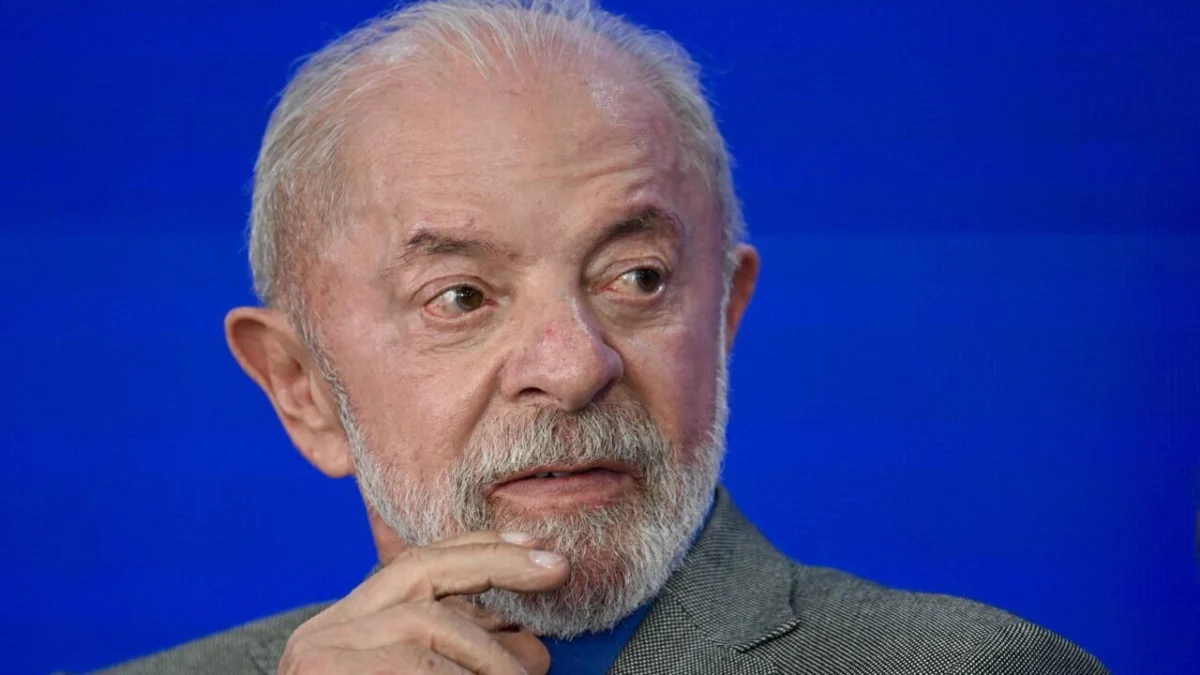
In a high-stakes move that underscores the volatile intersection of digital platform governance and democratic integrity, Brazilian President Luiz Inácio Lula da Silva’s campaign has announced its intention to file a formal complaint with the Organisation of American States (OAS). The petition alleges that Meta—the parent company of Facebook, Instagram, and WhatsApp—has engaged in systemic "interference" aimed at undermining the leftist leader’s bid for a fourth nonconsecutive term in the upcoming October 25 presidential runoff.
The confrontation marks a significant escalation in the ongoing battle between political movements and Big Tech, as the stakes of the Brazilian election reach a fever pitch. With the incumbent, Lula, facing a formidable challenge from Senator Flavio Bolsonaro—the son of the far-right former president Jair Bolsonaro—the digital battlefield has become as contentious as the physical campaign trail.
The Core Allegations: Digital Suppression or Algorithmic Glitch?
The Workers’ Party (PT), led by Lula, has cataloged a series of grievances concerning what they describe as "unexplained irregularities" in the performance of their official social media accounts. According to campaign officials, these disruptions have not been random but have targeted the visibility and outreach capacity of the President’s digital presence at critical junctures of the election cycle.
Eden Valadares, the party’s Communications Secretary, delivered the ultimatum to reporters this Wednesday. "It is time to denounce [Meta] before the international community, starting with the OAS," Valadares stated, emphasizing that the decision to escalate the matter was personally authorized by President Lula.
Specific grievances cited by the campaign include:
- Restricted Promotion: The campaign claims that Meta prevented the President’s official profile from "boosting" or promoting Instagram feed posts, effectively neutering their paid advertising reach.
- Engagement Throttling: The campaign reported a sudden and "unnatural" interruption in view counts on official posts, which they argue significantly hampered their ability to communicate with voters.
- Search Engine Visibility: Perhaps most alarmingly, the campaign asserts that in the lead-up to the first round of voting on October 13, the profiles of Lula and several prominent leftist allies were effectively purged from Instagram’s search function, making them undiscoverable to new users or those searching by name.
Chronology of the Conflict
The friction between the Lula campaign and Meta did not emerge in a vacuum. The timeline of events leading to this international appeal highlights a growing sense of urgency within the administration:
- Pre-Election Period: As the first round of voting approached, campaign analysts noted significant discrepancies in engagement metrics. The campaign alleges that these irregularities were flagged to Meta’s representatives, yet no satisfactory resolution was provided.
- October 13 (First Round): Flavio Bolsonaro finished first in the initial round of voting, a result that shifted the momentum of the race. Following the results, the Lula campaign doubled down on its allegations, suggesting that the digital suppression of the first week contributed to the electoral outcome.
- Post-Election (October 14–15): The Lula campaign intensified its digital pivot. Given the President’s well-known reluctance to use mobile devices personally, his team launched an aggressive, high-production video campaign designed to circumvent potential algorithmic barriers by focusing on direct, shareable content.
- Wednesday, October 15: The announcement of the formal appeal to the OAS was made.
- Thursday, October 16: The campaign scheduled a high-level briefing with international election observers to present their "evidence" of interference and to discuss the broader implications of private-sector influence on democratic processes.
Official Responses: Meta’s Rebuttal
Meta’s Brazil office has responded with categorical denials. In a statement released shortly after the campaign’s press conference, the tech giant addressed the allegations of suppression.
"The charges are simply false and are not supported by the facts," a company spokesperson stated. Meta maintains that its systems operate on neutral, automated algorithms designed to detect spam, bot activity, and policy violations, rather than political bias. They argue that any perceived drop in reach is often a result of changes in content quality, user engagement patterns, or adherence to the platform’s strict "community guidelines" regarding election-related content.
However, the company’s insistence on "neutrality" has failed to appease the PT. The campaign argues that the "black box" nature of algorithmic moderation allows for plausible deniability, making it nearly impossible for political actors to prove intentionality behind content suppression.

The Geopolitical Dimension: A Global Proxy War?
The tension in Brazil is playing out against a backdrop of wider geopolitical anxiety. President Lula has publicly suggested that the United States—specifically elements aligned with the administration of former President Donald Trump—is attempting to influence the Brazilian election in favor of the Bolsonaro camp.
The connection between the Bolsonaro family and the American "MAGA" movement is well-documented. With Flavio Bolsonaro positioning himself as the heir to his father’s populist legacy, the ideological ties between the two factions have led many in the Lula camp to suspect that foreign actors might be leveraging their influence with Silicon Valley giants to tip the scales.
"We are not just fighting a local candidate," one campaign advisor suggested, speaking on condition of anonymity. "We are fighting a transnational network of political influence that views Brazil as a cornerstone of the global right-wing movement."
Implications for Democratic Integrity
The move to involve the OAS is a strategic shift. By elevating the dispute to an international body, the Lula campaign is attempting to reframe the debate from a technical dispute between a user and a platform into a human rights and democracy issue.
1. The Challenge of Platform Accountability
The central question remains: To what extent should private social media companies be held accountable for the "reach" of political candidates? As social media has become the primary town square for modern campaigning, any technical disruption—intentional or otherwise—is perceived as an act of disenfranchisement.
2. The Role of International Observers
The meeting with international election observers is a crucial tactical maneuver. By documenting the alleged interference, the Lula campaign is creating a record that could be used to challenge the legitimacy of the electoral process should the results of the October 25 runoff be close.
3. Setting a Global Precedent
Brazil’s situation is being watched closely by other nations facing high-stakes elections. If a major political party can successfully force a tech giant to answer to an international body like the OAS, it could pave the way for a new era of "digital sovereignty," where platforms are forced to be more transparent about their moderation algorithms in the context of democratic processes.
Conclusion: A Race Against Time
As the October 25 runoff approaches, the atmosphere in Brazil is increasingly polarized. The Lula campaign’s decision to take this battle to the international stage is a gamble; it may energize his base by positioning him as a victim of foreign-backed corporate censorship, or it could be perceived as a distraction from policy-focused campaigning.
Regardless of the outcome, the conflict highlights the fragility of modern democracy in the digital age. When the tools of communication are controlled by private entities, and those entities are perceived to be favoring one side of the political spectrum, the very foundation of the "free and fair" election is called into question. As the OAS considers the petition, the world will be watching to see whether the platform—or the candidate—ultimately wields the greater power in shaping the future of Latin America’s largest nation.