In a landmark discovery that bridges the gap between evolutionary biology and pharmaceutical engineering, an international research team has finally decoded the "secret language" of bacterial enzyme systems. For decades, the ability of bacteria to naturally synthesize multiple, potent versions of anti-cancer drugs—specifically those belonging to the depsipeptide family—has remained one of the most enigmatic puzzles in chemical biology.
By identifying the sophisticated "docking domains" that orchestrate these molecular assembly lines, researchers have unlocked a blueprint that could fundamentally alter the landscape of oncology drug development. The study, published in Nature Communications, details how these microscopic organisms utilize a flexible, "mix-and-match" strategy to produce highly complex therapeutic compounds, providing scientists with the tools to replicate—and potentially improve upon—these natural processes in the laboratory.
The Mystery of Combinatorial Biosynthesis
For years, the scientific community has looked to "combinatorial biosynthesis" as the holy grail of drug discovery. This process describes the way bacteria use a single set of enzymes to create a family of closely related compounds. In theory, if researchers could harness this process, they could generate vast libraries of drug candidates by simply "tinkering" with the biological machinery.
However, progress remained stagnant. While scientists could observe the end products—such as Romidepsin (Istodax), an FDA-approved treatment for cutaneous and peripheral T-cell lymphomas—the precise mechanism by which the enzymes "chatted" with one another to coordinate their assembly line remained elusive. The system was so elegantly economical that it defied traditional analytical techniques, leaving researchers unable to predict how modifying one part of the process would impact the final drug molecule.
Chronology: A Decades-Long Scientific Pursuit
The path to this breakthrough was not linear. It began with the clinical observation of depsipeptides, a class of cyclic molecules known for their potent HDAC (histone deacetylase) inhibitory properties.
- The 1990s and 2000s: The identification of various depsipeptides, including FR-901375, sparked interest. While these compounds showed immense promise in laboratory settings, the biological pathways responsible for their creation remained a "black box."
- The Mid-2010s: Advancements in high-resolution structural biology and mass spectrometry allowed researchers to begin mapping the massive protein complexes known as PKS-NRPS hybrids (polyketide synthase and nonribosomal peptide synthetase).
- The Breakthrough Phase: By integrating computational modeling with rigorous biochemical assays, the team at the University of Warwick and the Monash Warwick Alliance began to isolate the specific protein-protein interaction sites.
- The Current Discovery: The researchers identified "docking domains"—small, conserved molecular regions that function as physical connectors. These connectors allow the core building machinery to "pass" intermediate products to secondary enzymes, facilitating the diversity of the final compound.
Tiny Molecular Connectors: The "Docking Domain" Mechanism
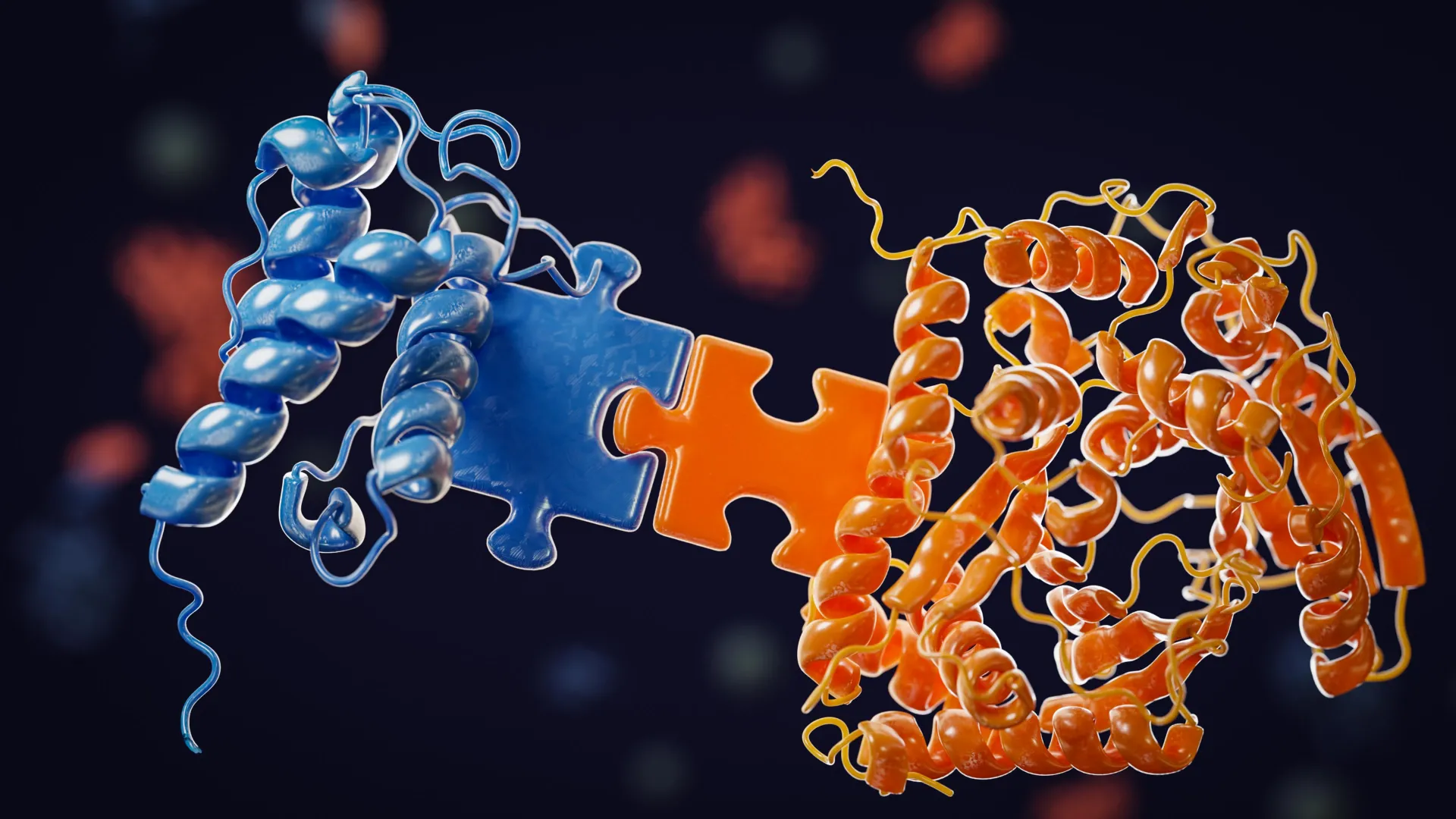
The core of the discovery lies in the structural elegance of the docking domains. These regions act as the "connectors" or "adapters" in a biological factory.
In a standard PKS-NRPS hybrid system, the molecule is built step-by-step. The researchers discovered that these docking domains share a conserved connection point, allowing them to interact with multiple enzyme partners. This flexibility is key: it allows the bacteria to maintain the precision required to produce a functional drug, while simultaneously allowing for enough variation to create a "family" of related compounds.
Think of it as a modular assembly line in an automotive factory: if the chassis is the base drug structure, the docking domains are the flexible arms that can attach different specialized parts—an engine, a transmission, or a custom trim—without having to rebuild the entire factory line from scratch. This allows the bacteria to evolve rapidly and produce multiple variants of a compound, providing a distinct survival advantage in their natural, competitive environments.
Official Perspectives: Translating Nature into Medicine
Dr. Munro Passmore, the study’s first author and a Research Fellow in the Department of Chemistry at the University of Warwick, emphasized the significance of cracking this biological code.
"For decades, we’ve known that bacteria can naturally produce multiple versions of powerful anti-cancer drugs, yet we had no idea how they achieved this," Dr. Passmore stated. "This work finally cracks that code. We’ve identified how the different enzymes communicate and cooperate to produce these drug variants. It’s the breakthrough we needed to actually engineer these drugs ourselves."
Professor Greg Challis, a lead investigator from the Monash Warwick Alliance, views this discovery as a turning point for sustainable chemistry and medicinal design.
"This research gives us a blueprint to do what nature does, but better and faster," Prof. Challis noted. "By reverse-engineering nature’s evolutionary logic, we can now design synthetic pathways that generate new anti-cancer drug candidates with properties optimized for clinical use, such as superior potency, improved selectivity, and fewer side effects. Our immediate goal is to build an expanded library of candidates for various cancers where new treatments are urgently needed."
Implications for Future Oncology Treatments
The implications of this discovery for cancer patients are profound. Current cancer treatments, particularly HDAC inhibitors like Romidepsin, are effective but often limited by their side-effect profiles or the narrow range of cancers they can treat.
Expanding the Therapeutic Window
By understanding the logic of the docking domains, scientists can now use synthetic biology to "edit" these pathways. Instead of searching for new compounds in the wild, which is a slow and expensive process, researchers can now design "designer bacteria" that churn out custom-made drug variants. These variants could theoretically be optimized to target only cancer cells, sparing healthy tissue and reducing the systemic toxicity that plagues many current chemotherapy regimens.
Addressing Resistant Cancers
Many blood cancers, such as T-cell lymphomas, eventually develop resistance to existing therapies. Because the newly discovered system allows for the creation of multiple related compounds, scientists can now create "drug libraries" that offer second- or third-generation alternatives to patients who stop responding to standard-of-care treatments.
Evolutionary Insights
The study also provides a window into the evolutionary history of these molecules. The researchers suggest that the identified compounds likely evolved through gene duplication and recombination—a process of natural "copy and paste" that allows organisms to experiment with new chemical structures. By mimicking this evolutionary pressure in a controlled laboratory environment, scientists can accelerate the development of "next-gen" drugs that might have taken nature millions of years to evolve.
Methodology: The Convergence of Sciences
The success of this project was contingent on a multi-disciplinary approach. To solve a mystery that had eluded researchers for years, the team employed:
- Structural Biology: Utilizing X-ray crystallography to visualize the physical interaction between the docking domains and the enzyme complexes.
- Biochemistry: Conducting in vitro assays to observe the assembly line in action, confirming that the docking domains were indeed responsible for the transfer of intermediate molecules.
- Genetics: Using gene-editing techniques to "knock out" or modify the docking domains to observe how the drug-making process was disrupted, thereby confirming their function.
- Computational Modeling: Building digital simulations of the protein-protein interfaces to predict how changing the amino acid sequence of the docking domains might lead to the creation of entirely new, synthetic drug variants.
Conclusion: A New Era of Drug Discovery
The transition from understanding how nature builds complex molecules to building them ourselves represents a monumental shift in pharmacology. As the research team moves forward, their focus will be on applying this knowledge to create an expanded library of candidates for cancers that are still deemed "hard-to-treat."
This discovery does more than just solve a long-standing chemical mystery; it provides a roadmap for the future of medicine. By learning to speak the language of bacterial enzymes, humanity is gaining the power to design the next generation of cancer therapies—drugs that are not only more potent and selective but also faster to develop and cheaper to produce.
As we look toward the future, the work of Dr. Passmore, Prof. Challis, and their colleagues serves as a poignant reminder that some of the most advanced solutions to our most pressing health challenges may be hidden within the microscopic world, waiting only for us to unlock the logic behind their design.