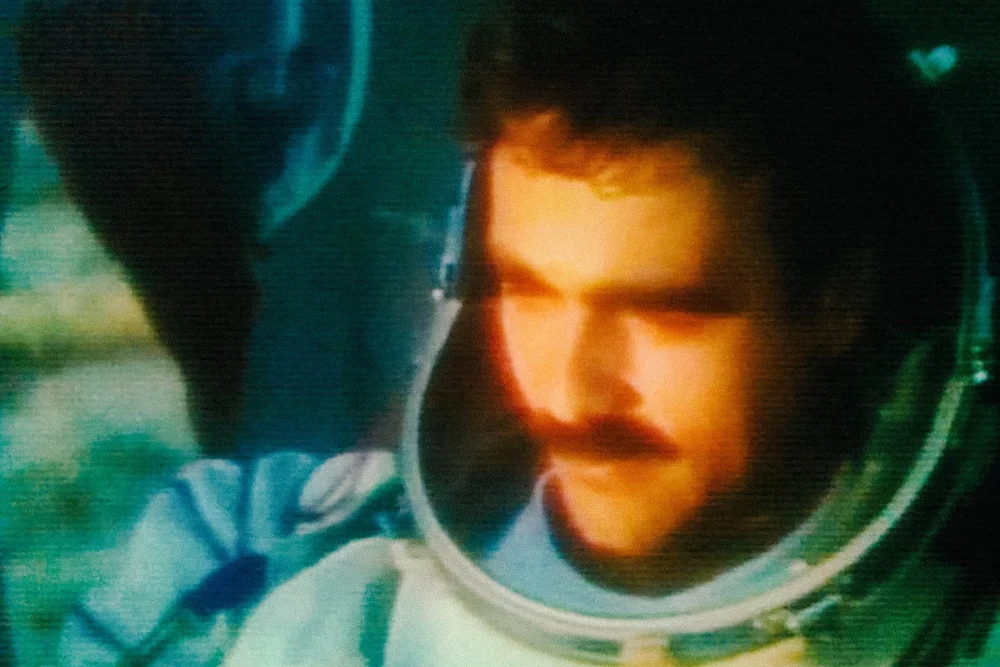
Main Facts: A Cinematic Achievement
As the global film community turns its gaze toward the Toronto International Film Festival (TIFF), one documentary short has emerged as a frontrunner in the cultural conversation: Forgotten Spaceman. Directed, written, and edited by BAFTA-nominated filmmaker Elham Ehsas, the film chronicles the extraordinary and largely obscured life of Abdul Ahad Momand, Afghanistan’s first and only astronaut.
The documentary, which recently secured the prestigious Leopard of Tomorrow (International Competition) award at the Locarno Film Festival’s Junior Jury Awards, is now entering a new phase of its trajectory. Ahead of its North American premiere at TIFF, the production has bolstered its creative and financial backing by bringing on two powerhouse entities as executive producers: the Mumbai-based Khan & Kumar Media and the multi-platform powerhouse Prism Entertainment.
These additions to the production team underscore the film’s significant international appeal and its thematic weight. By weaving together the personal history of a man who reached the stars at a time when his country was falling into shadow, Forgotten Spaceman transcends the boundaries of traditional biography, offering a poignant meditation on identity, exile, and the fragility of home.
Chronology: From the Mir Station to the Global Stage
To understand the gravity of Forgotten Spaceman, one must look back to 1988. As the Soviet-Afghan War pushed Afghanistan toward a total systemic collapse, Abdul Ahad Momand embarked on a mission to the Mir space station. For a nation gripped by the terror of impending dissolution, Momand’s ascent offered a fleeting, celestial spark of hope.
The mission was not merely a feat of engineering; it was a cultural milestone. During an orbital radio call, Momand spoke to his mother in Pashto, marking the first time the language had been spoken in space—the fourth language in history to be used beyond Earth’s atmosphere.
Decades later, filmmaker Elham Ehsas—whose own career has been defined by stories of the Afghan experience—decided to excavate this history. The film follows Ehsas as he traces Momand’s journey, ultimately discovering unexpected personal resonances between his own life and the astronaut’s legacy. Following its triumphant debut at Locarno, the film is now set for its North American unveiling at TIFF, marking the next chapter in its journey from a historical footnote to an internationally recognized piece of cinema.
Supporting Data: The Powerhouses Behind the Lens
The production of Forgotten Spaceman is a masterclass in collaborative filmmaking. The project is produced by Lorraine Bhattachary of MonoFilm Productions, with Dheeraj Agnihotri—noted for his work on the acclaimed Holy Curse—serving as associate producer. Maria Vera of the renowned Kino Rebelde is currently spearheading the film’s international sales and festival strategy.
The film’s executive producer credits are equally robust. Joining existing executive producers Jack Thomas O’Brien (of Ken Loach and Rebecca O’Brien’s Sixteen Films) and Catherine Tschaepe, the newly announced team brings substantial industry clout:
- Khan & Kumar Media: Founded by actor Vikas Kumar and Sharib Khan, this independent Mumbai house has rapidly become a beacon for auteur-driven cinema. Their portfolio includes the Venice Horizons competition premiere Songs of Forgotten Trees and the Karlovy Vary selection The Ink-Stained Hand and the Missing Thumb.
- Prism Entertainment: Led by Shruti Ganguly, Priya Giri Desai, and Megha Kadakia, the firm has built a reputation for championing high-impact, character-driven narratives. Their previous credits include the Oscar-nominated documentary To Kill a Tiger.
The collaboration between Khan & Kumar Media and Prism Entertainment is not their first; the two entities previously partnered on the Oscar-qualifying short Holy Curse, establishing a synergy that bodes well for the continued distribution and cultural footprint of Forgotten Spaceman.
Official Responses: The Human Dimension of Film
The addition of these executive producers has been met with enthusiasm from the core creative team. Elham Ehsas, reflecting on the film’s journey, emphasized the importance of community in storytelling.
“As we continue sharing Abdul Ahad Momand’s remarkable story with audiences around the world, it’s incredibly encouraging to have such passionate partners alongside us,” Ehsas stated. “I hope the film continues to spark conversations about home, identity, exile, and belonging wherever it travels.”
Producer Lorraine Bhattachary echoed this sentiment, noting the strategic importance of aligning with partners who share the film’s vision. “Building the right team is an important part of a film’s journey,” Bhattachary said. “We are thrilled to reach this next chapter together and are excited to continue sharing the film with audiences as its festival tour expands.”
The new partners expressed a deep, almost visceral connection to the subject matter. For Sharib Khan and Vikas Kumar, the film represents the pinnacle of why they enter the industry. “It uncovers a remarkable chapter of history that many of us never knew existed, while remaining deeply personal and profoundly human,” they shared. “At Khan & Kumar Media, we’re drawn to stories that resonate across cultures and borders, and Forgotten Spaceman does exactly that.”
Prism Entertainment’s leadership—Ganguly, Desai, and Kadakia—highlighted the film’s ability to force a reckoning with history. “Elham’s movie contains volumes of Afghan, South Asian, and world history while being so deeply personal and profound, forcing us to reconcile ourselves with disruptions that are beyond one’s control,” they remarked.
Implications: A Story of Universal Resonance
The success of Forgotten Spaceman is not an isolated event; it is emblematic of a broader shift in the cinematic landscape where personal, history-anchored documentaries are receiving renewed attention. By focusing on the story of a man who reached for the stars while his home was being torn apart, Ehsas taps into the contemporary urgency surrounding themes of migration and displacement.
The Filmmaker’s Pedigree
Elham Ehsas is no stranger to the festival circuit. His body of work—including the BAFTA-nominated short Yellow and the award-winning There Will Come Soft Rains—has established him as a voice that bridges the gap between gritty reality and poetic expression. With his debut feature, Our Kind of Love, currently in development with the BFI, Ehsas is clearly on an upward trajectory, and Forgotten Spaceman serves as a poignant centerpiece to his evolving filmography.
The Broader Cultural Impact
As the film prepares for TIFF, the implications for the documentary genre are clear. Audiences are increasingly drawn to narratives that challenge traditional historical canons, particularly those that center voices from the Global South. By bringing the story of Abdul Ahad Momand to a wider audience, the team behind Forgotten Spaceman is not just documenting a past event; they are reclaiming a narrative of Afghan achievement, providing a counter-narrative to the standard tropes of conflict and despair.
In conclusion, Forgotten Spaceman stands as a testament to the power of persistence—both of the subject, who navigated the literal vacuum of space, and of the filmmaker, who is navigating the complexities of historical memory. With a strengthened production team and a momentum-filled festival run ahead, the documentary is poised to become one of the most discussed short films of the year, ensuring that the man who spoke Pashto in the stars will not be forgotten again.