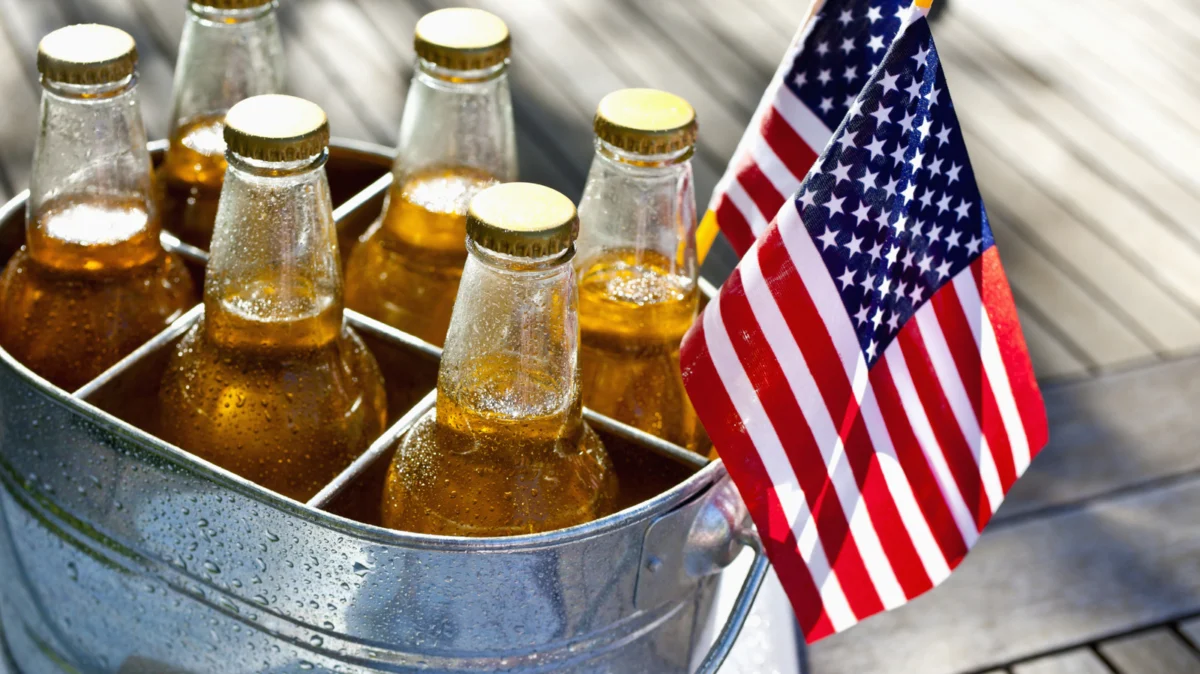
In the crowded landscape of American domestic lagers, few brands carry the weight of history and the cultural cachet of Miller High Life. While giants like Budweiser and regional stalwarts like Yuengling often dominate the conversation, a recent comprehensive analysis has crowned a different champion. In Tasting Table’s definitive ranking of 10 iconic American beer brands, Miller High Life surged past its competitors to claim the top spot, cementing its status as the quintessential "Champagne of Beers."
This isn’t merely a victory of nostalgia; it is an affirmation of a product that has remained remarkably consistent since its inception in 1903. Whether served as a crisp pint at a local dive bar or as the effervescent base of the cult-favorite "Spaghett" cocktail, High Life occupies a unique space in the American drinking lexicon: it is affordable, unpretentious, and, most importantly, consistently excellent.
The Foundation: Understanding the "Champagne of Beers"
To understand why Miller High Life stands alone, one must first appreciate its technical composition. At 4.6% ABV, the beer is designed for approachability. It avoids the heavy, cloying sweetness that plagues many budget-tier lagers, opting instead for a profile that highlights the interplay between malted barley, proprietary Miller yeast, and high-quality Pacific Northwest hops.
The flavor profile is a masterclass in balance. Upon the first sip, the drinker is met with a clean, crisp mouthfeel—a direct result of its well-calibrated carbonation. The malt backbone provides just enough structure to avoid the "watery" sensation often associated with mass-produced domestic lagers, while a subtle, lingering hoppy bitterness ensures that the palate remains refreshed rather than fatigued. It is this specific harmony that makes it an "Everyman" brew, capable of satisfying both the craft beer aficionado and the casual drinker who wants nothing more than a cold, reliable beverage after a long workday.
A Chronology of Quality: Over a Century of Brewing
The history of Miller High Life is a testament to the endurance of the American lager tradition. Launched in 1903 by the Miller Brewing Company in Milwaukee, Wisconsin, the beer was marketed as a premium product—a "high life" for the working class.
- 1903: The inaugural launch of Miller High Life. The brand quickly distinguishes itself with its iconic clear glass bottle, intended to showcase the clarity and golden hue of the lager, effectively branding it the "Champagne of Beers."
- The Mid-20th Century: As post-war prosperity hits America, High Life solidifies its place in the American home. It becomes a staple of suburban barbecues and industrial-era social clubs.
- The Late 20th Century: Despite the rise of light beers and the eventual craft beer explosion in the 1990s, High Life maintains a steady, loyal following. It avoids the trap of trying to reinvent itself, choosing instead to lean into its identity as a classic, no-nonsense lager.
- The 21st Century: In the modern era, Miller High Life experiences a "retro-chic" renaissance. It becomes the darling of mixologists and high-end bartenders who appreciate its carbonation and clean finish, leading to its inclusion in creative cocktails like the Spaghett.
Supporting Data: The Consumer Perspective
The argument for High Life’s superiority isn’t based solely on subjective taste tests; it is backed by an overwhelming consensus of consumer behavior and sentiment. In digital spaces, such as Reddit’s r/beer community, the discourse surrounding High Life often focuses on the "discovery" element. Many craft-focused drinkers, after years of exploring complex IPAs and stouts, find themselves returning to High Life for its simplicity.
"Why didn’t anyone tell me Miller High Life was so drinkable?" one user queried in a popular thread. This sentiment is echoed across multiple platforms, where the brand is consistently praised for its "fuller-bodied" feel compared to other light lagers.
Furthermore, the economic data is undeniable. At a time when inflation has driven the price of craft beer and even premium domestic labels to record highs, Miller High Life remains a bastion of value. At major retailers like Walmart, a 30-pack can often be found for under $20, equating to roughly $0.62 per can. This price-to-quality ratio makes it the most accessible "high-quality" beer on the market today.
Official Stances and Industry Recognition
While Miller High Life has never relied on flashy marketing campaigns to define its status, its reputation within the brewing industry is one of respect. Brewing experts often point to the stability of Miller’s proprietary yeast strain and the company’s stringent quality control processes as the primary reasons for the beer’s longevity.
Industry analysts have noted that the brand’s refusal to pivot toward "lite" or "ultra" branding has, ironically, protected its reputation. While competitors diluted their core products to chase shifting demographics, Miller High Life stayed the course. The result is a brand that has gained "authentic" status—a rare commodity in the corporate brewing world. It is the beer that brewers drink when they aren’t drinking their own creations.
The Broader Implications: What Does This Say About the American Palate?
The crowning of Miller High Life as the "best" iconic American beer carries significant cultural implications. It suggests that, after decades of being told that "bigger is better" (in terms of IBU counts, barrel-aging, or experimental ingredients), the American consumer is returning to an appreciation for technical precision.
1. The Value of Consistency
In a global market flooded with choice, the modern consumer is increasingly fatigued by the "next big thing." There is an inherent comfort in a product that tastes exactly the same today as it did decades ago. High Life represents a form of reliability that is increasingly rare in the food and beverage industry.
2. The Bridge Between Tiers
High Life effectively bridges the gap between the "budget" beer category and the "premium" category. It is inexpensive enough to be a standard-issue bar beer, yet refined enough that it does not feel out of place in a more upscale setting. This versatility is the hallmark of a truly iconic brand.
3. The Future of Domestic Lagers
As the craft beer market matures, we are seeing a shift toward "lager-focused" breweries. Many craft brewers are now attempting to replicate the profile of a classic 1903-style lager. The fact that Miller High Life remains the gold standard for this profile proves that the "original" is still, in many ways, the best.
Conclusion: Why It’s Still Miller Time
Ultimately, the appeal of Miller High Life lies in its refusal to be anything other than what it is: a damn good beer. It doesn’t promise to change your life, it doesn’t boast about its hop profile, and it doesn’t try to appeal to every trend under the sun. It simply delivers a refreshing, clean, and balanced experience at a price point that makes it accessible to everyone.
As we look toward the future of the American beer market, it is clear that there will always be room for innovation. However, as Tasting Table’s ranking demonstrates, sometimes the best innovation is simply perfecting a classic. Whether you are a beer snob or a casual sipper, the "Champagne of Beers" remains, for good reason, the king of the American cooler. Long live the High Life.