In the rapidly shifting landscape of the Earth’s northernmost latitudes, scientists have uncovered a hidden chemical engine that may fundamentally change our understanding of Arctic climate feedback loops. A groundbreaking study, published August 5 in the journal Nature Geoscience, reveals that the interface between melting sea ice and open ocean acts as a natural laboratory, generating a surge of cloud-forming particles that could significantly influence how the region absorbs and reflects solar radiation.
Led by an international team from the University of Birmingham, with key collaborators in China and Spain, the research provides the first real-world evidence of a complex atmospheric chemistry mechanism that, until now, had only been observed under controlled laboratory conditions at CERN’s CLOUD chamber.
The Chemistry of the Marginal Ice Zone
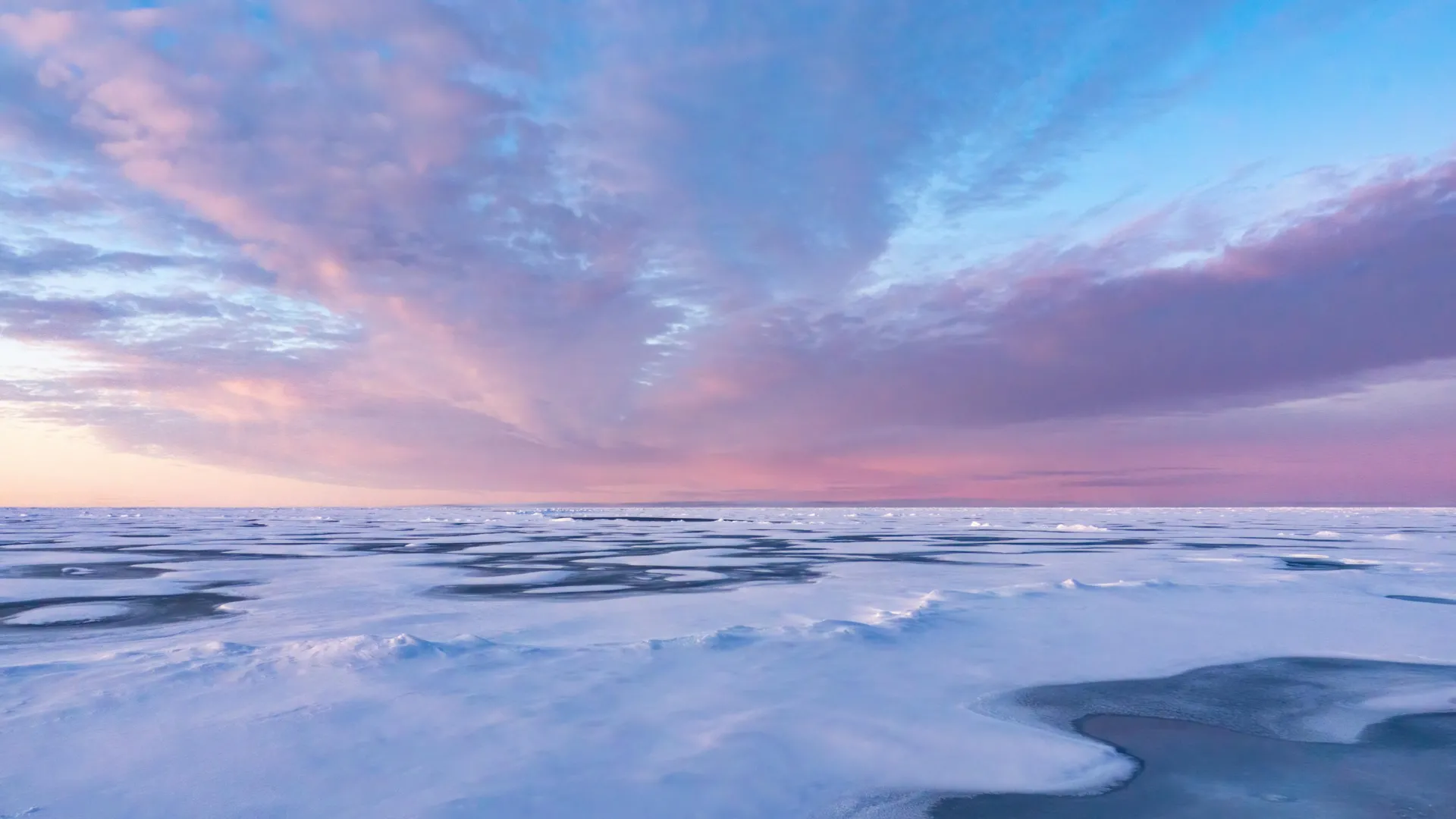
The phenomenon centers on the "marginal ice zone"—the volatile, narrow stretch where solid sea ice gives way to the open, biologically productive Arctic Ocean. As the ice retreats, it exposes vast swathes of water teeming with marine life. This biological activity, when combined with intense seasonal sunlight, triggers a chemical chain reaction.
The researchers identified that a cocktail of naturally occurring iodine, sulfur, and a newly discovered class of compounds known as iodine-containing oxygenated organic molecules (I-OOMs) are released into the atmosphere. Once airborne, these compounds undergo a sunlight-driven transformation, coalescing into tiny particles that serve as "seeds" for cloud droplets.
The scale of this process is immense. During the expedition, the team observed the concentration of these cloud-seeding particles skyrocket from approximately 50 to 1,500 per cubic centimeter within a single day—a fifty-fold increase. Evidence of this new particle formation was recorded on more than 80% of sunny days, indicating that this is not an anomaly, but a fundamental, recurring process in the Arctic atmosphere.
A Chronology of Discovery: From CERN to the Arctic
The path to this discovery began years ago in the subterranean halls of CERN, the European Organization for Nuclear Research. Scientists at the CLOUD chamber had theorized that specific chemical interactions involving iodine oxoacids and sulfuric acid could create atmospheric particles. However, the academic community remained skeptical as to whether these laboratory-based findings could translate to the messy, unpredictable conditions of the real world.
The 2022 Expedition
To bridge this gap, the international research team embarked on a high-stakes mission in the spring and summer of 2022. Aboard the Royal Research Ship (RRS) Discovery, the team navigated the waters around Greenland and the Davis Strait.
- Spring 2022: As the Arctic transitioned from polar night to the return of the sun, the team began monitoring atmospheric composition. They sought to document the precise moment when biological productivity at the ice edge met solar exposure.
- Summer 2022: As temperatures rose and the marginal ice zone expanded, the team successfully captured the rapid particle surge. The data collected during this window provided the long-sought evidence that the laboratory-proven chemistry was indeed functioning in the wild.
- Post-Expedition Analysis (2023–2024): The researchers spent over a year synthesizing the data, identifying the previously unknown I-OOMs, and confirming their role in helping small particles grow into the larger droplets necessary to seed clouds.
Supporting Data: The Power of Iodine-Organic Molecules
The significance of the study lies not just in the discovery of particle formation, but in the identification of the mechanisms that allow these particles to survive and expand. The newly detected I-OOMs act as a vital catalyst. Without these molecules, many nascent particles would remain too small to influence cloud cover.
The data shows that these compounds are highly efficient at "growing" smaller particles into larger ones that can effectively reflect sunlight or trap heat. Because the Arctic is warming three times faster than the global average, the "ice-edge effect" is becoming more pronounced. As sea ice melts, the surface area of this marginal zone increases, theoretically expanding the geographic reach of this particle-forming engine.
The findings indicate a direct correlation between solar intensity and particle production. On clear, sunny days—which are becoming more common as the Arctic climate shifts—the atmosphere is being primed with more cloud-seeding potential than previously accounted for in climate models.
Official Responses and Expert Insights
Dr. James Brean, Assistant Professor in Atmospheric Science at the University of Birmingham and co-author of the study, emphasized the rarity of such a direct link between lab work and field observation.
"Our findings provide the first real-world validation of a recently identified atmospheric chemistry mechanism involving iodine oxoacids and sulfuric acid," Dr. Brean stated. "These newly identified I-OOM compounds help small particles grow into larger particles that can seed clouds. We believe this is the first time such molecules have been observed, and it implies important new pathways for iodine chemistry that we are only just beginning to understand."
Professor Zongbo Shi, the study’s lead author and Professor of Atmospheric Biogeochemistry at the University of Birmingham, highlighted the broader implications for global climate science. "The Arctic has warmed more than three times faster than the global average over the past 40 years, making it one of the most sensitive regions on Earth to climate change," Professor Shi explained. "Understanding how natural emissions influence clouds is critical for predicting climate changes in this region."
The project, which received essential support from the Natural Environment Research Council (NERC), serves as a reminder of the complex, interconnected nature of Earth’s systems.
Implications for Global Climate Modeling
The most pressing concern arising from this study is the current state of climate models. Most global climate projections currently do not include this specific iodine-sulfur-organic particle formation process. This represents a significant "blind spot" in our ability to predict the future of the Arctic.
The Feedback Loop
The presence of clouds in the Arctic creates a complex radiation balance.
- Reflection: Clouds can reflect incoming solar radiation back into space, potentially cooling the region.
- Insulation: Conversely, clouds can trap outgoing infrared radiation, potentially warming the surface.
If the increase in cloud-seeding particles leads to thicker or more persistent cloud cover during the melting season, the impact on sea ice could be twofold. It might accelerate ice melt by trapping heat, while simultaneously providing a cooling effect on the open ocean. Determining which of these effects dominates is now the primary objective for the research team.
Incorporating the Process
The team is now working to integrate their findings into global climate models. By inputting the data on I-OOMs and the particle-forming rates measured in the Davis Strait, they hope to refine projections of how the Arctic will respond to continued warming.
"Our discovery will help climate models to improve their understanding of how climate change is affecting the Arctic and how the region itself influences global climate," Professor Shi added.
Conclusion: A Changing Arctic Frontier
The discovery by the Birmingham-led team serves as a critical update to our environmental lexicon. As the Arctic transitions from a region dominated by permanent ice to one defined by ephemeral, seasonal shifts, the chemistry of the air above it is changing in tandem.
By identifying that the melting ice edge is not just a passive result of climate change, but an active participant in atmospheric regulation, scientists have provided a new piece to the complex climate puzzle. As the marginal ice zone continues to expand, this "hidden engine" of cloud formation will likely become an increasingly dominant force in the Arctic’s climate future, one that researchers and policymakers can no longer afford to ignore.
The task ahead is clear: translate these findings into the language of global climate models, ensuring that the world’s most sophisticated forecasting tools are finally tuned to the chemical reality of the changing Arctic.