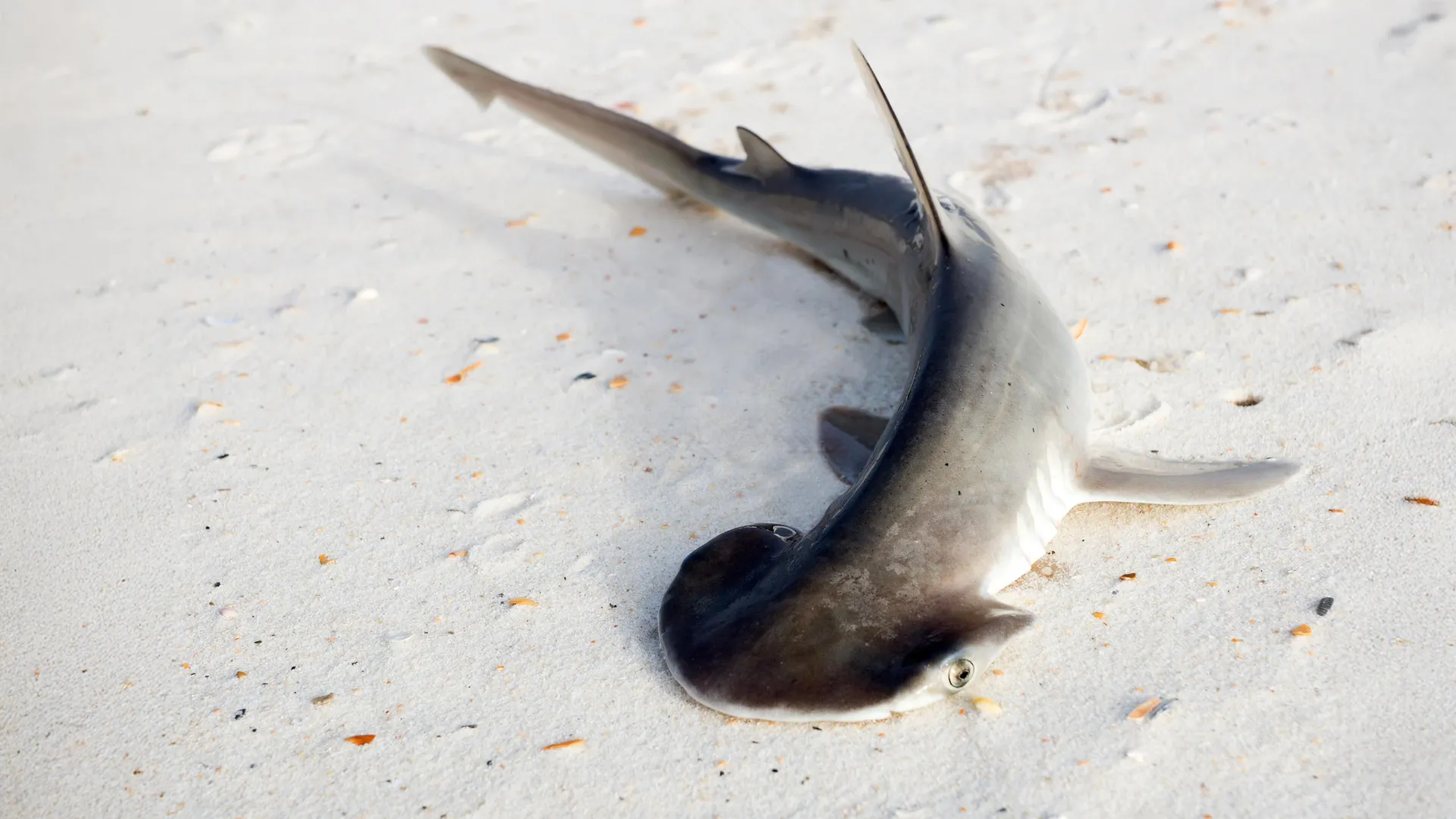
For decades, marine biologists have been captivated by a peculiar anatomical riddle lurking in the shallow coastal waters of Florida. The bonnethead shark (Sphyrna tiburo), a diminutive and charismatic relative of the iconic hammerhead, stands as the only known shark species to exhibit distinct sexual dimorphism in its cephalofoil—the shovel-shaped head structure that defines its lineage. While males sport a pronounced, pointed snout, females possess a markedly more rounded, smooth profile.
For years, the scientific consensus suggested that these distinct shapes were a hallmark of sexual maturity, specifically appearing in males as they reached adulthood. However, a groundbreaking new study conducted by researchers at the University of Miami Rosenstiel School of Marine, Atmospheric, and Earth Science has upended this narrative. By combining high-resolution digital morphometrics with long-term dietary analysis, the team has revealed that the development of the bonnethead’s head is a far more complex, age-dependent process than previously imagined.
The Evolutionary Puzzle of the Bonnethead
The bonnethead shark is a common sight in the estuaries and seagrass beds of the American Southeast. Despite their abundance, their unique head morphology has remained a subject of intense academic debate. Sexual dimorphism—the systematic difference in form between individuals of different sexes in the same species—is common in the animal kingdom, often driven by mate selection or niche partitioning.
In the case of Sphyrna tiburo, the "pointed vs. rounded" dichotomy was long assumed to be a secondary sexual characteristic that emerged during puberty. The prevailing hypothesis was that males developed their sharp, wedge-like snouts to facilitate specific behaviors, such as competitive posturing or mate identification. The recent study, titled "A Head of the Curve: Bonnethead Shark Cephalofoil Morphology and Trophic Ecology," published in the journal Integrative Organismal Biology, suggests that the truth is significantly more nuanced.
Chronology of the Investigation
The research project, which spanned from May 2022 to May 2023, was designed to observe bonnetheads in two distinct environments: Biscayne Bay and the Tampa Bay region. The goal was to determine if geographic location influenced physical development or dietary habits.
Methodology and Data Collection
The team utilized a robust sampling strategy, collecting data on 105 bonnetheads in Biscayne Bay and 39 in the Tampa Bay area. To minimize stress on the animals, researchers employed specialized capture techniques—research longlines in Biscayne Bay and gillnets in Tampa Bay.
Upon capture, each shark underwent a rigorous, rapid-fire assessment. This included:
- Morphometric Photography: Sharks were placed against a calibrated grid board and photographed from both sides to capture the precise curvature of the cephalofoil.
- Tissue Sampling: Small muscle samples were extracted to conduct stable isotope analysis.
- ImageJ Analysis: The research team used sophisticated ImageJ software to analyze the curvature profiles of the cephalofoils, allowing for an objective, quantitative comparison of head shapes across different age groups and sexes.
By keeping the "handling time" to a minimum, the researchers ensured that the data collection was both ethical and reflective of the shark’s natural state.
Supporting Data: Debunking the Maturity Myth
The primary breakthrough of the study came from the analysis of these photographs. Lead author Kathy Liu, who conducted the work as part of her master’s thesis at the Rosenstiel School, discovered that both male and female bonnetheads begin their lives with relatively pointed heads.
"Our findings show that the pointed head shape is not a feature that develops in males when they reach maturity," Liu explained. Instead, the data indicated that as both sexes grow, their heads naturally become rounder. Crucially, this transition from a pointed to a rounded profile is significantly more pronounced in females.
This discovery effectively dismantles the previous theory that males "grow" into a pointed shape. Instead, the difference is a result of varying rates of developmental "rounding" as the sharks age. Males maintain a higher degree of their juvenile pointed shape, while females undergo a more significant transformation, resulting in their characteristic rounded appearance.
Trophic Ecology: Is Diet the Driver?
One of the most persistent questions in evolutionary biology is why such a physical difference exists. A popular hypothesis was that the head shape might be linked to foraging strategies. If males and females were targeting different prey or utilizing different hunting techniques, their anatomy might have diverged to favor those specific ecological niches.
To test this, the research team analyzed the carbon and nitrogen isotope signatures in the sharks’ muscle tissue. These isotopes act as a "chemical record" of an animal’s long-term diet, far more reliable than a simple stomach-content analysis, which only reflects the last few hours of feeding.
The results were unequivocal. While the sharks in Biscayne Bay occupied different food webs than those in Tampa Bay—evidenced by distinct isotope signatures—there was no significant difference between the diets of males and females living within the same ecosystem.
"Our findings provided no evidence that differences in diet or foraging were driving the development of the sharks’ sex-specific head shapes," Liu noted. The isotope signatures showed that, regardless of their head shape, males and females of the same population were consuming the same local food sources.
Official Responses and Expert Perspectives
The study’s findings have sent ripples through the marine biology community, prompting a re-evaluation of how we categorize sexual dimorphism in elasmobranchs (sharks and rays).
Catherine Macdonald, a co-author of the study and director of the Shark Research and Conservation Program at the Rosenstiel School, emphasized the importance of this multi-faceted approach. "This study helps narrow the drivers of a biological trait that has puzzled scientists," Macdonald stated. "By examining body shape and diet in the same animals, we were able to assess whether diet and morphological changes co-occur. Our results suggest there is another cause behind the differences in head shape between male and female bonnetheads."
The collaborative nature of the study, which included experts from the Field School, Minorities in Shark Science, and the University of California, Merced, underscores a growing trend in marine science toward cross-institutional data sharing. By pooling resources, the team was able to draw conclusions that would have been impossible for a smaller, localized study.
Implications for Future Research and Conservation
If diet is not the driver of this morphological difference, what is? The researchers propose several avenues for future investigation:
- Swimming Efficiency: It is possible that the pointed head provides a hydrodynamic advantage for younger, smaller sharks. As females grow larger to accommodate the needs of gestation and reproduction, the potential benefit of a pointed snout may diminish, leading to the more rounded, stable profile seen in mature females.
- Embryonic Development: Further study into the developmental biology of the bonnethead, particularly during the embryonic stage, could reveal the genetic triggers for these shape changes.
- Hydrodynamic Modeling: Using computational fluid dynamics, scientists could simulate how both head shapes perform in various water flow conditions to see if one shape provides a measurable edge in speed, maneuverability, or sensory input.
Conservation Value
Beyond the academic interest, these findings have significant implications for conservation management. The study suggests that bonnethead populations are highly localized, as evidenced by the distinct isotope signatures between Biscayne Bay and Tampa Bay.
"Comparing populations from different regions could reveal additional variation in head shape and help scientists better understand how local populations differ," the researchers noted. Identifying these biological nuances is essential for creating region-specific management strategies. As climate change and human development continue to alter coastal ecosystems, understanding the biological adaptability of species like the bonnethead becomes a critical component of habitat protection and population sustainability.
Conclusion: A New Direction for Shark Science
The bonnethead shark, once thought to be a straightforward case of sexual maturation, has proven to be a master of biological complexity. By debunking the "maturity-driven" theory of head shape and ruling out diet as a primary evolutionary driver, this study has cleared the path for more focused research into the hydrodynamic and physiological advantages of the cephalofoil.
As the scientific community continues to explore the hidden lives of these small sharks, the lesson remains clear: even the most well-known species can harbor mysteries that challenge our understanding of evolution. Through the careful application of technology and interdisciplinary collaboration, we are slowly peeling back the layers of the bonnethead’s shovel-shaped secret, moving ever closer to understanding the true mechanics of their unique place in the marine food web.