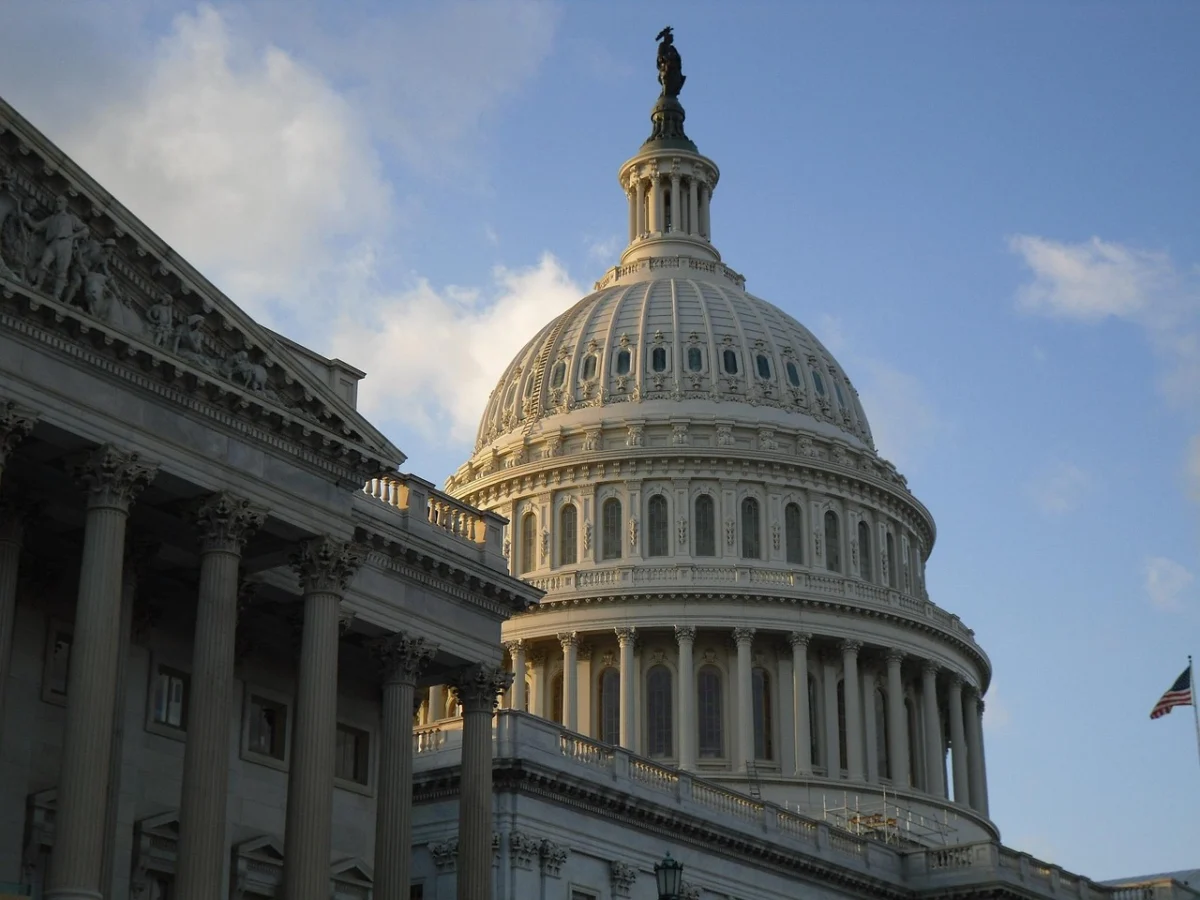
WASHINGTON, D.C. — In a dramatic display of executive defiance, President Donald Trump announced on Friday that he will refuse to sign the 21st Century ROAD to Housing Act—a sweeping bipartisan legislative package designed to address the nation’s crippling housing affordability crisis. Despite the bill having cleared both chambers of Congress with overwhelming, veto-proof majorities, the President has chosen to withhold his signature as a tactical protest against the Senate’s refusal to prioritize his preferred voting legislation.
This impasse marks a significant friction point in the relationship between the White House and Capitol Hill, raising constitutional questions about the limits of presidential influence and the mechanics of the legislative process in an era of intense political polarization.
The Core Conflict: Housing vs. Voting Rights
The current standoff is rooted in the legislative fate of the Safeguard American Voter Eligibility (SAVE) Act. The SAVE Act would mandate that individuals provide documentary proof of U.S. citizenship and valid photo identification to register for and cast ballots in federal elections. While the bill passed the House in February, it has hit a brick wall in the Senate, where Republicans—despite their best efforts—have failed to secure the 60-vote threshold necessary to overcome a filibuster.
President Trump, in a statement released via Truth Social, explicitly linked his refusal to sign the 21st Century ROAD to Housing Act to the Senate’s inaction on the SAVE Act. "I am withholding my signature in PROTEST of the Senate’s failure to pass the SAVE America Act," Trump wrote. By leveraging a high-priority, bipartisan housing bill as a bargaining chip, the President is attempting to pressure Senate leadership to reconsider their procedural stance.
The 21st Century ROAD to Housing Act is, by contrast, a rare example of legislative consensus. Passed by the House with a staggering 358–32 vote and subsequently cleared by the Senate, the bill aims to stabilize the housing market by restricting large institutional investors from purchasing single-family homes—a practice critics argue has driven up prices and squeezed out middle-class families. Additionally, the bill includes provisions to streamline federal building regulations, aimed at accelerating supply in a market where median home prices have recently surpassed $400,000.
Chronology of the Legislative Impasse
The path to this confrontation began early in the 119th Congress, as housing affordability emerged as a top-tier concern for American voters.
- February 2025: The SAVE America Act (H.B. 7296) passes the House of Representatives, signaling a strong push by the GOP base to overhaul federal election integrity standards.
- Spring 2025: Negotiations on the 21st Century ROAD to Housing Act (H.B. 6644) gain momentum. Recognizing that housing affordability is a cross-party concern, leadership in both chambers works to craft a bill that addresses both supply-side constraints and institutional speculation.
- June 2025: The 21st Century ROAD to Housing Act clears the House with broad support, followed by a successful vote in the Senate.
- July 2025: The bill arrives at the White House for the President’s signature.
- July 25, 2025: President Trump announces on Truth Social that he will not sign the housing bill, citing the lack of progress on the SAVE Act and demanding that Senate Majority Leader John Thune eliminate the filibuster to force a vote on the election measure.
The Constitutional Reality: A Pocket Veto That Won’t Stick
While President Trump’s refusal to sign the housing bill is a symbolic blow, its practical impact may be negligible due to the specific language of the U.S. Constitution.
Under Article I, Section 7, if a President chooses neither to sign nor to veto a bill within 10 days (excluding Sundays) while Congress is in session, the legislation automatically becomes law. This mechanism, sometimes referred to as a "passive enactment," is designed to prevent a President from unilaterally killing legislation that has earned the support of the legislative branch.
Because Congress has employed "pro forma" sessions—brief meetings held to satisfy the requirement that Congress remain in session—rather than formally adjourning, the 10-day window will expire without the President’s signature, and the 21st Century ROAD to Housing Act will effectively be enacted without his endorsement. Legal scholars note that this process highlights the intent of the Founders to ensure that the executive cannot indefinitely stall the will of the legislature.
Supporting Data: The Housing Affordability Crisis
The urgency behind the 21st Century ROAD to Housing Act is backed by stark economic data. Over the past four years, the United States has experienced a historic volatility in real estate. Median home prices have climbed to historic highs, consistently exceeding $400,000, rendering homeownership unattainable for millions of first-time buyers.
The "institutional investor" component of the bill is a response to the growing trend of private equity firms and hedge funds purchasing entire residential blocks to convert them into rental properties. Proponents of the bill argue this practice removes inventory from the market, creates an artificial scarcity, and prevents families from building intergenerational wealth.
Conversely, the debate over the SAVE Act centers on a different set of data. Opponents of the SAVE Act, including the Brennan Center for Justice, cite studies indicating that millions of eligible, natural-born American citizens lack the specific documents required by the act, such as a passport or a birth certificate, or the financial means to obtain them. Unlike many European nations that provide national identity cards, the U.S. system relies on a decentralized array of state-issued documents. Critics argue that requiring strict documentary proof of citizenship at the point of registration creates an insurmountable barrier for low-income and elderly voters.
Official Responses and Political Implications
The political fallout of this standoff is already reverberating through the halls of Congress. Senate Majority Leader John Thune has resisted the President’s demands to remove the filibuster, stating publicly that the "votes simply are not there." Thune’s position underscores the internal tension within the Republican Party: while there is strong support for the SAVE Act among the base, there is significant resistance to abandoning the filibuster, which many senators view as a critical safeguard for the minority party.
President Trump has warned that any Republican who fails to support the SAVE Act or resists the removal of the filibuster will face political consequences in upcoming primary cycles. This has created a precarious environment for Republican lawmakers, who must balance loyalty to the party’s leader with the institutional norms of the Senate.
For the Democrats, the impasse is being framed as an example of executive overreach. "The President is holding a lifeline for the American middle class—the housing bill—hostage to satisfy a fringe electoral agenda," one Democratic strategist noted.
The Broader Implications: A Strained Separation of Powers
This episode serves as a case study in the modern legislative process, characterized by deep-seated institutional mistrust. By refusing to sign a bill that he theoretically agrees with on policy grounds, the President is signaling a shift toward a more aggressive use of the veto power—even if that power is limited by the Constitution.
If the 21st Century ROAD to Housing Act proceeds to become law, it will represent a rare bipartisan victory in a period of otherwise gridlocked governance. However, the precedent set by the President’s public protest suggests that future legislation may be subject to similar "hostage-taking" tactics.
As the 10-day window closes, the nation watches to see how the White House will react once the housing bill officially becomes law. Will the President attempt to challenge the enactment, or will he pivot to a new strategy to pressure the Senate? Regardless, the intersection of the housing market crisis and the fight over election integrity remains the central theme of the current legislative session, illustrating that even when common ground is found, the path to implementation remains fraught with political hazard.
Ultimately, the standoff reveals that the balance of power between the President and Congress is as much about the public theater of negotiation as it is about the letter of the Constitution. As Congress continues to operate in pro forma sessions, the survival of the housing bill serves as a testament to the enduring, albeit strained, resilience of the American legislative framework.