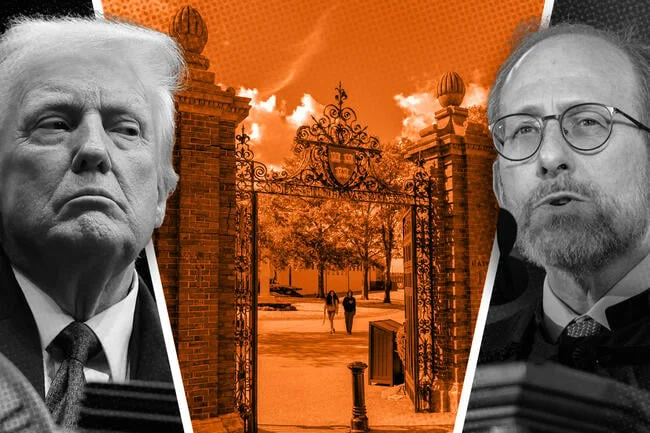
The halls of the U.S. Court of Appeals for the First Circuit became the epicenter of a landmark constitutional showdown this week as Harvard University and the Trump administration locked horns over the federal government’s authority to use funding and visa restrictions as levers of political pressure. The ongoing litigation represents a critical juncture in the relationship between higher education and the executive branch, testing the limits of presidential power in the face of institutional autonomy and First Amendment protections.
At the heart of the dispute are two primary initiatives by the Trump administration: a sweeping attempt to rescind over $2 billion in federal research grants and a move to strip the university of its ability to enroll international students. While Harvard successfully fended off these initiatives in federal district court last year, the administration’s appeal has breathed new life into the conflict, forcing the judiciary to reconcile administrative punitive measures with established constitutional safeguards.
The Scope of the Conflict: A Timeline of Escalation
The friction between Cambridge and the White House did not materialize in a vacuum. It is the culmination of a multi-year tension regarding campus culture, the administration of Title VI of the Civil Rights Act, and the broader role of elite universities in American society.
- Early 2025: The Trump administration begins signaling a more aggressive posture toward Ivy League institutions, specifically citing concerns over the handling of campus protests and alleged systemic indifference to antisemitism.
- March 2025: Federal investigations into Harvard’s federal funding status are initiated, laying the groundwork for the administration’s pivot toward financial withholding.
- Summer 2025: The administration moves to strip Harvard of its Student and Exchange Visitor Program (SEVP) certification, effectively attempting to bar the university from enrolling international students. U.S. District Judge Allison Burroughs intervenes, issuing an injunction that allows the university to continue its enrollment processes.
- Late 2025: Following the initial judicial setbacks, the administration officially cancels over $2 billion in promised research grants. Judge Burroughs again rules against the administration, characterizing the move as an unlawful violation of Harvard’s First Amendment rights.
- August 2026: A broader Department of Justice lawsuit against Harvard regarding antisemitism is dismissed by a federal judge, who finds that the administration failed to provide sufficient evidence of ongoing Title VI violations.
- October 2026: The First Circuit Court of Appeals hears oral arguments on the administration’s appeal of the earlier funding and enrollment rulings.
Procedural Maneuvering: The Shift to Jurisdictional Arguments
During this week’s hearings, the legal strategy employed by the Department of Justice appeared to shift away from the merits of the antisemitism allegations and toward complex procedural arguments regarding jurisdictional authority.
Justice Department lawyer Michael K. Velchik urged the appeals court to view the rescission of research grants not as a First Amendment violation, but as a contract dispute. Velchik argued that because the university is seeking the restoration of federal funds, the case properly belongs in the U.S. Court of Federal Claims. By reframing the issue, the government seeks to bypass the broader constitutional scrutiny applied by Judge Burroughs, suggesting that "there is no First Amendment right to money."
Harvard’s legal team, led by renowned appellate attorney Paul Clement, countered this narrative by highlighting the retaliatory nature of the government’s actions. Clement argued that the administration’s intent was not to settle a contractual disagreement, but to punish a private entity for its perceived political and social stances. "These are not claims that really depend on the contract in any particular way," Clement told the three-judge panel. "They are claims to be free from retaliatory discrimination under the First Amendment."
Judicial Skepticism and the Limits of Executive Action
Throughout the proceedings, the panel of judges displayed notable skepticism toward the government’s justifications for its punitive measures. Judge Sandra Lynch, a Clinton appointee, repeatedly questioned the administration’s decision to bypass established regulatory processes.
"The claim is that Harvard has been indifferent to antisemitism; there are no findings, there was no investigation, there was simply an announcement: ‘We’re terminating,’ against that backdrop," Judge Lynch remarked. She noted that Title VI of the Civil Rights Act of 1964 provides a clear, statutory framework for investigating and addressing discrimination on campus. By acting unilaterally, the administration bypassed the procedural due process that institutions of higher education are legally entitled to expect from the Department of Education and other federal agencies.

The government’s inability to point to formal administrative findings prior to the funding cuts appeared to leave the Justice Department’s counsel on the defensive. The court’s focus on the process of the administration’s decision-making suggests that the final ruling may hinge on whether the executive branch followed the law, rather than whether the university’s campus policies were sufficient.
The International Student Enrollment Dilemma
Perhaps the most controversial aspect of the administration’s strategy is the attempted ban on international students. Data from Harvard’s International Office indicates that international students represent nearly 25 percent of the student body, making them integral to the university’s research output and academic diversity.
Despite the expiration of the original 2025 proclamation, the administration’s counsel, Tiberius Davis, confirmed that the White House is actively considering reissuing the ban if the courts provide the necessary legal clearance. When confronted by Judge Gustavo A. Gelpí regarding the logic of the ban—specifically how it would combat antisemitism while simultaneously barring students from Israel—the government’s response was notably fluid. Davis suggested that the administration could implement "exceptions" for specific nationalities, a proposal that raised further concerns regarding the arbitrary and discriminatory nature of the potential policy.
Implications for Higher Education and the Rule of Law
The outcome of this case will have profound implications for the future of federal-university relations. If the First Circuit affirms the lower court’s ruling, it will set a significant precedent that federal research funding cannot be used as a political cudgel against universities. It would reinforce the principle that institutions of higher learning, even those that receive federal support, are protected from retaliatory administrative actions that infringe upon free speech and association.
Conversely, a reversal could empower the executive branch to exert unprecedented control over private and public universities. By linking federal contracts to ideological compliance, the administration could effectively rewrite the relationship between the government and the intellectual community, turning the "power of the purse" into a primary tool for cultural and political enforcement.
As the legal proceedings conclude, the academic world remains in a state of suspended animation. For Harvard, the stakes are not merely financial; they represent the preservation of the university’s independence from the shifting political whims of the executive branch. For the Trump administration, the litigation is a test of how far a president can push the boundaries of bureaucratic power to reshape the institutions that form the bedrock of the American intellectual landscape.
Regardless of the ruling, the battle between Harvard and the federal government has already fundamentally altered the landscape of campus administration. It has forced universities to grapple with the vulnerability of their federal funding streams and has underscored the fragility of the protections that have traditionally shielded academia from the direct reach of federal political intervention. The First Circuit’s impending decision will likely be cited for decades to come as a defining moment in the ongoing debate over the role of government in the nation’s halls of learning.