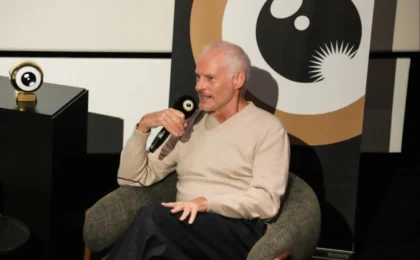
In the landscape of modern cinema, where risk-averse franchises and corporate-mandated narratives often dominate the box office, Martin McDonagh remains a defiant outlier. At the recent Zurich Film Festival, where he was honored with a prestigious Tribute Award, the playwright-turned-director didn’t just reflect on his storied past; he drew a line in the sand regarding the future of his craft. With his latest feature, Wild Horse Nine, McDonagh is stepping into a more explicitly political arena, signaling a departure from the "artistic neutrality" he argues has plagued contemporary storytelling.
The Political Pivot: Wild Horse Nine
At the heart of the current conversation surrounding McDonagh is his upcoming dark comedy, Wild Horse Nine. The film centers on two CIA operatives—portrayed by the formidable pairing of John Malkovich and Sam Rockwell—who embark on a mission to Easter Island in the shadow of the 1973 Chilean coup. While the setting is historical, the narrative resonance is unmistakably contemporary.
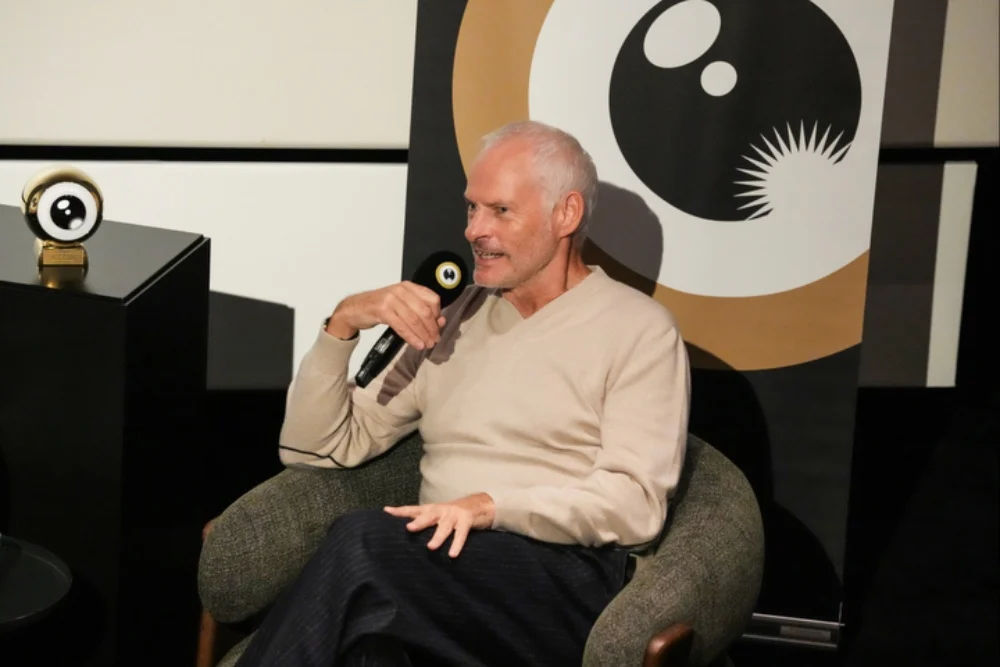
"This is probably my most political film," McDonagh stated during a masterclass at the Zurich Film Festival. "That’s why I find it very exciting to be releasing this monster into the world."
The director expressed a palpable frustration with the current cultural climate, which he characterizes as one of apathy. "I feel like, in the modern day, there’s perhaps a little too much artistic neutrality, or too much saying nothing—not having an opinion or being apathetic. I’m excited to be doing the opposite with this one."
Echoes of History in a Modern Mirror
One of the most striking aspects of Wild Horse Nine is how unintentionally—yet inevitably—it mirrors modern geopolitical volatility. McDonagh noted that the dialogue, originally penned to capture the atmosphere of the 1973 coup, has taken on new meanings in the eyes of test audiences.
"So many things in the present day mirror a lot of those types of interventions in the past," he observed. "You can actually hear lines that I thought were about 1973 being interpreted by a modern audience as being about Venezuela a few months ago or other places around the world."
The film also incorporates dark humor regarding historical Russian interventions—specifically those in Finland a century ago—that have gained a harrowing, unintended relevance due to the ongoing conflict in Ukraine. For McDonagh, this resonance serves as a testament to the cyclical nature of power and the necessity of political art that refuses to look away.
A Chronology of Defiance: From Unemployment to Auteur
To understand McDonagh’s uncompromising stance, one must look back at the trajectory that led him to the director’s chair. His career is a study in perseverance against the grain of institutional rejection.
The Formative Years
"I left school very young, at 16, and was unemployed for a long time," McDonagh recalled. "But with the hopes of being a writer. Part of that was not wanting to have a real job or a boss. That has remained with me until now."
This early resistance to authority defined his creative process. His initial forays into radio drama were met with consistent rejection, most notably from the BBC. Yet, rather than discouraging him, these setbacks hardened his resolve. He transitioned from radio to the stage, where he became a titan of contemporary theater, known for blending razor-sharp dialogue with shocking, visceral imagery—such as the iconic exploding cats in The Lieutenant of Inishmore.
The Catalyst: Al Pacino and the Power of Performance
McDonagh points to a specific, pivotal moment in his artistic development: witnessing Al Pacino in David Mamet’s American Buffalo. The performance crystallized for the young writer exactly what theater—and by extension, film—could achieve.
"He just came on stage and blew the whole theater away," McDonagh recounted. "It was this combination of a play, full of energy and swearing, amazing dialogue and this movie star who, well, you’d realize what acting really was when he was on stage." This ethos—the marriage of high-octane energy with deep, human vulnerability—has become the hallmark of his filmography.
Supporting Data: The Craft of the Actor
McDonagh’s success in directing is inextricably linked to his deep respect for his actors. His transition to film, which he describes as "scariest situation I’ve been in artistically," was facilitated by his reliance on actors who could shield him from the "grown-ups" of Hollywood—a term he uses with biting irony.
The Role of the Collaborator
His debut short, Six Shooter (2004), which earned him an Academy Award, was only possible due to the mentorship and protection of Brendan Gleeson. This partnership blossomed into the cult classic In Bruges, where McDonagh’s dark, existential humor found its perfect vessel in Gleeson and Colin Farrell.
"Colin and Brendan were great partners in protecting me from any interference from the grown-ups," McDonagh said. "Who aren’t usually grown up; they’re children with a lot of money. It’s the nature of Hollywood."
A New Palette for John Malkovich
With Wild Horse Nine, McDonagh is pushing his leading man, John Malkovich, into new emotional territory. The director emphasizes that he is not interested in casting stars for their "brand," but rather for their ability to project complex internal lives.
"When they’re great actors like Frances [McDormand] or John, you see the sadness in their eyes, and you fill in what they’re thinking about," he explained. "One of the ideas for John’s character was to give him the entire palette of emotions. You know that John can do comedy, he can do rage, and he can do contemplative, quiet stuff. But I’m making sure all those things are together in one package."
Official Responses and Industry Implications
McDonagh’s comments at the Zurich Film Festival have sparked a broader conversation about the state of the film industry. His disdain for "Hollywood movies"—which he defines as simple, feel-good stories—is a challenge to the studio system that favors mass appeal over thematic depth.
The Shift Toward Tragedy
McDonagh acknowledges that his work is evolving. While he made his name on pitch-black comedies, his recent output, including Three Billboards Outside Ebbing, Missouri, demonstrates a pivot toward the tragic and the contemplative.
"I’ve tried to make sure that the films aren’t just about being cool," he admitted. "They’re about something deeper, and I guess more tragic. I’m leaving room for more contemplative scenes where the characters are on their own and it’s not funny. They’re left to think about their lives or dwell on their regrets."
The Autonomy Mandate
Perhaps the most significant takeaway from his masterclass is his explicit rejection of the "bigger is better" ethos that governs most directorial careers. As his profile has grown, the pressure to expand his budgets and work on larger-scale projects has increased, yet he remains steadfast in his refusal.
"Weirdly, I’m really happy with the trajectory or the level of films that I’ve made," McDonagh concluded. "I don’t want a bigger budget. I don’t even want more success. I just want to continue making films completely free from any interference from anyone. That’s a perfect position to be in."
Conclusion: The Price of Artistic Freedom
Martin McDonagh’s career serves as a blueprint for the modern auteur. By maintaining a scale that allows for total creative control and by refusing to shy away from the political or the uncomfortable, he has carved out a space where he is beholden to no one but his audience and his own conscience.
As Wild Horse Nine prepares to enter the global consciousness, it does so as more than just another entry in a filmography; it is a manifesto. It stands as a reminder that the most powerful cinema often comes from those who are willing to be "the opposite" of the status quo—who, instead of seeking to comfort, seek to challenge, to provoke, and above all, to remain entirely, unapologetically themselves. In an era of increasing algorithmic content, McDonagh’s commitment to the "human" element of filmmaking—the sadness in an actor’s eyes, the weight of a quiet moment, and the biting truth of a political observation—is perhaps his most radical act of all.