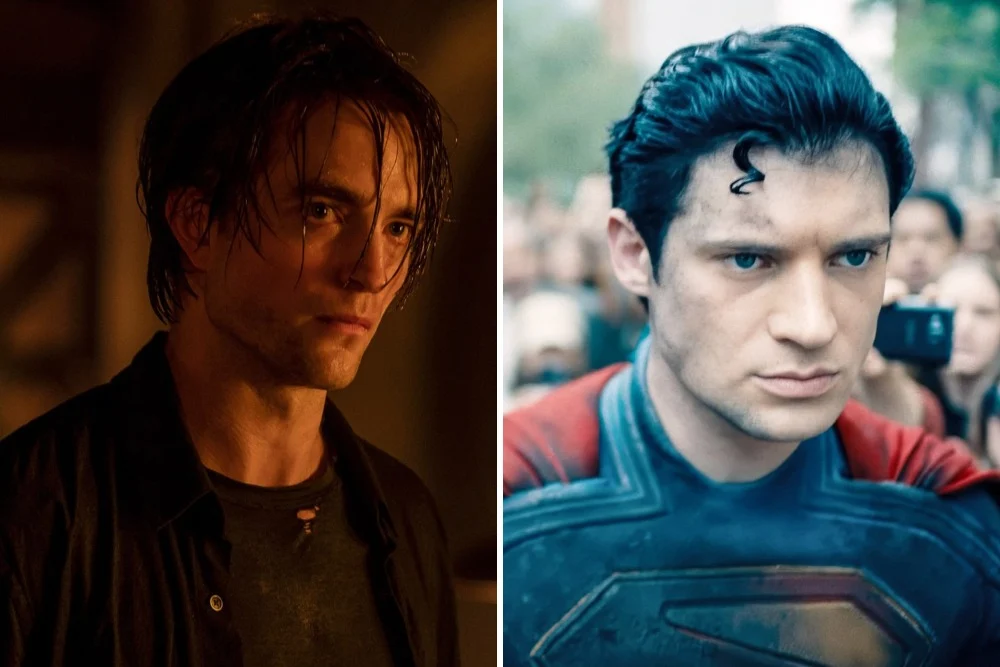
The DC Universe is currently undergoing its most ambitious transformation in history. Under the stewardship of James Gunn and Peter Safran, DC Studios is building a sprawling, interconnected cinematic tapestry designed to rival the structural success of the Marvel Cinematic Universe. However, as the new "Gods and Monsters" chapter takes shape, one prominent shadow looms over the proceedings: Robert Pattinson’s Bruce Wayne.
Despite persistent fan theories and the natural desire to see the World’s Finest—Batman and Superman—team up on the big screen, Robert Pattinson has officially closed the door on the possibility of his gritty, grounded Gotham crossing paths with the vibrant, heroic optimism of James Gunn’s new DC Universe (DCU).
The Psychology of the Bat: Why Pattinson Says "No"
The primary obstacle to a crossover is not merely logistical or contractual; it is tonal. In a recent interview with LADbible, Robert Pattinson articulated the intense, almost claustrophobic nature of his performance in Matt Reeves’ The Batman. For Pattinson, stepping into the cape and cowl is not a casual superhero gig; it is an immersive, psychological endurance test.
"I think it would be kind of tough to have this version of Bruce outside of that world," Pattinson explained. "It’s one of the only characters, I guess because of the length of the shoots, but also it’s such a specific kind of style, the tone of it gets inside you. I remember that happened to me the last time I did it, it took a while. You’re just in the dark, the whole time. Both mood-wise and light-wise, I can’t see anything for months. It does affect you, like you feel strange afterwards."
Pattinson’s comments highlight a fundamental divide in modern superhero filmmaking. His version of Bruce Wayne is a man consumed by trauma, operating in a Gotham that feels more like a noir thriller than a comic book fantasy. To transplant that character into the wider, more cosmic, and often more colorful landscape of the DCU would, in Pattinson’s view, dilute the very essence of what makes Matt Reeves’ vision so potent.
Chronology of a Darker Gotham
To understand why Pattinson’s Batman feels so isolated, one must look at the trajectory of the character over the last two decades. Following the conclusion of Christopher Nolan’s The Dark Knight trilogy in 2012, Warner Bros. struggled to find a consistent identity for the Caped Crusader.
The Post-Nolan Identity Crisis
After the immense success of Nolan’s grounded, hyper-realistic take, the studio attempted a pivot with Ben Affleck’s iteration in Zack Snyder’s Batman v Superman: Dawn of Justice. While Snyder’s vision was visually arresting and grand in scope, it faced a polarized reception. As Variety’s Peter Debruge famously noted in his 2022 review of The Batman, "Where do you go after The Dark Knight? Ben Affleck blew it, and even Christopher Nolan… couldn’t improve on what he’d created in his 2012 sequel."
The Reeves Renaissance
Matt Reeves entered the fray with a strategy that ignored the need for interconnected team-ups entirely. Instead, he leaned into the detective roots of the character, drawing inspiration from Seven and Chinatown. By creating a Batman who is barely a hero—a man struggling to find the line between vengeance and justice—Reeves created a "standalone" monolith. The Batman, released in 2022, was not merely a superhero movie; it was a character study that prioritized atmosphere over spectacle.
The Contrast with Gunn’s DCU
While Reeves was busy perfecting the shadows of Gotham, James Gunn was preparing the launch of his new DCU. The 2025 Superman film marked a deliberate departure from the "dark" aesthetic that defined much of the previous DC era. As Variety’s Owen Gleiberman observed, the new Superman was "a loopy, spinning, multifaceted story with genuine emotional stakes," consciously avoiding the grim, desaturated palette of the Snyder era. This aesthetic and tonal chasm is precisely why a crossover feels so jarring: one world is built on the reality of street-level crime, while the other is built on the reality of gods among men.
Supporting Data: The "Elseworlds" Strategy
Warner Bros. Discovery has navigated this tension by formally categorizing Reeves’ The Batman franchise as part of the "DC Elseworlds" label. This branding is crucial. It allows the studio to maintain two distinct Batmen: one that exists within the primary DCU timeline (the upcoming The Brave and the Bold film) and the Pattinson-Reeves iteration.
From a business standpoint, this is a masterful, if confusing, maneuver. By keeping the Reeves universe separate, Warner Bros. avoids the "continuity trap." In the past, studios have often forced characters into shared universes at the expense of creative integrity. By allowing Matt Reeves the autonomy to finish his trilogy without the pressure of a wider universe, the studio preserves the brand equity of a critically acclaimed and commercially successful series.
Official Responses and Creative Vision
The creative tension between "standalone art" and "shared universe commerce" is a constant in the halls of Warner Bros. James Gunn has been consistently supportive of the "Elseworlds" model. In several public statements, Gunn has emphasized that the DCU is an open, interconnected playground, but that it shouldn’t come at the expense of "singular visions."
Matt Reeves, for his part, has maintained a relatively low profile regarding the wider DCU, focusing his energy on The Batman Part II and the spin-off series, such as The Penguin. His commitment to a grounded reality is clear. By keeping his Batman disconnected from the Justice League, he ensures that the stakes remain personal. When your Batman is fighting a costumed serial killer, the introduction of an alien with heat vision would fundamentally break the internal logic of the world.
The Implications for Future DC Cinema
The decision to keep Robert Pattinson separate from the DCU carries several major implications for the future of the franchise:
1. The Quality vs. Quantity Dilemma
By isolating Pattinson, DC proves that it is willing to prioritize the quality of an individual filmmaker’s vision over the "shared universe" checklist. This could be a significant competitive advantage against other studios that often struggle with "franchise fatigue," where every film feels like a commercial for the next one.
2. Audience Confusion
The primary risk remains the casual viewer. With two different Batmen potentially appearing in cinemas within a few years of each other, the studio faces the challenge of maintaining brand clarity. Will general audiences understand why one Batman is a gritty detective in a rainy, grounded city, while another is a veteran mentor in a world filled with super-powered heroes? The marketing teams will have to work overtime to ensure the "Elseworlds" branding is clear.
3. The Ceiling of the Standalone
The potential downside is that fans of the "World’s Finest" dynamic—the classic Batman/Superman alliance—may feel disappointed that they will never see this specific iteration of Bruce Wayne stand alongside a Superman. However, the success of the "Elseworlds" model suggests that fans are becoming increasingly sophisticated, willing to accept different "versions" of characters much like they do in the pages of comic books.
Looking Toward the Future
As we look toward Feb. 18, 2028, the date set for the release of The Batman Part II, the industry will be watching closely. Robert Pattinson’s performance has redefined the character for a new generation, shifting the focus from the playboy billionaire trope back to the "World’s Greatest Detective."
His refusal to join the DCU is not a sign of conflict, but a sign of conviction. It is a declaration that this version of the Dark Knight is a closed loop, a complete story that doesn’t need a multiverse to justify its existence.
In an era where every intellectual property is being stretched, bent, and forced into a shared sandbox, there is something remarkably refreshing about a Batman who stays in the shadows—not just because he is a creature of the night, but because his world is complete, dark, and perfectly realized just as it is. Pattinson’s Bruce Wayne is a man who finds his strength in isolation, and perhaps, for the sake of the character’s integrity, that is exactly where he should remain.