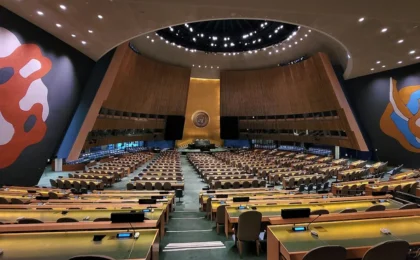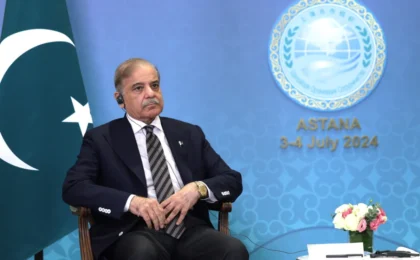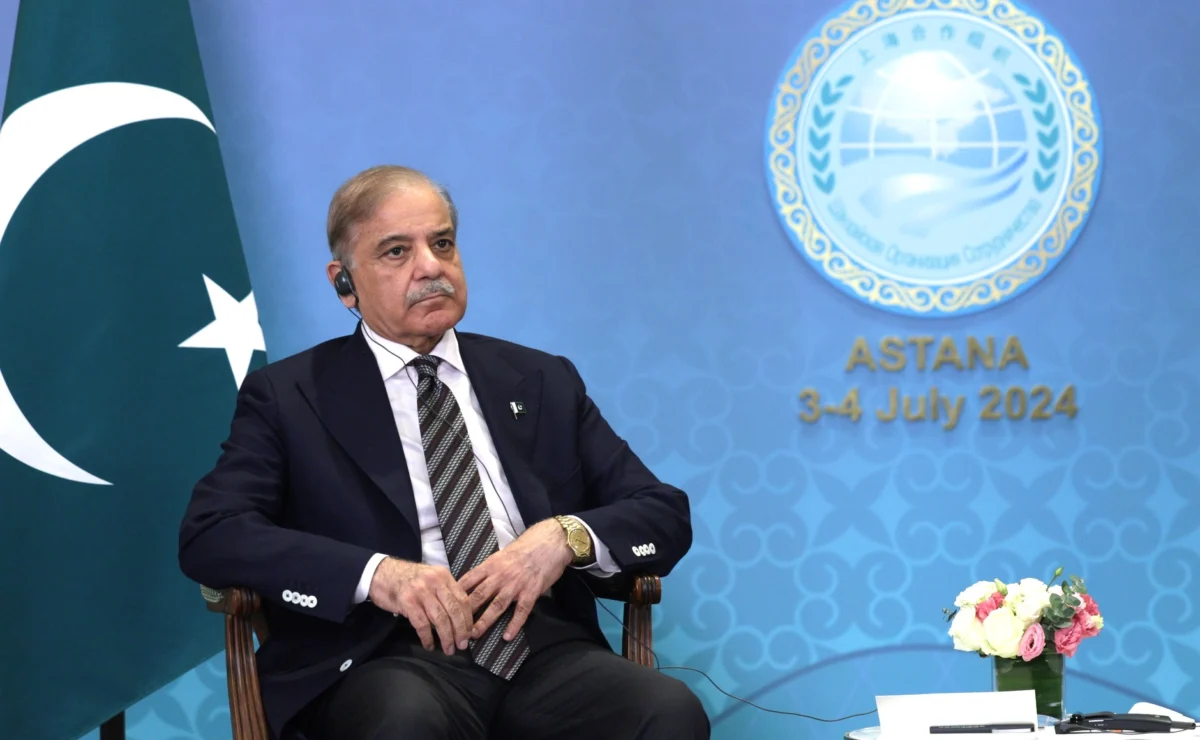
UNITED NATIONS, New York — In a stern address to the 81st session of the United Nations General Assembly (UNGA), Pakistan Prime Minister Shehbaz Sharif issued a grave warning to the international community, declaring that any attempt by India to unilaterally obstruct or divert the waters of the Indus River system would be treated as an "act of war."
The statement, delivered on the global stage, marks a dramatic escalation in the long-standing geopolitical rivalry between the two nuclear-armed neighbors. Sharif’s remarks underscore the deepening fragility of the 1960 Indus Waters Treaty (IWT), an agreement once heralded as a model of conflict resolution that has, in recent years, buckled under the weight of regional instability and accusations of diplomatic bad faith.
The Core Conflict: Water as a Geopolitical Weapon
At the heart of the crisis lies the Indus River system, a critical lifeline that sustains the agricultural and economic stability of millions across South Asia. The IWT, brokered by the World Bank in 1960, allocates the rights and obligations of the Indus waters between India and Pakistan.
Prime Minister Sharif emphasized that these waters are the "lifeblood" of Pakistan, warning that their weaponization threatens the sovereignty and survival of his nation. "Water must never be weaponized," Sharif told the Assembly. "Rivers should nourish nations, not divide them. Therefore, any attempt to stop, impede, or divert Pakistan’s share of the waters will be treated as an act of war. India must make no mistake about it."
The Prime Minister’s rhetoric directly challenges New Delhi’s recent policy shifts, specifically the Indian government’s decision to place the IWT in abeyance. Sharif argued that such unilateral measures lack any "legal basis whatsoever," citing recent rulings by the Permanent Court of Arbitration (PCA) as validation of Pakistan’s position.
Chronology of the Crisis: From Stability to Stagnation
The erosion of the IWT did not happen overnight. For decades, the treaty remained the only major diplomatic pillar that held firm, even during periods of overt military conflict. However, the current breakdown is rooted in a series of events that began in the spring of 2025.
The Turning Point: The Pahalgam Attacks (April 2025)
The diplomatic climate shifted sharply following a tragic militant attack in the Baisaran Valley near Pahalgam in Indian-administered Kashmir. The assault, which claimed the lives of 26 civilians, served as the catalyst for India’s decision to suspend the IWT. New Delhi asserted that it would keep the treaty in abeyance until Pakistan took concrete, verifiable action against cross-border terrorism.
The Immediate Aftermath
The Indian government moved to restrict water flow through the Baglihar and Kishanganga dams, prompting a swift and aggressive response from Islamabad. Pakistan expelled Indian military liaisons and closed its airspace to Indian aircraft, effectively cutting off direct diplomatic and transit channels.
The Legal Battle (2025–2026)
Following the suspension, the conflict moved from the borders to the international legal arena. In June 2025, the PCA issued a unanimous "Supplemental Award on Competence," ruling that India’s suspension of the treaty did not invalidate the tribunal’s jurisdiction. India formally rejected this authority, maintaining that it never recognized the tribunal’s existence in law and that all subsequent decisions were "void per se."
Despite India’s refusal to participate in the proceedings, the PCA reaffirmed its competence in August 2025. By late 2026, the dispute reached a technical impasse regarding "maximum pondage"—a measure defining the volume of water India is permitted to store for its run-of-river hydroelectric projects on the Western Rivers.
Supporting Data and Technical Context
The Indus Waters Treaty governs the flow of the Indus, Jhelum, and Chenab rivers—the "Western Rivers"—which are primarily allocated to Pakistan under the 1960 agreement. India is granted specific rights to use these waters for limited agricultural and hydroelectric purposes, provided it does not impede the flow to the downstream nation.
The Legal Framework
The treaty includes a robust dispute resolution mechanism, which provides for the appointment of a neutral expert or a Court of Arbitration. Pakistan’s reliance on the PCA is based on these clauses, while India’s argument rests on the claim that the treaty’s mechanisms have been superseded by the current security environment.
Economic and Humanitarian Stakes
Data from international observers suggests that water scarcity is becoming a primary security concern for the region. Climate change, coupled with rapid infrastructure development on both sides of the border, has intensified competition for the basin’s resources. The Lowy Institute has noted that the weaponization of the treaty represents a dangerous trend, where technical water-sharing agreements are increasingly viewed as tools of political coercion rather than instruments of regional cooperation.
Official Responses and International Intervention
The UNGA address saw Prime Minister Sharif pivot to broader diplomatic outreach, specifically thanking President Donald Trump for his intervention during periods of acute tension. By highlighting this, Sharif signaled that Pakistan is actively seeking international mediation to balance what it perceives as Indian regional hegemony.
The Kashmir Question
Sharif also utilized his platform to link the water dispute back to the Jammu and Kashmir conflict. He argued that the water crisis cannot be resolved in isolation from the broader territorial dispute, calling for a "fair resolution" to the Kashmir issue as a prerequisite for long-term stability in South Asia.
India’s Stance
New Delhi remains steadfast in its position. Indian officials have consistently argued that the treaty is not "divorced from reality" and that a nation cannot continue to facilitate the rights of an entity that harbors elements attacking its civilian population. India’s refusal to recognize the PCA’s rulings remains a sticking point, effectively creating a "legal vacuum" where the treaty exists on paper but is practically ignored on the ground.
Strategic Implications: A Region on the Brink
The declaration that water diversion is an "act of war" is a significant departure from standard diplomatic rhetoric. It effectively sets a "red line" that, if crossed, could trigger military engagement.
Regional Stability
The shift suggests that the era of "technical management" of the Indus waters is likely over. Regional analysts fear that the lack of communication between the two powers increases the risk of miscalculation. If water levels in the Western Rivers fluctuate—whether due to natural climate events or human intervention—the threshold for conflict is now significantly lower.
The Role of International Institutions
The failure of the IWT to manage the current crisis has cast doubt on the efficacy of 20th-century multilateral agreements in the face of 21st-century nationalistic agendas. With the PCA’s authority rejected by India and the treaty in abeyance, the international community faces a difficult choice: continue to press for legal adherence, or shift toward high-level mediation that addresses the root causes of the enmity.
Conclusion
As the 81st UNGA session concludes, the message from Islamabad is clear: the Indus River is not merely a geographic feature, but a vital interest of the state, worth defending with the full might of its military. Whether this warning acts as a deterrent or a spark for further escalation remains the central question facing South Asian security. For now, the region remains trapped in a cycle of suspicion, where the water that once united two nations now threatens to sweep away the last remnants of peace.