We are culturally obsessed with the notion of "winning" at life. From the iconic board game The Game of Life—first introduced by Milton Bradley in 1860—to the endless stream of self-help literature on Amazon promising "the secrets to success," we have been conditioned to view our existence through the lens of a scoreboard. Yet, beneath the surface of this metaphor lies a corrosive reality: by framing life as a competition, we are sacrificing our autonomy, our relationships, and our genuine happiness for a victory that, by definition, is hollow.
The Anatomy of a Metaphor: From Board Games to Modern Anxiety
The concept of "the game of life" has transcended the tabletop. In the contemporary zeitgeist, it has become a pervasive, internalized operating system. For many, the milestones of adulthood—career progression, status symbols, the academic trajectory of one’s children—are no longer personal goals, but metrics in an invisible, never-ending tournament.
Historically, this obsession can be traced back to the industrialization of success. In the 19th century, games like Milton Bradley’s The Game of Life were designed to teach morality and industry. By the 20th century, however, these games had evolved into simulations of wealth accumulation and social climbing. The commercials of the 1960s, 80s, and 90s shifted the narrative from "doing good" to "getting ahead," cementing the idea that a life well-lived is a life where you finish with more points than your neighbor.
Today, this metaphor has metastasized. Social media platforms act as the ultimate leaderboards, where users constantly compare their behind-the-scenes struggles with everyone else’s highlight reels. The result is a society paralyzed by the fear of "losing," where success is defined by objective, measurable markers that are, ultimately, trivial.
The Fundamental Misalignment: Why Life Isn’t a Competition
To understand why this mindset is so destructive, we must first define the parameters of a "game." A game is an activity governed by external, arbitrary rules designed to create a winner and a loser. In a game, the goals have no intrinsic value; the exhilaration comes from the act of competition itself. While games like chess, golf, or fantasy football are excellent for recreation, they are disastrous templates for existence.
The Conflict of Subjective Values
The most important aspects of a human life—ethics, love, intellectual curiosity, and creative fulfillment—are inherently subjective. There is no metric for "meaningful relationships." You cannot objectively rank the quality of one person’s integrity against another’s. When we try to force these abstract values into a competitive framework, we inevitably gravitate toward what can be measured: salary, square footage of a home, or the prestige of a university.
By prioritizing the measurable over the meaningful, we effectively subordinate the core pillars of human happiness to petty, external validation. We end up spending our limited time on earth optimizing for things that, in the grand scheme of history, are utterly inconsequential.
The Corrosion of Human Connection
Perhaps the most tragic consequence of viewing life as a game is the impact on our relationships. A healthy, flourishing life requires deep, unconditional support for others. We should be genuinely thrilled when our friends receive a promotion or when a peer finds success. However, if you perceive life as a zero-sum game, your brain begins to view the success of others as a personal setback.
The Rise of "Ambiguous Relationships"
When the people around you are seen as competitors, the nature of intimacy shifts. You find yourself rooting for them, but with an asterisk. You want them to do well, just not better than you. This creates a psychological distance that makes genuine vulnerability impossible. If you are constantly performing or comparing, you are not truly present. You are not building a life; you are managing a public relations campaign. True closeness requires the total abandonment of the competitive spirit. To love someone is to stop keeping score.
The Autonomy Trap: Who Sets the Rules?
One of the most insidious aspects of the "game of life" is that the players rarely stop to ask who wrote the rulebook. We chase academic prestige, athletic excellence, and material wealth not because these things inherently align with our personal values, but because the "game" tells us these are the keys to the kingdom.
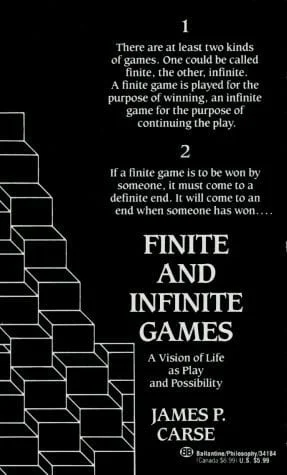
When you play by someone else’s rules, you have surrendered your autonomy. James Carse, in his seminal work Finite and Infinite Games, distinguishes between games played to win (finite) and games played to keep the play going (infinite). Most people are trapped in a finite game, chasing goals they had no role in formulating. Any victory achieved within this structure is what philosophers call a "Pyrrhic victory"—a success that comes at such a cost that it is indistinguishable from defeat. By the time you reach the "finish line," you may realize that the life you were living wasn’t yours to begin with.
The Reality of the Zero-Sum Game
Statistically, the game of life is a zero-sum construct. If you define winning by the top 0.01% of socioeconomic status, beauty, or professional influence, the vast majority of humanity is destined to "lose."
The modern anxiety epidemic is, in many ways, a symptom of this refusal to accept that we are not all meant to be champions of the status game. We view every frustration, every setback, and every moment of mediocrity as a sign of failure. This creates a state of constant, low-level shame.
The alternative is to embrace the "infinite game." In this framework, the objective is not to reach a final destination or to beat an opponent, but to continue the process of living, learning, and contributing. When you stop playing to win, you are freed from the tyranny of the scoreboard. You can experience failure not as a defeat, but as data—an opportunity for growth rather than a stain on your record.
Implications for the Future: A Paradigm Shift
If we are to reclaim our lives from the competitive delusion, we must engage in a radical recalibration of our values. This shift requires three fundamental changes in perspective:
- Redefining Success: Move away from objective, external metrics toward subjective, internal satisfaction. Success should be defined by the alignment of your daily actions with your deeply held values.
- Cultivating Community: Treat peers as collaborators rather than competitors. Invest in relationships that are built on mutual growth rather than status-seeking.
- Rejecting the Scoreboard: Recognize that the feeling of "falling behind" is a social construct. Practice gratitude for the present moment rather than obsessing over the future trajectory of your "status."
Final Thoughts: The Game is Over
We must be clear: competition has its place. It is the engine of innovation, the thrill of the stadium, and the spark that pushes us to improve our physical performance in athletics. There is joy in a hard-fought match, provided that the match ends.
The tragedy occurs when the whistle never blows. We must learn to put the game away. When you leave the playing field of status and competition, you don’t lose your life; you finally begin to live it. You gain the time to pursue hobbies that interest you, not those that impress others. You gain the space to nurture friendships that are rooted in love, not convenience.
Life is not a test to be passed or a competition to be won. It is a singular, unrepeatable experience. It is far too important to be turned into a game. The next time you feel the pressure to "win," remember that the only game worth playing is the one where you define the rules—and where the only person you are trying to improve is the one you see in the mirror.