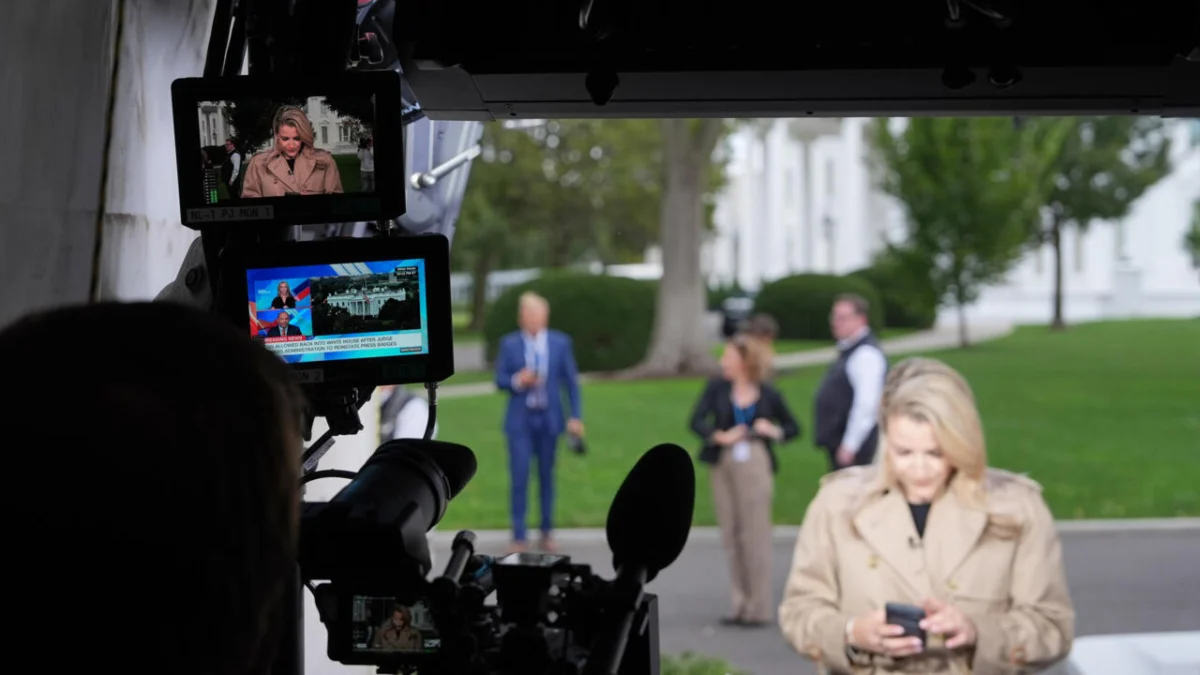
The friction between the executive branch and the press corps reached a new inflection point this weekend as the White House moved to exclude CNN from the presidential press pool for a scheduled trip to Tennessee. This latest development follows a tumultuous period of legal battles and administrative directives aimed at curbing the access of major news organizations, signaling a deepening rift between the Trump administration and mainstream media entities.
Main Facts: The Exclusion of CNN
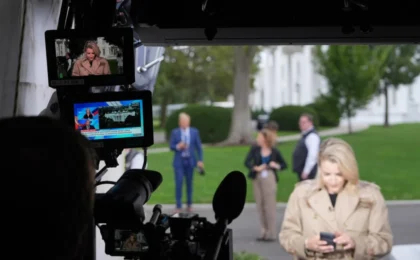
On Friday evening, the White House released an updated travel itinerary for President Donald Trump’s weekend journey to Tennessee. Notably absent from the rotation was the CNN crew, which had been slated to serve as the television network representative for the "pool"—a compact, rotating group of journalists tasked with documenting the president’s movements to provide coverage for the broader press corps when space is limited.
In a move that has further polarized observers, the administration bypassed the traditional network rotation entirely. Instead, the schedule designated "Lindell TV"—a digital outlet spearheaded by businessman and outspoken Trump ally Mike Lindell—as the primary "Secondary TV" correspondent and crew. By substituting a mainstream, independent news organization with an outlet known for its unwavering support of the president, the administration has reignited accusations that it is attempting to curate a favorable media environment, effectively sidelining critical scrutiny.
A Chronology of Confrontation
The events of this weekend are not isolated incidents but rather the latest chapters in a sustained effort by the Trump administration to reshape the relationship between the presidency and the press.
- September 2026 (The Initial Ban): The administration first moved to strip credentials from three major outlets: CNN, MS NOW, and Politico. The justification provided by the White House centered on allegations of "negative coverage" and "fake news," framing the outlets as inherently biased against the president’s agenda.
- The Legal Pushback: Following the initial revocation of press passes, the affected outlets took legal action, arguing that the denial of access violated the First Amendment and the principles of a free press.
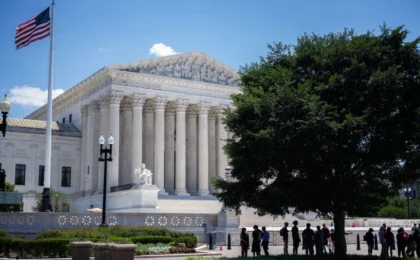
- The Judicial Intervention: A federal judge intervened shortly thereafter, issuing a temporary injunction that compelled the White House to restore the credentials of the journalists. The judge’s ruling suggested that the administration’s actions were likely unconstitutional, emphasizing that the White House complex serves as a public forum where access should not be contingent upon the favor of the officeholder.
- The Temporary Respite: Following the court order, the journalists were briefly allowed back into the White House complex, offering a fleeting sense of normalcy.
- The Current Escalation: The exclusion of CNN from the Tennessee pool represents the administration’s tactical adjustment to the legal reality. While the court mandated physical access to the White House complex, the administration is now leveraging its control over presidential travel logistics to bypass the court’s intent, essentially "starving out" specific networks by denying them the travel access necessary to cover the president on the road.
Supporting Data and the "Solidarity" Movement
The administration’s tactics have triggered a rare, unified response from the broader journalistic community. When CNN’s access was first threatened earlier this week, a coalition of the nation’s five most prominent broadcasters—ABC, CBS, CNN, Fox, and NBC—formed a collective front. In an unprecedented move, these networks threatened to halt all pool coverage of the White House in a display of solidarity against what they termed an "unacceptable encroachment on press freedom."
"The public has a vital interest in receiving accurate, independent information about its government," the joint statement read. "No administration should restrict a news organization because it objects to its reporting."
The inclusion of Fox News—historically more sympathetic to the current administration—in this statement underscores the severity of the situation. It suggests that even conservative-leaning media outlets recognize the danger of a precedent that allows the executive branch to hand-pick the journalists who cover the commander-in-chief.
Furthermore, the replacement of traditional networks with Lindell TV raises significant questions about transparency. Lindell TV, while a legitimate media venture, operates under a different editorial framework than the major networks. By prioritizing an outlet that has demonstrated ideological alignment with the President, the White House is arguably attempting to institutionalize a form of "state-aligned" journalism, which many media critics argue undermines the fundamental role of the press as a check on executive power.
Official Responses and Strategic Silence
The silence from the White House following the announcement of the Tennessee travel pool has been as telling as the exclusion itself. When reached for comment, administration spokespeople declined to provide a justification for the exclusion of CNN or the prioritization of Lindell TV.
CNN, for its part, maintained a disciplined stance, declining to provide a formal comment to media outlets such as AFP. Behind the scenes, however, sources indicate that the network is weighing its legal options, potentially seeking an expansion of the previous court order to cover presidential travel logistics.
Legal scholars suggest that the administration is operating in a "grey zone." While the White House has wide latitude in managing presidential travel logistics, the deliberate exclusion of specific networks—especially after a court ruling against similar actions—could be interpreted as an act of bad faith or a violation of the spirit of the previous judicial ruling.
Implications for Democracy and the Press
The implications of this struggle extend far beyond the logistics of a press pool. At its core, this conflict touches upon the fundamental definition of the relationship between the government and the governed in the United States.
1. The Erosion of Institutional Norms
The White House press pool is a structural necessity of modern governance. Because a president cannot be accompanied by hundreds of reporters at every public event, the pool system ensures that a representative group of journalists—regardless of their political orientation—is present to record and report on history. By politicizing this group, the administration is effectively dismantling a democratic norm that has existed for decades.
2. The Rise of "Curated" Journalism
By favoring outlets like Lindell TV over established news organizations, the administration is signaling a preference for a "filter-less" direct-to-consumer information strategy. This shift toward circumventing traditional media gatekeepers allows the president to frame narratives without the immediate pressure of adversarial questioning, a staple of the American democratic process.
3. The Future of Judicial Oversight
The judiciary is now in a precarious position. If courts consistently rule that the White House must grant access to all news organizations, they risk being seen as infringing on the executive branch’s operational control. If they refuse to intervene, they risk allowing the executive branch to insulate itself from critical oversight. The coming weeks will likely see further litigation that could define the legal limits of presidential control over press access for generations to come.
4. The Public Trust Deficit
Perhaps the most damaging implication is the potential for increased public distrust. When the government dictates who is allowed to report on its activities, the public is left with a fragmented information ecosystem. For those who support the administration, these actions are framed as "clearing out bias." For those who advocate for a traditional press, they are framed as "authoritarian overreach." This binary perception makes it increasingly difficult for citizens to arrive at a shared set of facts, further polarizing an already fractured electorate.
Conclusion: A Precarious Future
As the presidential motorcade departs for Tennessee without the presence of CNN, the broader question remains: What is the future of the American press in the age of digital media and ideological warfare? The administration’s move to swap out established journalists for hand-picked, ideologically aligned alternatives suggests a long-term strategy of isolation and control.
Whether the courts will intervene again, or whether the major networks will continue to hold the line in their unified stance, remains to be seen. What is clear, however, is that the tension between the Trump administration and the Fourth Estate has reached a critical threshold. The outcome of this confrontation will likely set the tone for executive-media relations for the remainder of the presidential term, serving as a landmark case study in the resilience—or fragility—of democratic transparency in the modern era. As the legal filings begin to pile up, the only certainty is that the battle for the narrative is only just beginning.