For decades, the backbone of modern industrial agriculture has been heavy machinery. From massive tractors to deep-tilling harvesters, the weight of modern farming technology has created an unintended, multi-billion-dollar crisis: soil compaction. As the earth is repeatedly pressed by tons of steel, it loses its porosity. The result is a suffocating environment for crops, leading to yield losses estimated between 20% and 60%.
For many, the solution has been traditional tilling—the practice of churning the soil to break up hardened layers. However, tilling is a double-edged sword. While it temporarily aerates the ground, it is fuel-intensive, labor-heavy, and fundamentally disruptive to the delicate microbiome of the soil. Now, a London-based startup, Muju Earth, is proposing a radical departure from this cycle. By introducing the “Aeropod”—a fingernail-sized device that behaves like a seed—the company aims to eliminate the need for traditional tilling entirely, promising a future of regenerative agriculture that is as simple as it is efficient.
The Core Innovation: Farming Without the Heavy Lifting
The Aeropod is the brainchild of co-founders Ifeoluwa Afolayan and Wangyang Hu, whose development work at Imperial College London centered on a singular, provocative question: "How do you make soil aeration as simple as sowing a seed?"
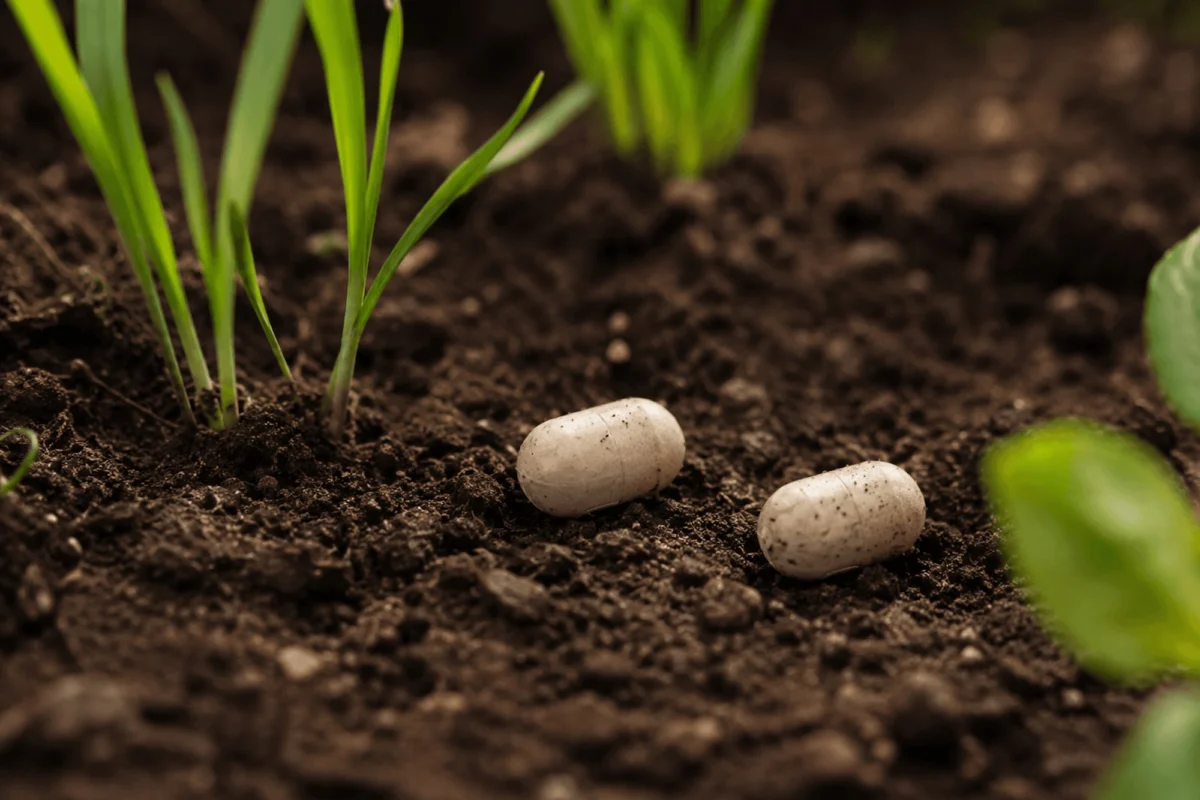
The resulting technology is deceptively simple in form but sophisticated in function. The Aeropod is designed to be sown alongside standard crop seeds using existing agricultural equipment. Once embedded in the soil, the device acts as a biological trigger. Upon being exposed to specific environmental cues—a precise combination of soil temperature, pressure, and moisture—the pod bursts open. This controlled expansion physically shifts the surrounding soil, creating a network of micro-channels that allow air, water, and delicate root systems to permeate deeper into the earth.
“It is built like a seed, it sows like a seed, and it ships like a seed,” Afolayan explained in an interview with TechCrunch. By removing the need for heavy mechanical intervention, the Aeropod essentially democratizes soil health, providing a low-barrier solution that small-scale farmers and industrial agriculturalists alike can implement without retrofitting their entire fleet of machinery.
A Chronology of Development: From Lab to Field
The journey of Muju Earth has been one of rigorous academic testing transitioning into real-world application.
- Conceptualization (The Imperial College Era): Afolayan and Hu began their research with the goal of reconciling high-yield agricultural demands with the urgent necessity of soil health. They identified the "tilling tax"—the cost of labor, diesel, and equipment wear-and-tear—as the primary obstacle for farmers.
- Proof of Concept: The team moved from theoretical models to laboratory testing, verifying that the Aeropod could reliably trigger expansion under controlled soil conditions.
- The Scaling Phase (2024): Following successful lab results, Muju Earth began preparing for its first series of paid field trials.
- The Present Moment (Fall 2024): The company is currently launching pilot programs in the United Kingdom, focusing on nine initial farming partners. The demand has already outpaced supply, with more than 30 farmers currently on a waiting list, eager to test the technology on their own land.
- The Global Stage (October 2024): Muju Earth has been selected as one of the 200 startups participating in the TechCrunch Startup Battlefield at TechCrunch Disrupt in San Francisco, where they will present their solution to a global audience of investors and agricultural experts.
Supporting Data: The Economics of Compaction
The economic case for the Aeropod is rooted in the harsh realities of current farming margins. According to Afolayan, the cost of tilling a single hectare of land—factoring in diesel consumption, operator labor, and the rapid depreciation of heavy machinery—can reach between £250 and £400.
Muju Earth estimates that the Aeropod could reduce these costs by more than 50%, bringing the expenditure down to approximately £100 per hectare. For a commercial farming operation managing hundreds of hectares, this represents a significant increase in bottom-line profitability.
Beyond the immediate financial savings, there is the "yield bonus." By preventing compaction, crops are better able to access deep-soil nutrients and moisture, which leads to more resilient plants. The startup is initially targeting onion growers in the UK, a sector where the high sensitivity of the crop to soil compaction makes the value proposition of the Aeropod particularly acute.
Official Responses and Strategic Partnerships
The reception from the agricultural community has been notably organic. Unlike many agritech companies that rely on heavy-handed outbound marketing, Muju Earth has found that the demand is primarily inbound.
“The best thing about Aeropod is that the farmers intuitively understand the proposition,” Afolayan noted. When a farmer sees the product, they immediately grasp the correlation between soil aeration and crop health, removing the need for complex educational campaigns.
Beyond the farmers, an unexpected secondary market has emerged: the producers of "biologic amendments." These companies manufacture microbial soil additives designed to boost plant health. These biological products, which often contain live, beneficial bacteria, struggle to penetrate compacted soil. Manufacturers of these products have expressed significant interest in partnering with Muju Earth, as the Aeropod provides the perfect delivery mechanism for their microbes to reach the root zone.
The Broader Implications: Regenerative Agriculture at Scale
The implications of the Aeropod extend far beyond individual farm profits. We are currently witnessing a global shift toward regenerative agriculture—a philosophy of farming that prioritizes soil carbon sequestration, biodiversity, and ecosystem restoration.
Traditional intensive tillage is a major antagonist in the regenerative movement, as it releases stored soil carbon into the atmosphere and disrupts the fungal networks (mycorrhizae) that plants rely on for nutrient uptake. By offering a "zero-till" or "reduced-till" alternative that does not sacrifice output, Muju Earth is aligning itself with the global push for climate-smart farming.
Furthermore, the "simplicity" of the technology is its most equitable feature. Large-scale robotic solutions for farming often carry price tags that exclude smallholder farmers in developing nations. Because the Aeropod is designed to be handled just like a seed—sown by existing, simple machinery—it has the potential to be deployed across vastly different economic landscapes, from the high-tech farms of the UK to small-scale holdings in the Global South.
Conclusion: A Seed of Change
As Muju Earth prepares to take the stage at TechCrunch Disrupt, the company stands at a crossroads. It has moved beyond the "what-if" stage of academic research and into the high-stakes world of commercial field trials.
The agricultural industry is notoriously slow to adopt change, often because the risks associated with new technology—such as total crop failure—are too high. However, by designing a product that works with the farmer’s existing workflow rather than against it, Muju Earth has cleared the highest hurdle in agritech innovation.
The Aeropod is not just a clever piece of engineering; it is a fundamental rethinking of how we interact with the earth. By shrinking the technology down to the size of a seed, Muju Earth may have found the key to unlocking a more profitable, more productive, and—most importantly—more sustainable future for agriculture. Whether they can scale their production to meet the global demand remains to be seen, but the initial evidence suggests that the solution to one of farming’s oldest problems may have been lying in the soil all along.