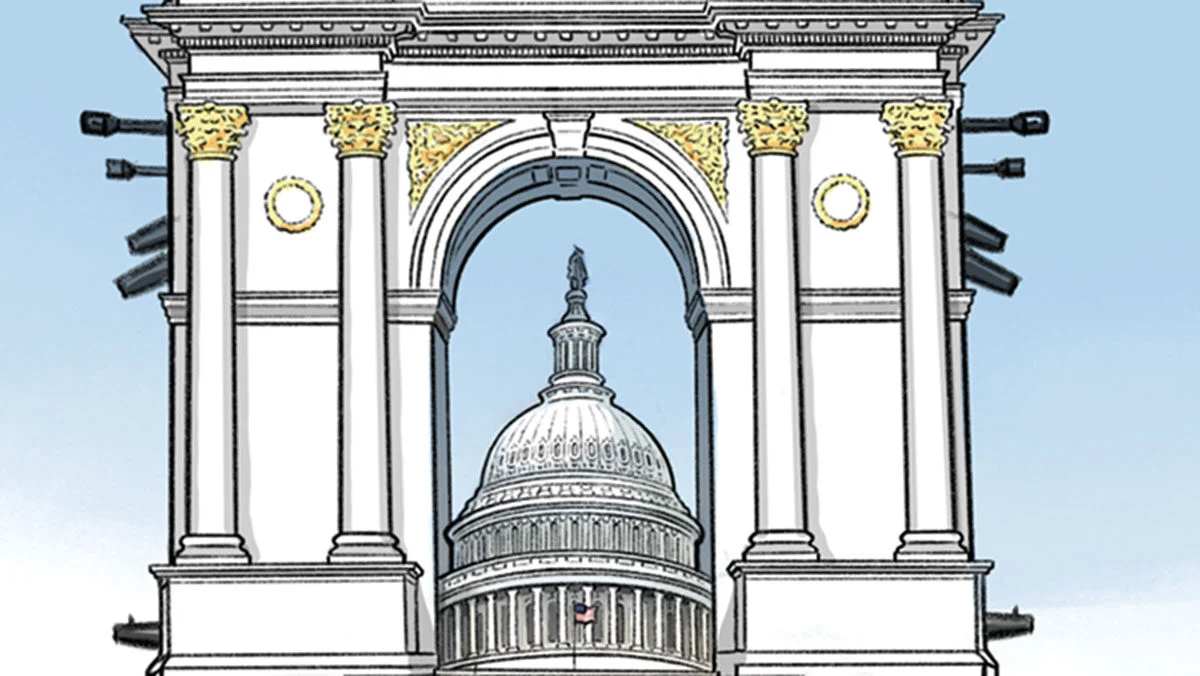
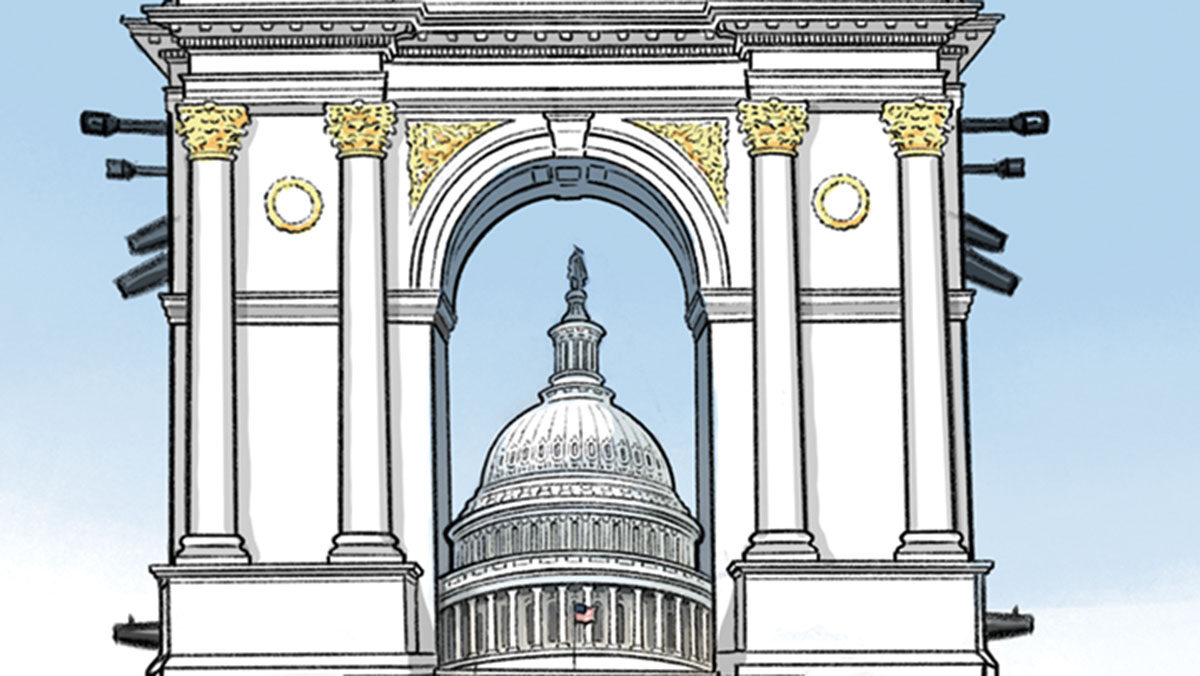
WASHINGTON — With only seven days remaining before the federal fiscal calendar resets, Washington is once again paralyzed by a high-stakes budget impasse. As the September 30 deadline approaches, lawmakers in the House and Senate remain sharply divided over funding the federal government for Fiscal Year 2027. The growing anxiety across the Capitol complex was captured in the September 23 edition of CQ Roll Call, where editorial cartoonist R.J. Matson’s "Capitol Ink" highlighted the escalating frustration over Congress’s recurring reliance on brinkmanship to manage the nation’s finances.
The current deadlock pits a conservative faction in the House, demanding deep cuts to non-defense discretionary spending and stringent policy riders, against a bipartisan coalition in the Senate and the White House, who favor a clean, short-term Continuing Resolution (CR) to keep agency doors open. Without a legislative compromise or a temporary stopgap measure enacted by midnight on September 30, vast segments of the federal government face an immediate lapse in appropriations, threatening widespread furloughs, disruption to public services, and economic uncertainty.
Main Facts: The Fiscal Year 2027 Impasse on Capitol Hill
At the core of the current crisis is a fundamental disagreement over total discretionary spending levels for Fiscal Year 2027. While regular order dictates that Congress pass 12 individual appropriations bills to fund federal operations, the legislative process has ground to a halt, leaving the government vulnerable to a full or partial shutdown.
Key Elements of the Budget Dispute
- Topline Spending Limits: House fiscal hawks are demanding a topline discretionary spending cap set at $1.61 trillion, representing a significant cut from previous fiscal agreements. In contrast, the Senate’s bipartisan spending package adheres to a $1.72 trillion threshold, reflecting inflation adjustments and previously agreed-upon spending frameworks.
- Policy Riders and Amendments: Negotiations are further hindered by a series of contentious policy riders attached to the House spending bills. These include provisions aiming to curtail federal diversity programs, restrict funds for climate change initiatives, and mandate stricter border security enforcement protocols.
- The Continuing Resolution Dilemma: To prevent an immediate shutdown on October 1, leadership in both chambers has proposed a stopgap Continuing Resolution (CR). However, disagreement over the duration of the CR—ranging from a short 30-day extension to a longer bridge lasting through December—has stalled movement on the House floor.
- Internal Party Divisions: House leadership faces a narrow majority, giving small blocs of lawmakers significant leverage. A faction of fiscal conservatives has threatened to block any temporary funding measure that does not include structural spending cuts or major policy concessions, severely restricting leadership’s ability to pass a clean bipartisan measure.
Chronology of the Legislative Deadlock
The path to the current fiscal stalemate has been marked by months of missed statutory deadlines, committee disagreements, and stalled floor votes. The timeline below outlines how the Fiscal Year 2027 budget negotiations devolved into an eleventh-hour crisis.
+-----------------------------------------------------------------------------------+
|                            FY 2027 BUDGET TIMELINE                                |
+-----------------------------------------------------------------------------------+
|  March 11, 2026    : Executive Branch submits FY 2027 Budget Request              |
|  May - June 2026   : House & Senate Appropriations Committees hold markup sessions |
|  July 24, 2026     : House floor debate stalls; key spending bills fail procedural |
|                      votes                                                        |
|  August 8, 2026    : Congress enters summer recess with only 4 of 12 bills passed |
|                      in the House                                                 |
|  September 8, 2026 : Lawmakers return to Washington under mounting pressure       |
|  September 18, 2026: House fails to pass a conservative-backed 30-day stopgap CR   |
|  September 23, 2026: Bipartisan Senate negotiations begin on an emergency alternative|
+-----------------------------------------------------------------------------------+
Spring 2026: Initial Budget Submissions and Committee Hearings
The process began in early March when the White House submitted its formal Fiscal Year 2027 budget proposal to Congress, requesting $1.77 trillion in total discretionary funding. Through May and June, the House and Senate Appropriations Committees held extensive hearings. However, stark ideological differences emerged early during the committee markups, particularly regarding the allocation between defense and non-defense discretionary accounts.
Summer 2026: House Floor Stalls and Recess Approaching
By mid-July, the House had successfully passed only four of its twelve required spending bills—primarily those focused on Military Construction, Veterans Affairs, and Defense. Efforts to bring remaining measures to the floor collapsed when conservative members repeatedly joined Democrats to defeat procedural rule votes, expressing dissatisfaction with overall spending levels. Consequently, Congress departed for its traditional August recess without establishing a clear path forward for full-year funding.
September 2026: Failed Stopgaps and Emergency Negotiations
Upon returning to Washington on September 8, lawmakers faced a tight 16-legislative-day window to reach an agreement. On September 18, the House leadership attempted to pass a conservative-leaning, 30-day Continuing Resolution that included reduced spending rates and attached border enforcement measures. The bill failed on the floor in a 210–222 vote, with a dozen conservative members voting against it on the grounds that it did not cut spending deeply enough, while Democrats opposed the attached policy provisions.
By September 23, with no consensus in sight, Senate leaders began drafting an alternative, emergency bipartisan stopgap measure designed to extend funding through mid-November, setting up a direct confrontation with the House leadership.
Supporting Data and Economic Projections
The economic and operational ramifications of a federal government shutdown are substantial, affecting millions of public sector employees, federal contractors, and national programs.
Discretionary Spending Gap (FY 2027)
The discrepancy between proposed spending levels across key sectors underscores the impasse between the House, Senate, and White House frameworks:
| Sector / Category | Executive Request | House Proposal | Senate Bipartisan Target | Net Difference (House vs. Senate) |
|---|---|---|---|---|
| Defense Discretionary | $895 Billion | $895 Billion | $895 Billion | $0 |
| Non-Defense Discretionary | $825 Billion | $715 Billion | $825 Billion | -$110 Billion |
| Total Discretionary Caps | $1.72 Trillion | $1.61 Trillion | $1.72 Trillion | -$110 Billion |
Discretionary Topline Comparison (in Billions USD)
==================================================
Executive Request : [########################################] $1,720
Senate Target     : [########################################] $1,720
House Proposal    : [#################################] $1,610
                    +----------------------------------------+
                    0                                       $2,000
Workforce and Operational Impacts
According to data compiled by the Congressional Budget Office (CBO) and the Office of Personnel Management (OPM):
- Civilian Federal Workforce: Approximately 2.2 million civilian employees work for federal agencies nationwide.
- Furlough Vulnerability: An estimated 750,000 to 850,000 non-essential federal workers could be placed on immediate unpaid furlough if a shutdown occurs on October 1.
- Essential Personnel: Over 1.3 million active-duty military personnel and hundreds of thousands of essential civilian employees—including TSA agents, air traffic controllers, and federal law enforcement—would be required to work without immediate pay until funding is restored.
- Economic Cost: Analysis from major macroeconomic forecasting firms indicates that a full government shutdown reduces real GDP growth by approximately 0.1 to 0.2 percentage points for every week it lasts, driven by lost direct federal output and reduced consumer spending among furloughed workers.
- Contracting Losses: The federal government obligates roughly $2.3 billion per day in public contracts. A disruption to agency operations halts contract awards and delays ongoing infrastructure and technology services across private industry supply chains.
Official Responses and Political Rhetoric
As the deadline nears, political rhetoric across Washington has intensified, with both parties attempting to frame the narrative regarding potential economic fallout and operational disruptions.
Congressional Leadership
House Speaker’s Office:
House leadership has maintained that any long-term budget agreement or short-term extension must prioritize fiscal restraint and address systemic deficit spending. In a press conference on Capitol Hill, the Speaker defended the legislative strategy:
"The American public can no longer afford the unbridled spending habits of Washington. Our objective is straightforward: we must rein in runaway federal debt, protect taxpayers, and restore fiscal sanity to the appropriations process. We have presented viable measures to keep the government open while addressing spending concerns, and we urge the Senate to work with us on these priorities."
Senate Majority Leadership:
Conversely, Senate leadership has called for an immediate, clean Continuing Resolution to remove the threat of a shutdown, warning against using temporary funding bills to force broader policy concessions:
"Holding the basic funding of the federal government hostage to secure extreme, partisan policy riders is unacceptable. A government shutdown damages our national security, harms federal workers, and disrupts vital public services. The Senate is working on a bipartisan, common-sense stopgap measure to keep federal operations fully funded while negotiations on full-year appropriations continue."
Executive Branch and Administrative Preparations
Office of Management and Budget (OMB):
In accordance with federal guidance, the White House Office of Management and Budget has formally directed federal agencies to review and update their contingency plans for an orderly shutdown. OMB Director issued a memorandum to executive heads outlining operational steps:
"While our primary goal remains working with Congress to enact timely appropriations, prudent management requires that all executive departments and agencies prepare for the possibility of a lapse in funding. Agencies are instructed to finalize emergency operational protocols, identify essential functions, and notify personnel regarding prospective furlough status."
Implications for Governance and Public Policy
The ongoing budget impasse carries far-reaching consequences that extend beyond the immediate fiscal deadline, affecting federal administrative operations, national security readiness, public trust, and upcoming political contests.
Administrative and Public Service Disruptions
A government shutdown results in severe operational friction across the public sector:
- National Parks and Public Lands: Public facilities and national parks face immediate closures or reduced staffing, resulting in millions of dollars in lost local tourism revenue surrounding national sites.
- Regulatory and Financial Oversight: Operations at regulatory agencies, including the Securities and Exchange Commission (SEC) and the Environmental Protection Agency (EPA), are significantly reduced, slowing corporate filings, environmental reviews, and administrative approvals.
- Small Business and Housing Programs: Processing of federal business loans through the Small Business Administration (SBA) and home loan guarantees through the Federal Housing Administration (FHA) comes to a temporary standstill, disrupting private economic activity.
Long-Term Impact on the Appropriations Process
The recurring reliance on temporary funding fixes and last-minute budget negotiations highlights a broader structural breakdown in the congressional appropriations process. Over the past two decades, Congress has rarely passed all 12 standalone spending bills before the start of the fiscal year, relying instead on omnibus spending packages or continuous stopgaps. This persistent instability hampers long-term strategic planning for federal agencies, particularly within the Department of Defense, where procurement contracts and research projects require stable multi-year funding guarantees.
Political and Electoral Fallout
With the upcoming midterm elections approaching, the political stakes of a government shutdown are heightened. Historically, public frustration over government closures has fallen disproportionately on the party perceived as initiating the impasse. Both parties are acutely aware of the potential political cost, as vulnerable incumbents in swing districts express concern over voter backlash heading into the fall campaign season.
As September 30 approaches, pressure continues to build on congressional leaders to negotiate a temporary compromise, avoid a disruptive shutdown, and navigate a path toward a long-term spending agreement for Fiscal Year 2027.