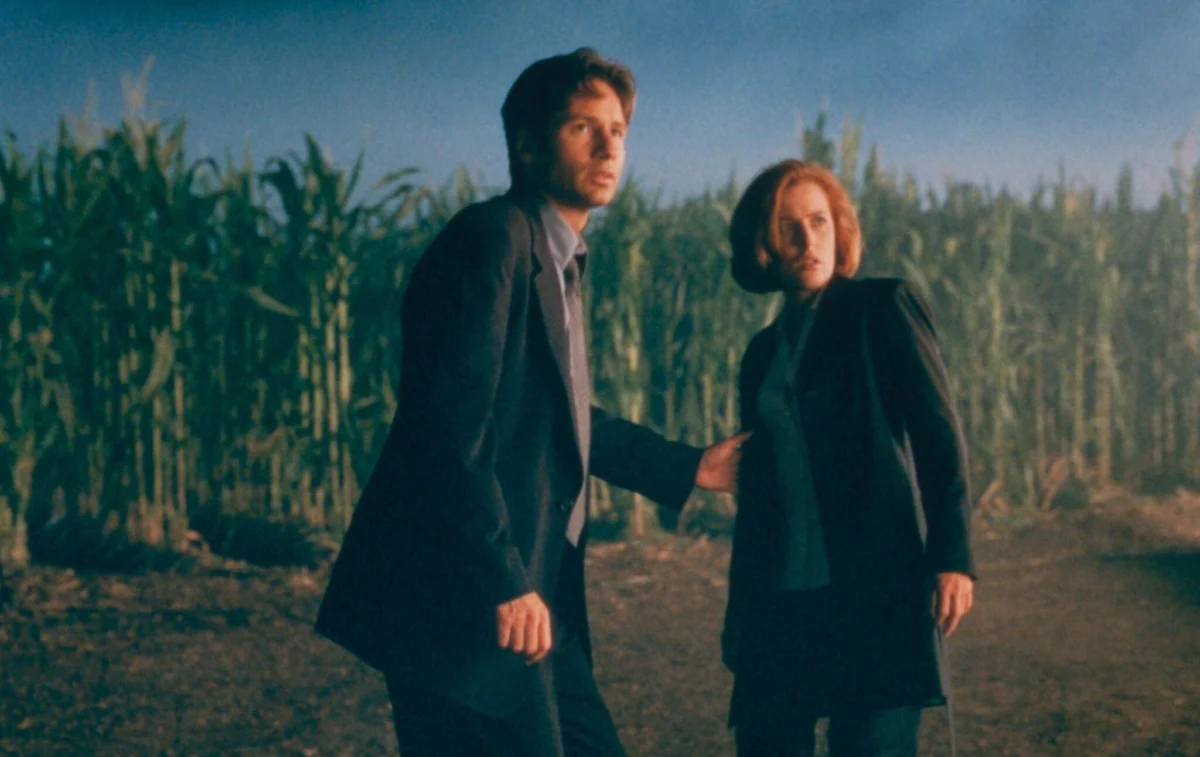
In the vast, sprawling tapestry of The X-Files, the show’s legacy is often divided into two distinct camps. There is the "Mythology"—the dense, serialized, and occasionally labyrinthine narrative involving extraterrestrial colonization, government cabals, and the missing sister of Fox Mulder. Then, there are the "Monster of the Week" (MOTW) episodes: the procedural, standalone tales that saw Agents Mulder and David Duchovny and Gillian Anderson’s Dana Scully venturing into the dark corners of American folklore, urban legends, and fringe science.
While the mythology episodes often dictated the high-stakes narrative trajectory of the series, it is the standalone monsters that truly defined the show’s cultural footprint. Among that pantheon of ghouls, mutants, and cryptids, one creature stands head and shoulders—or rather, sewer pipe and slime—above the rest. He is the Flukeman, the primary antagonist of the second season episode "The Host." Even decades after his singular appearance, the Flukeman remains the ultimate mascot of The X-Files, a testament to the power of practical effects and the enduring dread of the unknown.
The Anatomy of an Icon: Chronology and Context
"The Host," which aired early in the second season, arrived at a critical juncture for the series. The X-Files division had been shuttered, and Mulder was feeling the sting of administrative exile. When he is assigned a mundane case involving a decomposed body found in the Newark, New Jersey sewer system, the audience—and Mulder himself—initially treats it as a bureaucratic punishment.
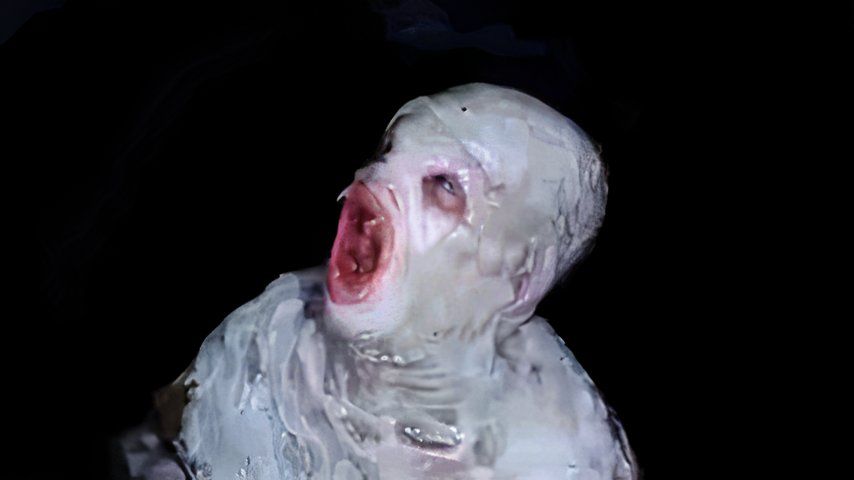
The narrative structure of "The Host" is a masterclass in tension. It begins with the mundane discovery of a corpse, but the investigation quickly spirals into the grotesque. During an autopsy, Scully discovers a parasitic flukeworm in the victim’s liver. As the mystery deepens, the threat escalates from a medical anomaly to a physical menace, culminating in the revelation of the Flukeman: a humanoid entity that blends the unsettling textures of a parasitic worm with the physical presence of a man.

The timeline of the episode follows a standard procedural format:
- Discovery: The body in the Newark sewer.
- The Forensic Shift: Scully’s discovery of the parasitic agent.
- The Escalation: An attack on a sanitation worker, which shifts the tone from mystery to survival horror.
- The Confrontation: Mulder’s descent into the sewage treatment facility to capture the creature.
- The Aftermath: The realization that the horror is not easily contained, ending on a chilling note that suggests the threat persists in the dark.
The Science of the Sewer: Supporting Data and Development
What made the Flukeman so effective in 1994, and why does he persist in the public consciousness today? The answer lies in the production philosophy of creator Chris Carter and his team. At the time, television was rarely afforded the budget for high-end, cinematic creature effects. "The Host" bucked that trend.
The Flukeman was a triumph of practical effects. Unlike modern CGI-heavy monsters, the creature was a physical presence on set. Actor Darin Morgan, who would later become a legendary writer for the series, donned the suit, providing the creature with a disturbing, erratic physicality. The design—the pasty, translucent skin, the bloated midsection, and, most importantly, the circular, tooth-lined mouth of a flatworm—created a visual language that was genuinely nauseating.
Furthermore, the episode utilized the anxieties of the era to ground the horror. By suggesting the creature was a byproduct of the 1986 Chernobyl nuclear disaster, the writers tapped into the real-world fear of radiation-induced mutation. This lent a layer of "truth" to the fiction, bridging the gap between urban legend and scientific catastrophe. It was not just a monster; it was a consequence of human error.

The Legacy of the Sewer: Why He Won
The longevity of the Flukeman is statistically curious. He appeared in exactly one episode. Yet, when one surveys X-Files merchandise, legacy content, or fan-led discussions, the Flukeman is almost always present. When the official X-Files Lego set was released in 2026, the inclusion of the Flukeman alongside Mulder and Scully was a deliberate nod to his status as the series’ definitive non-alien antagonist.
Other monsters were certainly more "human," such as the liver-eating serial killer Eugene Victor Tooms, or more disturbing, like the inbred Peacock family from the controversial episode "Home." However, the Flukeman represents the "purity" of the X-Files format. He is the quintessential "Monster of the Week." He didn’t require a complex backstory about government conspiracies or alien DNA hybrids; he was simply a biological mistake lurking in the infrastructure of civilization, reminding viewers that the "truth" is often hidden just beneath the sidewalk.
Official Responses and Creative Impact
Chris Carter has often spoken about the "Monster of the Week" episodes as the creative lifeblood of the show. By allowing the writers to step away from the heavy lifting of the mythology, the show could experiment with different genres—comedy, body horror, social commentary. "The Host" was the pinnacle of the body-horror iteration of the show.
In retrospective interviews, the production team has noted that the Flukeman forced them to push the boundaries of what was "allowable" on network television. The intensity of the sewer sequences and the visceral nature of the autopsy scenes helped establish The X-Files as a show that took its horrors seriously. It was a stylistic turning point that allowed the show to lean into darker, more unsettling imagery for the remainder of its run.
Implications for Modern Television
The enduring popularity of the Flukeman serves as a case study for modern television producers. In an era where digital effects can create anything, the physical, tactile nature of the Flukeman serves as a reminder of the power of practical design. His presence on merchandise and his continued relevance in pop culture suggest that audiences are not looking for the most complex monster, but the most memorable one.
The "Flukeman effect" proves that a character does not need to be a series regular to become a franchise icon. By establishing a clear, terrifying, and visually distinct creature, the show runners created an indelible image that functions as a shorthand for the entire series. When fans talk about "the good old days" of The X-Files, they are almost always talking about the era of the Flukeman—a time when the show was finding its footing, pushing the limits of the medium, and proving that the scariest things aren’t always from space; sometimes, they’re just waiting for you in the drain.
As we look back at the history of the series, the Flukeman stands as a monument to the show’s creative peak. He represents the intersection of high-concept storytelling and low-budget ingenuity. He remains, quite literally, the monster that refused to die, cemented in the sewer of our collective memory, forever reminding us to be careful about what we flush—and what might be looking back up at us.