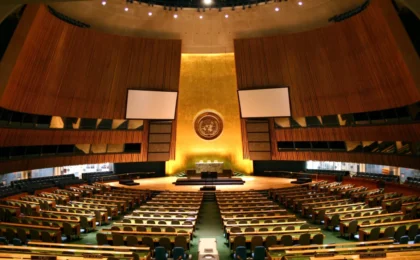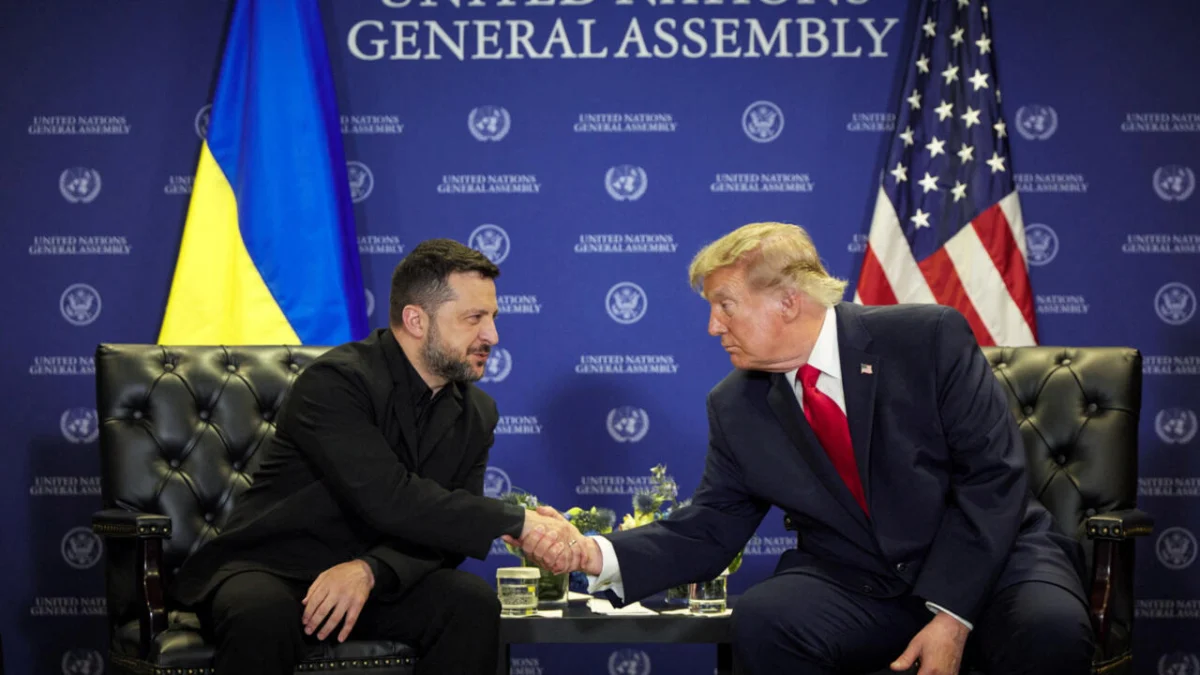
NEW YORK — On the sidelines of the 79th United Nations General Assembly, Ukrainian President Volodymyr Zelensky signaled a potential de-escalation in the high-stakes shadow war currently playing out across the Russian and Ukrainian energy sectors. Speaking to journalists in New York on Tuesday, Zelensky confirmed that Kyiv is prepared to halt its long-range drone strikes on Russian energy infrastructure, provided that Moscow agrees to a reciprocal freeze on attacks against Ukraine’s power grid.
The proposal comes at a critical juncture, as both the Ukrainian leadership and their counterparts in Washington express an urgent desire to stabilize the front lines and mitigate the humanitarian toll of the conflict before the onset of the harsh winter season. However, the path to such an agreement remains fraught with uncertainty, complicated by Russia’s opaque position and a shifting global focus that has seen the United States increasingly preoccupied with the escalating conflict involving Iran.
The Strategic Stakes: Why Energy?
The war in Ukraine has evolved into a grinding contest of attrition where energy infrastructure has become a primary target for both sides. For months, Ukraine has utilized advanced, long-range drones to strike deep within Russian territory, targeting oil refineries, storage depots, and logistical hubs. The objective is twofold: to degrade the Russian military’s supply chain and to inflict economic pain by undermining the Kremlin’s primary source of hard currency.
Conversely, Russia has utilized its extensive arsenal of cruise missiles and Iranian-designed drones to systematically dismantle Ukraine’s power generation capacity. The intent is clear: to plunge the Ukrainian population into darkness and freezing temperatures, thereby eroding civilian morale and forcing the government in Kyiv to the negotiating table on Moscow’s terms.
Zelensky’s offer of an "energy ceasefire" represents a pragmatic attempt to trade tactical offensive capabilities for national security and humanitarian relief. "We are ready for any kind of format of energy ceasefire," the President stated, emphasizing that the proposal is contingent upon a complete cessation of Russian strikes on the Ukrainian grid.
Chronology of a Widening Conflict
The trajectory of the Russia-Ukraine conflict has been marked by a transition from conventional battlefield maneuvers to a campaign of strategic sabotage and long-range targeting.

- February 2022: Russia launches a full-scale, multi-front invasion of Ukraine, initially focusing on capturing major urban centers.
- Late 2022 – Early 2023: Recognizing the difficulty of rapid territorial gains, Russia pivots to a campaign of "winter terror," firing waves of missiles at Ukraine’s thermal power plants and substations.
- 2024: Ukraine significantly upgrades its domestic drone production. Kyiv begins targeting critical Russian oil infrastructure, including massive refineries in the deep interior, causing temporary but significant disruptions to Russian export capabilities.
- September 2026: Tensions peak as both nations exchange record-breaking drone volleys. Kyiv executes its largest-ever drone attack on Moscow and surrounding regions, while Russian strikes on Ukrainian grid infrastructure reach a new intensity.
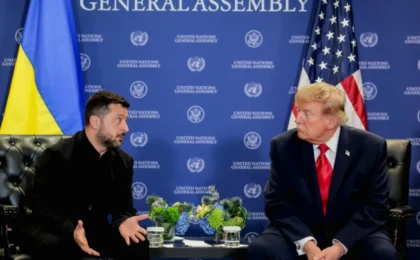
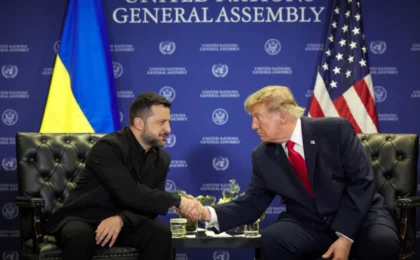
- September 22, 2026: During the UN General Assembly in New York, President Zelensky meets with US President Donald Trump. Following the meeting, the urgency of ending the conflict "before winter" is identified as a shared strategic priority for both Kyiv and Washington.
The Diplomatic Impasse and the "Trump Factor"
The diplomatic landscape is further complicated by the internal political dynamics of the United States. While Washington has traditionally been the primary provider of security assistance to Ukraine, the focus of the White House has shown signs of drifting. With the US military and intelligence apparatus increasingly focused on the Middle East and the escalating conflict with Iran, the appetite for sustained, high-level diplomatic mediation in the Ukraine conflict has faced hurdles.
President Donald Trump, who held a highly anticipated meeting with Zelensky in New York, has adopted a unique posture regarding the conflict. Last week, Trump expressed frustration over Ukraine’s strikes on Russian oil refineries, arguing that such actions risk global market instability and unnecessary escalation. Trump claimed that both nations had previously signaled an agreement to avoid energy infrastructure, a claim that highlights the fragile and informal nature of current back-channel communications.
Despite the complexities, Zelensky characterized his meeting with Trump as "positive and productive." In a statement posted to X (formerly Twitter), the Ukrainian leader noted, "Both the US and Ukraine want to see this senseless Russian war ended before winter."
However, the efficacy of these discussions remains in doubt. Zelensky admitted to reporters that he remains uncertain of Moscow’s true position. The Kremlin has historically been hesitant to commit to formal agreements that restrict its military options, particularly when it perceives an advantage in its ongoing campaign of attrition.
Supporting Data: The Cost of the Conflict
The infrastructure war has resulted in staggering economic and humanitarian costs.
Economic Impact:

- Russian Oil Exports: Ukrainian drone strikes have forced the temporary suspension of operations at several key refineries, resulting in a measurable, albeit fluctuating, impact on Russian domestic fuel prices and export volumes.
- Ukrainian Power Grid: The Ukrainian government estimates that over 60% of its total power generation capacity has been damaged or destroyed since the onset of the invasion. The cost of restoration is estimated to be in the tens of billions of dollars, a figure that continues to climb as strikes persist.
Humanitarian Impact:
- Winter Readiness: With winter approaching, the focus has shifted to the survival of the Ukrainian populace. Reliable electricity is the difference between life and death for millions during the sub-zero temperatures typical of Eastern Europe.
- Regional Stability: The targeting of energy infrastructure in the Black Sea has also threatened global food security, as the infrastructure supporting the grain corridor remains under constant threat of collateral damage.
Implications for Future Negotiations
Zelensky’s overture serves as a litmus test for the Kremlin’s willingness to engage in any form of de-escalation. If Moscow accepts the proposal, it could provide a much-needed cooling-off period, allowing for the restoration of critical civilian infrastructure. If Moscow rejects it, or continues to strike the grid while feigning neutrality, it will likely strengthen the argument for continued—and potentially expanded—Ukrainian strikes on Russian energy assets.
1. The Potential for De-escalation
Should a ceasefire take hold, it would represent the first substantive agreement between the two nations in years. While it would not resolve the broader territorial disputes, it would decouple the humanitarian survival of the Ukrainian people from the ongoing military stalemate.
2. The Risk of Miscalculation
There is a significant risk that an energy ceasefire could be viewed as a sign of weakness or, conversely, a tactical maneuver to replenish munitions. Trust between Kyiv and Moscow is non-existent, and any agreement would require robust, likely international, verification mechanisms—a tall order given the current state of diplomatic relations.
3. The Shift in Western Priorities
The fact that the United States is currently balancing the war in Ukraine with a deepening confrontation with Iran suggests that Washington’s capacity to act as a guarantor for such a deal is limited. The success of any ceasefire will depend less on Western pressure and more on the internal calculations of the warring parties themselves.
Conclusion
As the autumn leaves fall and the specter of another brutal winter looms, the proposal for an energy ceasefire represents a desperate, necessary attempt to place human life above tactical aggression. President Zelensky’s outreach at the UN General Assembly underscores a sobering reality: both sides are exhausted, yet neither is willing to concede. Whether the energy sector becomes a sanctuary from the violence or remains a primary target in a war without clear resolution remains to be seen. For now, the world waits to see if Moscow will prioritize the stability of its own infrastructure—and the survival of its neighbor—or continue on a path that promises only more destruction.