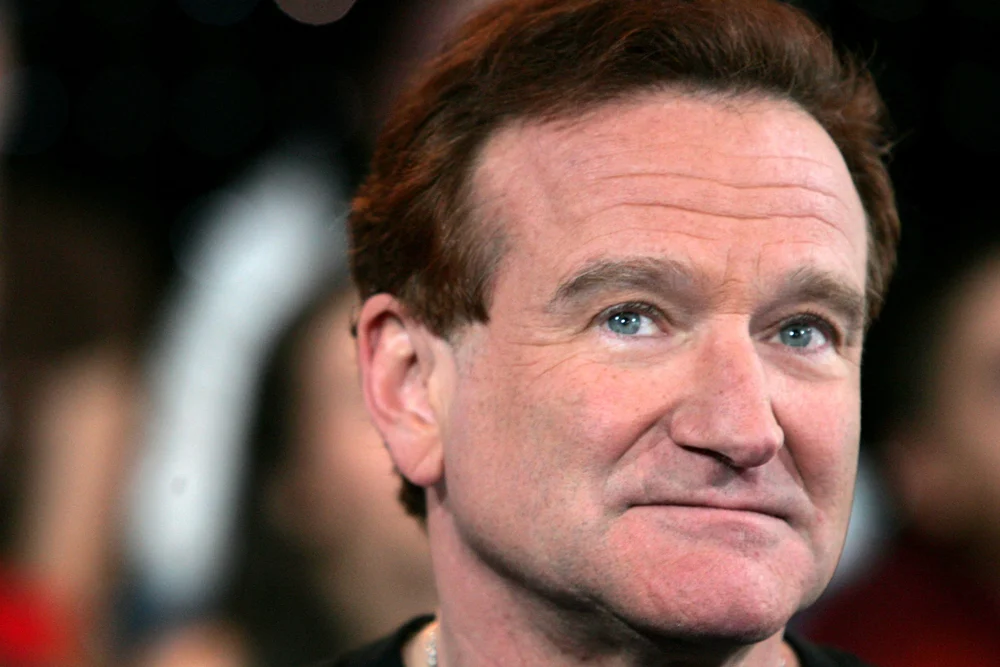
In the digital age, the line between homage and exploitation has become increasingly blurred, particularly when it comes to the legacy of deceased cultural icons. For Zelda Williams, the daughter of the late, legendary comedian Robin Williams, this technological evolution has manifested as a persistent and deeply personal intrusion.
On Monday, Zelda Williams once again took to social media to publicly denounce the proliferation of AI-generated content featuring her father. Her latest statement, posted to X (formerly Twitter), serves as a sharp indictment of the "digital necromancy" that has seen the Oscar-winning actor’s voice and likeness hijacked for everything from harmless "tributes" to the propagation of fringe conspiracy theories. As the debate over generative AI intensifies, Williams’ struggle highlights a burgeoning crisis in digital ethics: who owns the soul of an artist once they are gone?
The Anatomy of a Digital Fabrication
The catalyst for Williams’ most recent outburst was a video circulating on social media that claimed to show a "private" recording of Robin Williams discussing controversial conspiracy theories. For those familiar with the comedian’s distinct cadence, improvisational brilliance, and warmth, the video was jarringly off-key.
"That supposedly ‘private video’ of dad… is clearly AI, and not even particularly convincing AI," Williams wrote. She noted that the audio output was "robotic and terrible," suggesting that the creators of such content have little understanding of the man they are attempting to mimic. "Anyone who claims to be a fan who believes it clearly listened to his movies on mute," she added.
Beyond the technical failure of the deepfake, Williams targeted the moral bankruptcy of the endeavor. She challenged the anonymous creators, asking why they felt the need to leverage a dead man’s authority to bolster their own skewed narratives. "If you cannot make your case without making a dead man make it more convincing for you, then tell me: who’s the one manipulating the public through media now?"
This confrontation underscores the weaponization of AI. It is no longer just about generating "new" content for entertainment; it is about using the perceived trustworthiness of a beloved figure to lend false credibility to misinformation.
A Chronology of Ongoing Advocacy
Zelda Williams has been a vocal opponent of AI-generated recreations of her father for years, marking a long-standing battle to protect his posthumous reputation.
- October 2025: Williams first issued a public plea on Instagram, begging fans to stop sending her AI-generated videos of her father. At the time, she noted the emotional toll of being constantly confronted with "synthetic" versions of a parent she lost in 2014. She described the act as a "waste of time and energy" and explicitly stated, "He’s not your puppet. Have some shame."
- August 2026: Recognizing that individual pleas were not curbing the tide of AI-generated "slop," Zelda, alongside her siblings Zak and Cody, made the strategic decision to revive their father’s dormant Instagram account. The goal was twofold: to curate a space of authentic memory and to act as a defensive barrier against the rampant abuse of his likeness.
- September 2026: The most recent escalation occurred when Williams took to X to address the specific "conspiracy theory" video, marking a shift from passive requests for decency to active confrontation of the misinformation being spread in her father’s name.
This timeline reflects a transition from personal grief-management to public activism. Williams is no longer just a daughter mourning a loss; she is the guardian of a massive cultural legacy in an era where that legacy is under constant siege.
The Technology Behind the Theft: A Technical Perspective
To understand why Zelda Williams is so frustrated, one must look at the accessibility of Generative AI. Tools that once required studio-grade software and weeks of labor can now be accessed by anyone with a smartphone and a subscription to an AI platform.
The process—often referred to as "voice cloning" or "face-swapping"—relies on deep learning models trained on hours of publicly available archival footage. Robin Williams, having left behind a vast library of films, interviews, and stand-up performances, serves as a "high-quality dataset" for these algorithms. However, as Williams pointed out, the nuance is always lost.
Data scientists note that while AI can replicate the frequency and timbre of a voice, it cannot replicate the intent or the emotional intelligence that defined Robin Williams’ delivery. When an AI attempts to make him read a script about conspiracies, it sounds "robotic" because it lacks the spark of human consciousness. Yet, for a casual social media user scrolling through a feed, the aesthetic veneer of the video is often enough to foster a belief in its authenticity.
Implications for Digital Rights and Estate Law
The situation surrounding Robin Williams is a bellwether for the future of entertainment law. Current legislation is struggling to keep pace with the rapid advancement of generative AI.
The Right to Publicity
In many jurisdictions, the "Right of Publicity"—the right to control the commercial use of one’s identity—is a post-mortem right that can be passed down to heirs. However, the legal definition of "commercial use" is often narrow. If a fan creates a video as an "artistic expression" or "satire" on a social media platform, it often falls into a legal gray area that is difficult for families to challenge without significant financial resources.
The Problem of Platform Liability
Zelda Williams has frequently expressed her disdain for social media, referring to the platforms as a "cesspool of bots." Her frustration is shared by many who believe that tech giants are not doing enough to label or remove AI-generated content that mimics real people. When AI-generated content is allowed to thrive under the guise of "engagement," the platforms profit from the very interactions that cause distress to the families involved.
The Moral Rights of the Deceased
Beyond the legal framework, there is an ethical vacuum. Does a public figure forfeit their right to be left alone upon death? Most estates would argue that the dignity of the deceased is paramount. The unauthorized use of a person’s likeness to promote ideologies or products they would have found abhorrent is viewed by many as a violation of fundamental human rights.
Official Responses and the Industry Shift
The industry is beginning to take notice. Following the SAG-AFTRA strikes of 2023, which saw the use of digital replicas as a major sticking point in negotiations, there has been a push for stronger protections regarding the use of AI in film and television.
While these protections primarily cover working actors, the precedent they set is vital. The "Robin Williams standard"—a term now being used by some legal experts to describe the protection of a deceased actor’s likeness—is becoming a talking point in Hollywood boardrooms. Major agencies are now increasingly tasked with managing "digital estates," ensuring that contracts strictly forbid the use of AI to generate performances that were never authorized by the artist.
However, these corporate protections do little to stop the "bedroom developer" or the bad-faith actor using open-source models to generate content in a basement. This is where the burden currently falls on family members like Zelda Williams, who are forced to police the internet in a game of digital whack-a-mole.
A Call for Collective Responsibility
Zelda Williams’ plea is not just for herself; it is a call for a shift in digital literacy. She argues that the audience shares a portion of the blame. By engaging with, sharing, or failing to report clearly AI-generated content, users are fueling the ecosystem that makes these tools profitable and popular.
"Just because he’s gone does not mean he’s now your puppet," she reminded her followers. It is a sentiment that resonates far beyond the Williams family. It asks the digital public to consider the human cost of their entertainment. In a world where anything can be manufactured, the value of authenticity has never been higher.
As we look toward a future where AI is woven into the fabric of daily life, the example set by the Williams family serves as a critical warning. If we do not establish ethical boundaries—and if we do not respect the boundaries set by those who own the rights to our cultural icons—we risk turning our shared history into a hall of mirrors, where nothing is real, and no one, not even the dead, is truly at rest.
For now, Zelda Williams remains a steadfast guardian. Her voice, firm and uncompromising, is the only real thing in a digital space increasingly populated by hollow imitations. Her message is clear: respect the legacy, honor the human, and stop the machine.