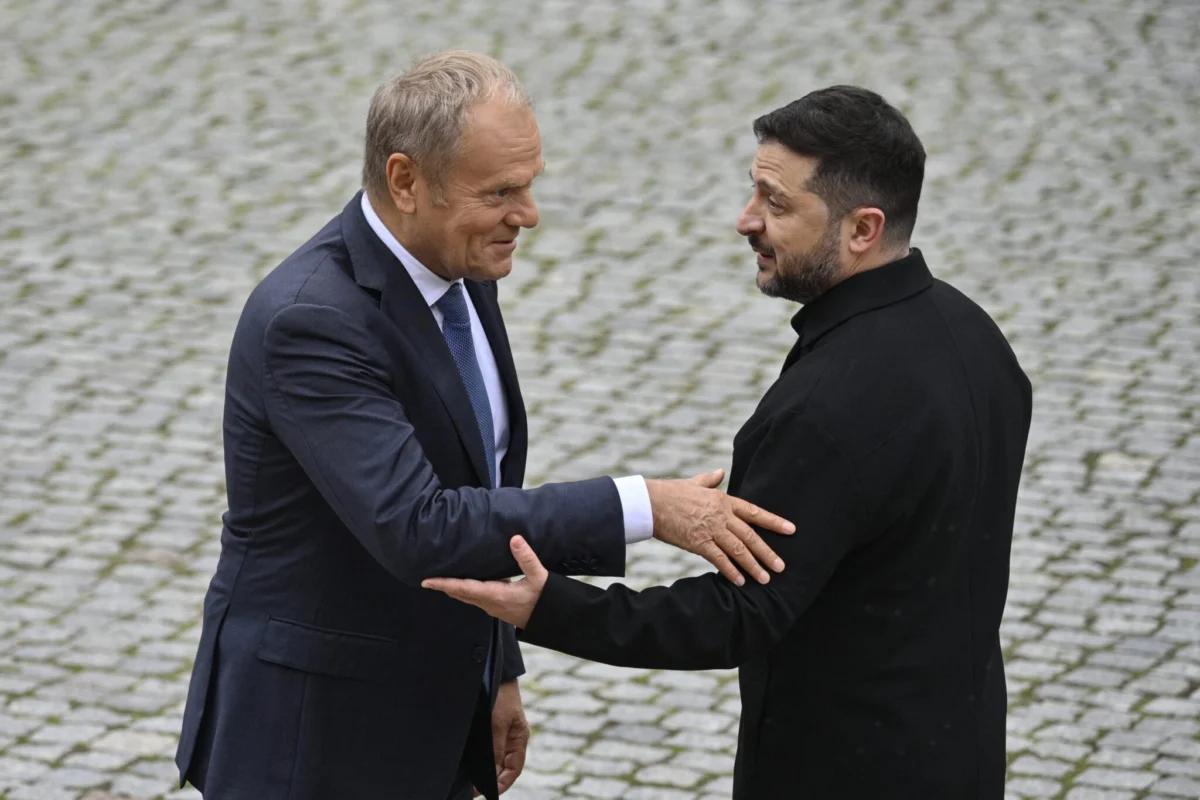
IVANO-FRANKIVSK, Ukraine — In a strategic move to fortify regional alliances as the war with Russia enters a more volatile phase, Ukrainian President Volodymyr Zelenskyy convened the inaugural summit of the "Carpathian Eight" on Friday. The high-level gathering, held in the western Ukrainian ski resort of Bukovel, brought together leaders and representatives from seven neighboring nations and the European Union. The summit unfolded against a grim backdrop of overnight Russian missile and drone strikes that claimed lives across Ukraine, while Moscow issued stern warnings to the West regarding the seizure of its commercial "shadow fleet" vessels.
I. Main Facts: A Convergence of Diplomacy and Destruction
The "Carpathian Eight" summit represents a significant diplomatic pivot for Kyiv. By bringing together Ukraine, Romania, Serbia, Poland, Slovakia, the Czech Republic, Austria, and Hungary, Zelenskyy is attempting to bridge the gap between staunch military allies and those nations that have remained more cautious or skeptical of direct military involvement.
Key highlights of the current situation include:
- The Carpathian Eight: A new regional platform aimed at deepening cooperation in security, energy, logistics, and cross-border economic ties.
- Economic Infusion: Ukraine confirmed the receipt of a €3.3 billion ($3.8 billion) tranche from the European Union, a critical lifeline as the nation grapples with a projected $27 billion budget deficit.
- Escalating Casualties: Russian strikes in the Zhytomyr and Kharkiv regions resulted in at least three deaths and several injuries, targeting both civilian infrastructure and logistics hubs.
- The Shadow Fleet Conflict: President Vladimir Putin warned of "asymmetric responses" if the West continues to seize Russian merchant vessels, which Moscow uses to circumvent international sanctions.
- Hybrid Warfare Concerns: European leaders, including Polish Prime Minister Donald Tusk, expressed mounting alarm over Russian "hybrid threats," including sabotage and drone incursions into NATO territory.
II. Chronology: A Week of High-Stakes Maneuvering
The events of the past 48 hours illustrate the rapid-fire nature of the conflict’s current trajectory, shifting from the battlefield to the diplomatic stage and into the realm of international maritime law.
Thursday, AM: Hybrid Threat Warnings
Before departing for Ukraine, Polish Prime Minister Donald Tusk issued a stark warning that Moscow is planning "hybrid strikes" involving drones and rockets against European nations supporting Kyiv. This follows a string of mysterious incidents across Poland, Germany, and Denmark involving arson and surveillance of defense facilities.
Thursday, PM: The Kursk Incident
Russia’s state nuclear corporation, Rosatom, reported that a Ukrainian drone struck a cooling tower at the Kursk nuclear power plant. While no radiation leak was detected and the plant remained operational, the incident added a layer of nuclear anxiety to the week’s escalations.
Friday, Overnight: The Aerial Assault
Russian forces launched a massive coordinated strike. In the Zhytomyr region, warehouse and production buildings were set ablaze, killing two. In Kharkiv, a drone targeted an electric passenger train, killing one and injuring six. Simultaneously, Russia claimed its air defenses intercepted a staggering 629 Ukrainian drones across 14 regions and the annexed Crimean Peninsula.
Friday, Morning: The Summit Convenes
President Zelenskyy welcomed the Carpathian Eight leaders in Bukovel. The focus immediately turned to creating a "strong element of cooperation at the EU level" to secure energy corridors and logistics.
Friday, Afternoon: Diplomatic Friction and Financial Aid
As the summit progressed, Zelenskyy announced the arrival of the €3.3 billion EU aid package. Meanwhile, in Moscow, the British Chargé d’Affaires was summoned to the Foreign Ministry for a formal protest against the UK’s supply of long-range drones to Ukraine.
III. Supporting Data: The Sinews of War and Economy
The conflict is increasingly defined by two factors: the ability of Ukraine to sustain its economy and the ability of Russia to bypass global sanctions.
The Financial Lifeline
Ukraine’s receipt of $3.8 billion from the EU is part of a larger structural support mechanism. Kyiv is currently facing a massive $27 billion budget gap for the current fiscal year. This funding is specifically earmarked for:
- Strengthening defense capabilities (missile and drone procurement).
- Maintaining macroeconomic stability.
- Repairing energy infrastructure damaged by seasonal strikes.
The Drone War by the Numbers
The scale of aerial warfare has reached unprecedented levels. Russia’s claim of intercepting 629 drones in a single night suggests a massive expansion of Ukraine’s domestic drone production and its willingness to strike deep into Russian territory. Conversely, Moscow Mayor Sergei Sobyanin reported that over 350 drones were neutralized on their way to the capital, highlighting the increasing vulnerability of the Russian heartland.
The "Shadow Fleet" and Maritime Sanctions
To bypass the G7 oil price cap and other sanctions, Russia has assembled a "shadow fleet" estimated to include several hundred aging tankers.
- Seizures: France and the UK have recently detained several tankers suspected of violating sanctions.
- EU Sanctions: The European Union has officially sanctioned hundreds of these vessels, leading to the recent Russian decision to deploy warships as escorts for commercial cargo—a move that significantly raises the risk of a direct naval confrontation with NATO-aligned coast guards.
IV. Official Responses: Rhetoric and Resolve
The rhetoric from all sides this week suggests a hardening of positions, with little room for the "territorial concessions" currently being discussed in stalled U.S.-mediated talks.
President Volodymyr Zelenskyy (Ukraine):
"The Carpathian Eight is a significant beginning. We are creating another strong element of cooperation at the EU level. We will work together on security, energy, and support for our local communities. This is about regional resilience."
President Vladimir Putin (Russia):
"Let’s live in peace, otherwise we will be forced to respond in kind. The Western claims about Russia’s aggressive plans are intended to justify a boost in defense spending. However, the seizure of our merchant vessels is piracy, and our response will not necessarily come in the waters where the ships were seized."
Prime Minister Donald Tusk (Poland):
"Moscow is planning hybrid strikes… that fall below the threshold of armed aggression but clearly threaten our national security. We need a NATO-like mechanism within the EU to respond to these incidents."
The UK Foreign Office:
In response to being summoned by Moscow, the UK stated: "The diplomatic reprimand is yet another attempt to deflect attention from Russia’s barbaric full-scale invasion… the UK remains committed to providing the equipment Ukraine needs to defend itself."
V. Implications: A Region on the Edge
The outcomes of this week’s events suggest several long-term implications for the European security architecture.
1. The "Carpathian Eight" as a New Power Block
By including "skeptic" nations like Hungary and Slovakia in a new regional framework, Zelenskyy is attempting to neutralize Russia’s influence in Central and Eastern Europe. If this group can harmonize its energy and security policies, it could create a formidable sub-bloc within the EU that prioritizes the stability of the Ukrainian border.
2. The Normalization of Hybrid Warfare
The warnings from Tusk and European Commission President Ursula von der Leyen regarding "NATO-like mechanisms" for hybrid threats indicate that the EU no longer views sabotage and cyberattacks as isolated incidents. We are likely to see a significant increase in intelligence sharing and joint policing of critical infrastructure across the continent.
3. Escalation at Sea
Putin’s threat of "asymmetric" retaliation for ship seizures marks a new frontier in the conflict. If Russia begins to retaliate against Western commercial shipping in international waters, the war could expand from a terrestrial conflict in the Donbas to a global maritime crisis, affecting international trade routes and insurance markets.
4. The Budgetary Brink
Despite the €3.3 billion infusion, Ukraine’s financial situation remains precarious. The upcoming meeting between Zelenskyy and von der Leyen at the UN General Assembly will be a litmus test for whether the West is prepared to commit to the long-term "financial stability" of Ukraine, or if "Ukraine fatigue" will begin to hamper the necessary funding to bridge the $27 billion deficit.
5. The Parliamentary Context in Russia
As voting begins in Russia’s parliamentary elections, the Kremlin’s aggressive posture serves a dual purpose: it projects strength to a domestic audience while suppressing any potential dissent. With no real opposition on the ballot, the election is expected to solidify the "wartime economy" footing of the Russian state for the foreseeable future.
In conclusion, the Bukovel summit and the surrounding escalations underscore a conflict that is no longer confined to the trenches of eastern Ukraine. It has evolved into a multi-dimensional struggle involving regional diplomacy, global maritime law, and a high-stakes game of economic survival. As winter approaches, the "Carpathian Eight" may find that their newfound cooperation is the only thing standing between regional stability and a wider European conflagration.