Introduction: A Judiciary Under Fire
In a striking escalation of the ongoing tension between the executive branch and the federal judiciary, President Donald Trump launched a scathing public attack on the United States Supreme Court on Tuesday. The President’s remarks followed the Court’s refusal to grant an emergency stay that would have allowed the administration to implement sweeping new requirements for mail-in ballots ahead of the impending midterm elections.
The rejection, issued on Monday, effectively halts the administration’s attempt to impose a new regulatory framework on the United States Postal Service (USPS), which would have mandated the use of pre-approved envelope designs, specialized voter barcodes, and electronic portals for the submission of voter rosters. The President’s reaction, broadcast via Truth Social, signals a deepening rift between the White House and a Court that, despite containing three of his own appointees, has repeatedly rebuffed his legislative and executive initiatives.
The Chronology of the Dispute
The current controversy stems from an executive order signed by the President in March 2026, which sought to address concerns over election integrity. The administration argued that the new USPS guidelines were necessary to prevent "violations of federal criminal law" and to bolster public confidence in the electoral process.
The Regulatory Path
- March 2026: President Trump issues an executive order establishing new protocols for federal elections, citing the need for enhanced security measures.
- August 2026: The Department of Justice (DOJ) moves to enforce these regulations through the USPS, setting the stage for a showdown with voting rights advocates and lower courts.
- September 2026: A federal injunction is filed to block the USPS rules, citing potential voter disenfranchisement and administrative chaos.
- September 14, 2026: The Department of Justice petitions the Supreme Court for an emergency stay of the injunction.
- September 15, 2026: The Supreme Court denies the petition, effectively blocking the implementation of the new rules for the upcoming midterms.
The Supreme Court’s Rationale: The Purcell Principle
The Court’s decision to deny the petition was not merely a ruling on the merits of the USPS regulations but a adherence to a long-standing judicial doctrine known as the "Purcell Principle." Derived from the 2006 case Purcell v. Gonzalez, this principle dictates that federal courts should generally refrain from changing election rules shortly before an election.
The rationale is clear: sudden shifts in procedure create significant potential for voter confusion, administrative errors, and the unintentional disenfranchisement of the electorate. By injecting new requirements—such as specialized barcodes and specific envelope designs—the administration would have forced election officials to pivot their logistics in a timeframe that critics argued was impossible to manage.
Justice Brett Kavanaugh, one of the three justices appointed by President Trump, authored a brief concurrence to the denial. While Kavanaugh noted that he did not necessarily disagree with the USPS’s underlying authority to promulgate such rules, he emphasized that the timing rendered them incompatible with the Administrative Procedures Act (APA). The APA requires that rule-making be conducted with sufficient notice and opportunity for public input, a standard the Court found to be unmet in this accelerated timeline.
A Growing Pattern of Judicial Setbacks
The President’s outburst against the Court is not an isolated event but rather the latest in a series of legal defeats for the current administration. Throughout 2026, the Supreme Court has consistently struck down or limited the scope of the President’s executive actions.
Birthright Citizenship
In June, the Court delivered a major blow to the administration’s immigration agenda by upholding the long-standing precedent of birthright citizenship. The administration had attempted to limit citizenship to children born to mothers with lawful permanent status, or a specific combination of parental status. The Court’s rejection of this executive order was viewed by legal scholars as a defense of the 14th Amendment, further distancing the Court from the administration’s nationalist policy goals.
International Economic Policy
Earlier in February, the Court invalidated several tariffs imposed by the President under the International Emergency Economic Powers Act (IEEPA). The Court ruled that the administration had overstepped its statutory authority, prompting the President to decry the decision as a "trillion-dollar mistake" that would cripple the U.S. economy.
In his Tuesday post, President Trump linked these decisions to the USPS ruling, stating: "It is a Court that will go down as having rendered some of the most destructive, hurtful, and damaging decisions in our Country’s history." He further characterized the institution as a "shell of its original self," suggesting that the justices have lost their way from the originalist principles he claims to have championed during their nomination processes.
Supporting Data: The Partisan Divide on Mail-in Voting
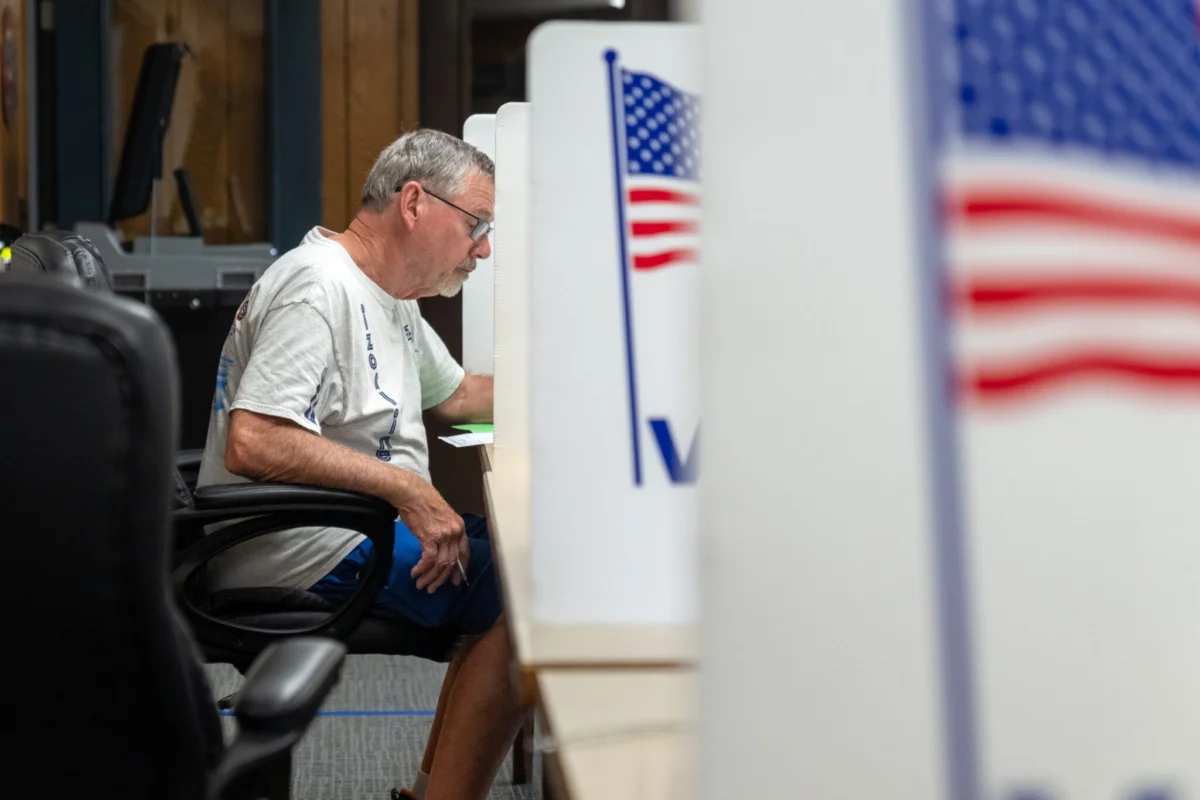
The legal battle over USPS regulations reflects a wider, deeply entrenched partisan divide regarding the mechanics of voting. According to data from MIT’s Election Performance Index and the Pew Research Center, the methods of voting have become a defining feature of the political landscape.
- Democratic Utilization: During the 2020 election, approximately 58 percent of Democratic voters utilized mail-in ballots. Recent polling suggests this figure remains stable, with current approval for mail-in voting among Democrats holding at roughly 81 percent.
- Republican Skepticism: Conversely, the Republican electorate has grown increasingly wary of mail-in ballots. Approval among GOP voters has plummeted from 57 percent in 2018 to just 34 percent in 2026.
This divergence is not merely anecdotal; it informs the administration’s strategic push to restrict mail-in procedures. When a political party perceives a specific voting method as a liability to their electoral success, legislative and executive attempts to regulate or suppress that method become a central component of their campaign platform.
Implications for the Midterm Elections
The denial of the emergency petition carries significant implications for the upcoming midterm cycle.
- Administrative Stability: Election officials across the country can now proceed with their existing logistics, avoiding the need to retrain staff or procure new equipment on short notice. This provides a measure of certainty to an already stressed electoral system.
- Executive Authority: The Court’s refusal signals a clear boundary for the exercise of executive power. Even when the administration claims an executive order is essential for "national security" or "public confidence," the judiciary is signaling that it will not permit the subversion of established administrative law.
- The "Trump vs. The Court" Narrative: For the President’s political base, these judicial losses serve as fodder for a narrative of a "corrupt" or "captured" establishment. By framing the justices as failures, the President continues to mobilize his supporters against the institutional status quo, a strategy that has proven effective in previous election cycles.
Conclusion: The Resilience of Judicial Independence
The friction between the White House and the Supreme Court highlights the structural checks and balances that define the American system of government. Despite the President’s frustration, the Court’s reliance on the Purcell Principle suggests that the judiciary remains committed to protecting the procedural integrity of elections over the political desires of any single executive.
As the nation moves toward the midterm elections, the focus will likely shift back to the ballot box. However, the legal questions surrounding the administration’s authority to regulate federal elections—and the judiciary’s role in curbing that authority—will remain a central theme of the 2026 political narrative. The Supreme Court has once again demonstrated that while they may have been appointed by a specific administration, their allegiance remains to the legal framework, a stance that continues to reshape the boundaries of presidential power in the 21st century.