By John Breech
Updated: September 16, 2026
In the National Football League, the adage "don’t overreact to Week 1" is a sentiment echoed by coaches and players alike. However, for those of us who live in the intersection of sports analysis and predictive modeling, the opening weekend provided too much high-quality data to ignore. The 2026 NFL season kicked off with a seismic shift in the competitive landscape, effectively tearing up the preseason script and forcing a complete re-evaluation of the road to Super Bowl LXI.
While the league is only 60 minutes of football deep into the schedule, the implications are already being felt in boardrooms and locker rooms across the country. Through advanced simulations conducted by analytics expert Stephen Oh—a man whose algorithmic prowess is often described as "AI in human form"—we have recalibrated our projected playoff bracket. The results are startling: the reigning AFC champion New England Patriots are currently trending toward a postseason absence, while perennial contenders are grappling with early-season identity crises.
The Chaos of the Opening Weekend: A Chronology of Surprises
The narrative of the 2026 season began with a series of upsets that defied conventional wisdom. The most significant shockwaves originated in the international theater, where the Los Angeles Rams, widely heralded as the preseason Super Bowl favorites, were dismantled in Australia. Their 27-7 defeat at the hands of the San Francisco 49ers was more than just a loss; it was a tactical thrashing that raised immediate questions about the Rams’ ability to retain their NFC West crown.
Following the Rams’ stumble, the focus shifted to the AFC, where the Los Angeles Chargers—a team notorious for finding creative ways to miss the postseason—lived down to their reputation. Their 26-14 loss to the Arizona Cardinals in the opener served as a sobering reminder that the Chargers’ transition from "dark horse" to "contender" remains incomplete.
Meanwhile, in the NFC South, the parity reached a chaotic zenith. Every team in the division finished the opening week at 0-1, creating a four-way tie for last place and turning the division into a mathematical wildcard. While some observers might label this "unpredictable," our simulation model treats this volatility as a data point, allowing us to project the eventual victor through rigorous probabilistic modeling.
The AFC Landscape: Kansas City Reclaims Authority
Before the first whistle blew in September, the Kansas City Chiefs were viewed by many as a team in flux. Questions regarding their roster depth and offensive consistency persisted throughout the summer. Those concerns were effectively silenced during their Monday night demolition of the Denver Broncos. A 31-10 victory did more than secure a divisional win; it signaled that the AFC West is once again being routed through Arrowhead Stadium.
Our model suggests that the AFC playoff picture is undergoing a transition. If current projections hold, the AFC will welcome two new teams to the playoff stage that were absent last year: the Cincinnati Bengals and the Kansas City Chiefs.
Perhaps the most jarring revelation in this week’s update is the exclusion of the New England Patriots. The reigning AFC champions have seen their probability of returning to the playoffs drop significantly following a lackluster opening performance. While the Patriots are historically resilient, the current competitive density of the AFC—pushed by the ascension of Kansas City and the consistency of Buffalo—leaves little room for the margin of error that New England displayed in Week 1.
The NFC Outlook: A Western Power Struggle
The NFC is arguably the most complex puzzle in the NFL this year. Our computer simulation has identified a trend that would have seemed impossible three months ago: three teams from the NFC West are currently projected to occupy playoff berths.
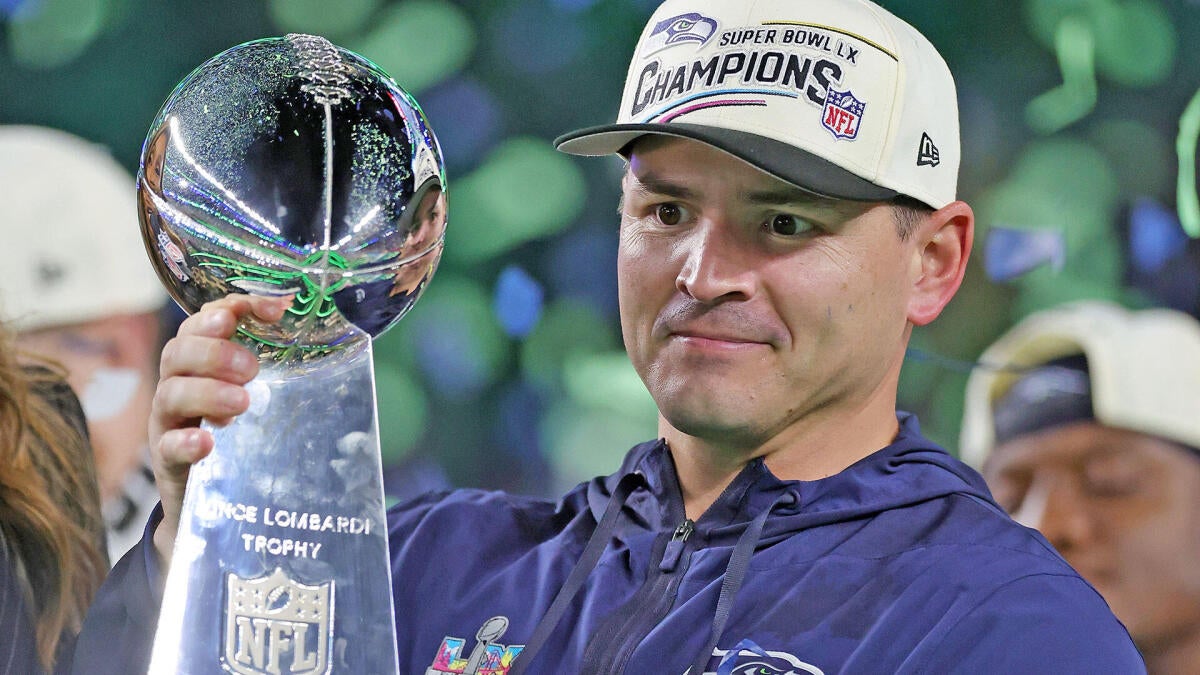
The Seattle Seahawks, who were identified by our model as the division winners back in August, have solidified their standing. Despite the injury concerns surrounding quarterback Sam Darnold, the simulation remains bullish on Seattle’s ability to navigate the division. The Rams, despite their disastrous outing in Australia, are projected to scrape into the postseason, though they are currently viewed as a team fighting for survival rather than a dominant force.
The NFC South Mystery
The NFC South remains the league’s most enigmatic division. While the collective 0-1 start is an indictment of current performance, our model points toward the Atlanta Falcons as the eventual division winners. This projection is backed by situational analysis: the Falcons’ 20-13 loss to the Pittsburgh Steelers was a "what-if" game defined by a third-string quarterback and two missed field goals. Once the Falcons stabilize their personnel and special teams, the simulation suggests they possess the highest ceiling in a weak division.
The NFC North Narrative
In the NFC North, the Chicago Bears made a loud statement with a 59-point offensive explosion. However, the simulation remains unmoved by single-game anomalies. The Detroit Lions, characterized by a more balanced roster and a more consistent defensive identity, are still favored to win the division. The computer rewards long-term efficiency over one-off offensive outbursts.
Supporting Data and Simulation Methodology
The projections outlined here are not merely opinions; they are the result of 10,000 simulations per week. By accounting for injuries, strength of schedule, and historical performance trends, we create a probability distribution for every game remaining in the 2026 season.
When Stephen Oh’s model evaluates a team like the Falcons or the Patriots, it considers "Expected Points Added" (EPA) and situational leverage. For instance, the Patriots’ exclusion isn’t just about their Week 1 loss; it’s about their remaining schedule, which ranks as one of the most difficult in the league according to our proprietary strength-of-schedule index.
Official Responses and Injury Implications
The most pressing concern for league analysts remains the health of Seattle Seahawks quarterback Sam Darnold. The Seahawks’ front office released a statement on Tuesday confirming that Darnold’s injury is "non-long-term," a critical piece of information for our model.
"We are monitoring the recovery timeline closely," noted a team spokesperson. "Sam is a vital component of our offensive architecture, but we have full confidence in our depth chart if he requires a short recovery window."
Our simulation currently treats Darnold as an active participant for the majority of the season. However, should the team’s medical staff announce a setback, the model would immediately adjust the Seahawks’ win-loss probability downward, likely creating a ripple effect that would favor the 49ers in the division race.
Implications for the Road to Super Bowl LXI
As we look toward the potential Wild Card, Divisional, and Conference Championship rounds, the projected path to Super Bowl LXI at SoFi Stadium is beginning to sharpen.
If the current data trends persist, we are looking at a "Battle of the Birds" in the Super Bowl. The Buffalo Bills and the Detroit Lions have emerged as the computer’s favorites to meet in the title game. Both franchises are historically significant for their lack of a Super Bowl trophy, a narrative that would add an immense layer of pressure and excitement to the championship game.
The road ahead is long. Week 1 is merely the prologue. Yet, for the Patriots, the Rams, and the other teams currently sitting on the wrong side of the playoff bubble, the urgency is palpable. The 2026 NFL season has already demonstrated that reputation is no protection against the cold, hard math of the gridiron. Whether it is the rise of the Chiefs or the unexpected struggle of the AFC’s defending champions, one thing is certain: the parity of the modern NFL ensures that the path to February will be anything but predictable.
As the league transitions into Week 2, all eyes will be on whether the underperforming favorites can recalibrate or if the "new guard" of the AFC and NFC will continue to dominate the narrative. In the world of professional football, today’s data is tomorrow’s history, and the simulation is just getting started.