For centuries, the rhythm of the tropical climate has been defined by a synchronized dance between the Pacific and Indian Oceans. Like two vast gears in a planetary engine, these ocean basins have traditionally moved in tandem, with the Pacific’s temperature fluctuations acting as the primary conductor for rainfall, winds, and heat distribution across the tropics. However, a groundbreaking new study from the Woods Hole Oceanographic Institution (WHOI) reveals that this long-standing harmony is under siege—first by the cataclysmic force of volcanoes, and now by the relentless, unprecedented pressure of human-induced climate change.
Published in Nature Communications under the title "Coupling of Pacific and Indian Ocean variability disrupted by 19th century volcanism," the research offers a sobering look at how the Earth’s climate system is losing its traditional tethering, potentially rendering our historical climate models obsolete.
Main Facts: A Disrupted Climate Synchrony
At the heart of the study is the concept of "ocean coupling"—the physical mechanism through which the Pacific Ocean dictates the climatic state of the Indian Ocean. For hundreds of years, this relationship has provided a reliable framework for meteorologists to predict monsoons, droughts, and heatwaves.
The research team, led by scientists at WHOI, has identified that this coupling is not immutable. By synthesizing paleoclimate data—environmental "archives" found in coral reefs, tree rings, and stalagmites—with state-of-the-art climate simulations, the researchers have confirmed two major stressors on this system.
First, they identified that major volcanic eruptions in the 19th century acted as a temporary "circuit breaker," forcing the Indian Ocean to decouple from the Pacific. Second, and perhaps more alarmingly, they have determined that the current weakening of this connection, observed since the 1980s, is fundamentally different from anything seen in the last 400 years. Unlike the volcanic disruptions of the past, which were transient and natural, the current breakdown is sustained and driven by the anthropogenic accumulation of greenhouse gases, representing a structural shift in the global climate system.
Chronology of a Changing Climate
To understand the significance of the present, the WHOI team had to look deep into the past. Because instrumental climate records—data collected by satellites, buoys, and weather stations—only cover the last 100 years, the researchers were effectively "flying blind" regarding longer-term climate cycles.
1600–1800: A Period of Stability
The reconstruction of climate conditions back to the early 1600s reveals a remarkably consistent pattern. For nearly two centuries, the Pacific and Indian Oceans remained locked in a tight, predictable relationship. The atmospheric bridges between them functioned with a rhythmic reliability that supported stable agricultural patterns and predictable monsoon cycles across the Indian Ocean rim.
1810–1850: The Volcanic Interruption
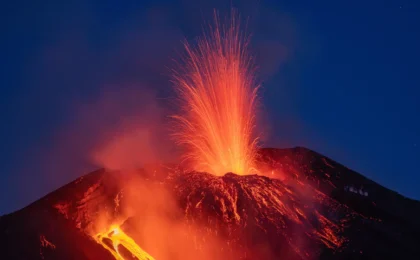
The first major disruption in the data occurs in the early 19th century. During this window, the synchronization between the two basins significantly degraded. By cross-referencing this timeline with historical volcanic records, researchers identified a cluster of major tropical eruptions. These events injected massive quantities of sulfate aerosols into the stratosphere, reflecting sunlight and cooling the Earth’s surface. This cooling acted as a "noise" that drowned out the Pacific’s influence on the Indian Ocean, effectively breaking the communication line between the two basins.
1980–Present: The Anthropogenic Shift
Following the mid-19th century, the oceans returned to their coupled state—until the 1980s. Since then, scientists have noted that the Indian Ocean has begun to exhibit "independent" behavior, ignoring the signals usually dictated by the Pacific’s El Niño and La Niña cycles. This current decoupling is the focus of the study’s most urgent warning: it is not a temporary reaction to a single event like a volcanic eruption, but a persistent trend caused by the warming of the entire ocean-atmosphere system.
Supporting Data: Paleoclimate Archives and Simulations
The credibility of the study rests on the convergence of two distinct methodologies: natural archives and computer modeling.
The Role of Natural Proxies
To peer into the pre-industrial past, the team utilized "proxies"—biological and geological records that store climate information.
- Corals: Their skeletons grow in layers, much like trees, trapping trace elements that reveal the temperature and chemistry of the water at the time of growth.
- Tree Rings: These provide data on rainfall and humidity levels, offering a terrestrial perspective on the climate cycles originating in the oceans.
- Stalagmites: Found in deep caves, these drip-fed limestone structures capture long-term changes in precipitation, providing a high-resolution timeline of regional climate shifts over centuries.
Climate Modeling
The researchers paired this empirical data with climate models that simulated the last millennium. These models allowed the team to "stress-test" the ocean connection. By isolating volcanic forcing and comparing it to greenhouse gas forcing, the models confirmed that while volcanoes can temporarily sever the link, the current sustained disruption is statistically impossible to explain without the influence of modern human-caused warming. This confirms that the current state of our oceans is moving into a "no-analogue" territory—a climate state that has no precedent in the recorded history of our civilization.
Official Responses and Expert Analysis
The researchers emphasize that this study is not merely an academic exercise; it is a diagnostic of a system under stress.
"This is one of the first studies to examine the breakdown in the connection between the Pacific and Indian oceans using evidence from past climates, modern observations, and climate models," says co-author Caroline Ummenhofer, a senior scientist at WHOI. Her colleague, Delia Oppo, an emeritus research scholar at the same institution, adds: "The Indian Ocean is a huge heat reservoir, and it can decouple from what the Pacific Ocean is doing. The results of this study underscore the independent behavior of the Indian Ocean."
Lead author Shawn Wang, formerly of WHOI and now a postdoctoral researcher at the University of Colorado Boulder, highlighted the necessity of this long-term view: "The modern data we have is limited and doesn’t go back far enough. With climate models and paleo-records, we are now able to say with more confidence that the recent changes we are seeing are really quite exceptional."
Implications: The High Stakes of Ocean Decoupling
Why should the public care about the synchronization of two distant ocean basins? The answer lies in the reliability of our global weather forecasts.
The Breakdown of Forecasting
Our current climate forecasting systems are built on the assumption that the Indian and Pacific Oceans interact in a predictable, historical manner. If the Indian Ocean begins to behave independently, the "teleconnections"—the atmospheric links that carry weather patterns from one region to another—become frayed. This means that historical data, which meteorologists have used for decades to predict monsoon onset or drought potential, may no longer be a valid guide for the future.
Independent Heat Reservoirs
The Indian Ocean’s role as a "heat reservoir" is critical. If it continues to decouple from the Pacific, it may store and release energy in ways that are currently invisible to our existing climate models. This "rogue" behavior could lead to more frequent and intense extreme weather events that strike without the traditional warnings that scientists have come to rely on.
A Call for New Climate Models
The study serves as a wake-up call for the international climate research community. As Ummenhofer notes, "Global warming and human emissions are now overwhelming the Pacific’s natural influence on the Indian Ocean." This suggests that the climate system is shifting into a new, more volatile state. To prepare for the challenges of the coming decades—ranging from food security issues in regions dependent on the monsoon to coastal adaptation—scientists must move beyond viewing ocean basins as isolated units and instead build a more comprehensive, integrated understanding of how these vast bodies of water interact under the weight of a changing atmosphere.
In conclusion, the WHOI study provides a sobering perspective: the Earth is not merely warming; it is behaving differently. By shedding light on the "exceptional" nature of the current ocean decoupling, the researchers have provided an essential roadmap for future climate study, urging us to recognize that the old rules of the climate game are being rewritten in real-time.