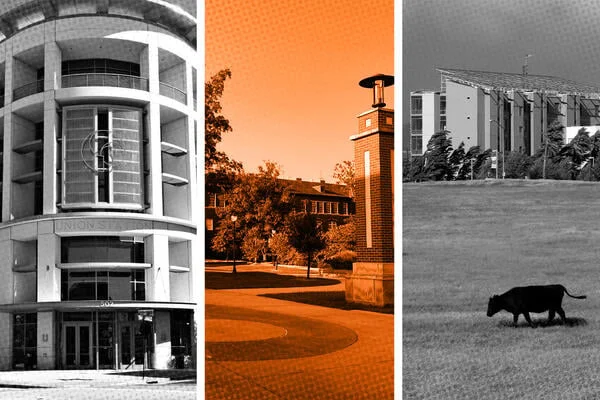
The landscape of American higher education in 2026 is defined by a striking dichotomy. While the macro-level data suggests a period of relative stability—with overall enrollment numbers ticking upward—the reality on the ground is far more fragmented. Beneath the surface of national averages, a "winners and losers" dynamic has taken hold. While flagship universities and select community colleges are enjoying record-breaking capacity, a significant cohort of institutions is grappling with an existential squeeze.
This tension is driven by a convergence of headwinds: a persistent decline in international student visa issuance, a growing societal pivot toward vocational credentials over traditional degrees, and the long-anticipated demographic cliff—a steady, year-over-year reduction in the number of high school graduates. Yet, amidst this uncertainty, a specific subset of institutions has managed to transcend these systemic obstacles. By pivoting from passive recruitment to aggressive, data-driven, and hyper-local engagement, these colleges and universities have not only survived the current climate but have set new benchmarks for success.
The State of the Sector: A Chronology of Change
To understand the current enrollment landscape, one must look back at the last two years of volatility. 2025 served as a sobering inflection point, with international student enrollment experiencing a 23 percent drop, sending shockwaves through institutions heavily reliant on global tuition revenue. Simultaneously, the decline in the college-aged population, which began in earnest in late 2024, transitioned from a theoretical projection to an operational reality for admissions offices across the country.
By the spring of 2026, the strategy for many institutions shifted from broad-market branding to tactical, localized intervention. As the fall 2026 semester began, the data revealed a clear trend: the institutions that thrived were those that prioritized the "student journey"—removing bureaucratic friction, aligning academic offerings with immediate workforce demands, and cementing ties with regional K-12 partners.
Case Studies in Growth: The Strategies of 2026
Southern Illinois University Edwardsville (SIUE)
SIUE, historically known as a commuter-heavy institution, has executed one of the most remarkable turnarounds in the Midwest. Following a 50 percent surge in first-year enrollment over the last two years, the university has successfully transformed its campus culture.
The lynchpin of this success is the "SIUE START" program. By embedding university staff directly into 10 local high schools, the institution effectively demystified the transition to college. By conducting placement testing, advising, and registration on-site, the university eliminated the "summer melt" that often plagues incoming classes. "It was a practical way to resolve challenges before they became barriers to enrollment," noted Nicole Franklin, director of communications. Looking forward, SIUE is doubling down on sophomore retention, implementing coaching and tutoring systems designed to integrate students into the campus social and academic fabric long before they reach a point of academic crisis.
University of Alabama in Huntsville (UAH)
For UAH, the path to growth required an internal structural revolution. After five years of decline, the university launched a comprehensive enrollment road map in 2025, consolidating seven disparate offices into a singular Division of Enrollment Management.
The results were granular and immediate. By analyzing the correlation between financial aid and student retention, the administration discovered that students who did not submit test scores were significantly less likely to yield. By adjusting aid packages for this demographic, they achieved a 5 percent increase in yield. Furthermore, by leveraging the regional brand power of the U.S. Space & Rocket Center and offering scholarships to Space Camp attendees, UAH transformed a local landmark into a high-octane recruitment pipeline.
Edward Waters University (EWU)
The success of Jacksonville’s Edward Waters University highlights the power of institutional transformation. Having nearly doubled its enrollment since 2011, EWU reached a 20-year record of 1,281 students this year. President A. Zachary Faison Jr. attributes this to a dual-pronged strategy: aggressive online expansion and a commitment to the residential experience.
By increasing its majors from seven to 18 and launching its first master’s programs, EWU effectively rebranded itself. "The graduate programs did more than increase enrollment," Faison noted. "They changed how external audiences perceive this institution." Simultaneously, the university’s move into NCAA Division II athletics has provided a platform for visibility, helping to attract transfer students seeking the "family-like" environment that larger, impersonal institutions often fail to provide.
Cape Fear Community College (CFCC)
In North Carolina, CFCC saw an 18 percent boom in full-time equivalency, the highest in the state. The institution’s success was built on a foundation of data analytics. By creating a dedicated team to track "intent-to-register" patterns, the college identified students who had selected courses but never completed the enrollment process.
Beyond data, CFCC leaned heavily into workforce agility. By expanding short-term credential programs in high-demand fields like healthcare and construction, and allowing students from 46 states to access online offerings, the college positioned itself as an essential partner for both local industry and the modern, mobile student.
Arkansas Tech University–Ozark
The branch campus of Arkansas Tech has reached its highest enrollment since 2014, with a 75 percent surge in skilled-trade programs. Associate Director of Admissions Jessica Spicer emphasizes that their success is a byproduct of long-term consistency.
"When we haven’t met a goal, we haven’t abandoned it," Spicer stated. Their focus on concurrent enrollment—a 223 percent increase this year—has allowed the college to build relationships with 20 different K-12 partners. This early-exposure strategy ensures that students see a clear, accessible pathway to a career before they even receive their high school diploma.
University of California, Merced
In the crowded California market, UC Merced’s 36 percent jump in first-year students and 66 percent increase in transfers represent a masterclass in regional alignment. By focusing on workforce-relevant majors like accounting and computer science, the university has made its value proposition clear to the state’s Central Valley residents. Through guaranteed admission programs and streamlined transfer pathways, UC Merced has effectively lowered the "barrier to entry" for local students, proving that even in a highly selective system, intentional recruitment yields results.
Implications for the Future of Higher Education
The success stories of 2026 share several common threads that serve as a blueprint for the remainder of the decade:
- The End of Passive Recruitment: Institutions can no longer wait for the "traditional" student to find them. Success now belongs to those who actively insert themselves into the high school experience and the professional development cycles of adult learners.
- The Power of "High-Touch" Technology: Data analytics are not a replacement for human connection; they are a tool to identify where human intervention is most needed. Whether it is addressing FAFSA hurdles or streamlining course registration, the institutions that grew were the ones that removed friction.
- Workforce Alignment: The skepticism surrounding the value of a degree is real. Institutions that tether their curriculum to immediate, high-demand job markets—such as healthcare, skilled trades, and technology—are seeing a surge in demand that liberal arts-only institutions may struggle to match.
- Retention as Recruitment: Many of these institutions realized that filling seats is useless if those seats become empty by the second semester. By shifting focus toward the "first-to-second year" experience, these universities are creating a cycle of success that improves both their reputation and their bottom line.
As we move further into the decade, the "enrollment paradox" will likely sharpen. The institutions that fail to adapt to the demographic and economic realities of 2026 may face irreversible contraction. Conversely, for those willing to embrace the organizational agility demonstrated by the six institutions highlighted here, the current era of higher education represents not a crisis, but a profound opportunity for renewal and growth. The "ship" of higher education is turning—and for those who have mastered the navigation, the future is looking remarkably bright.