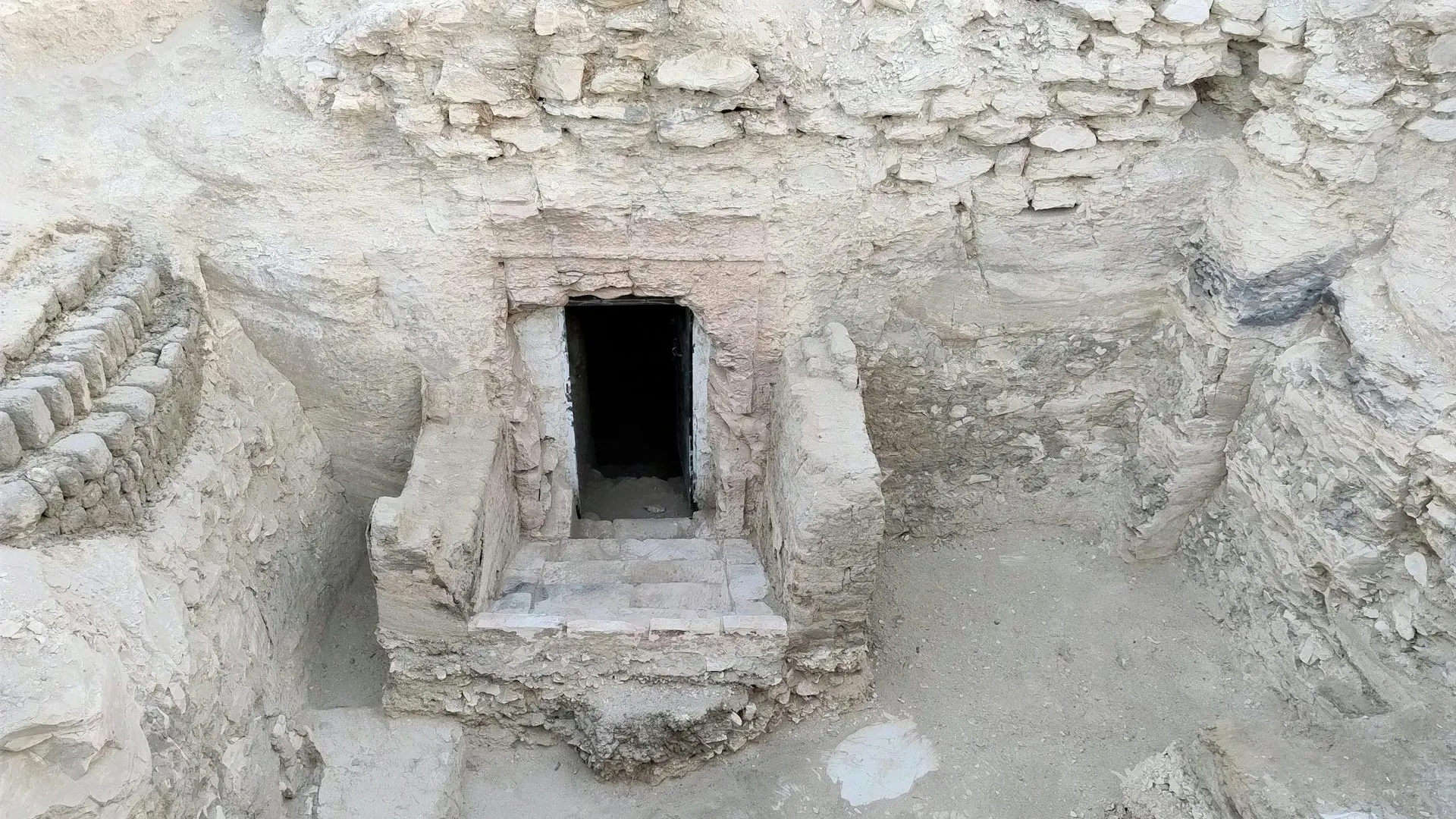
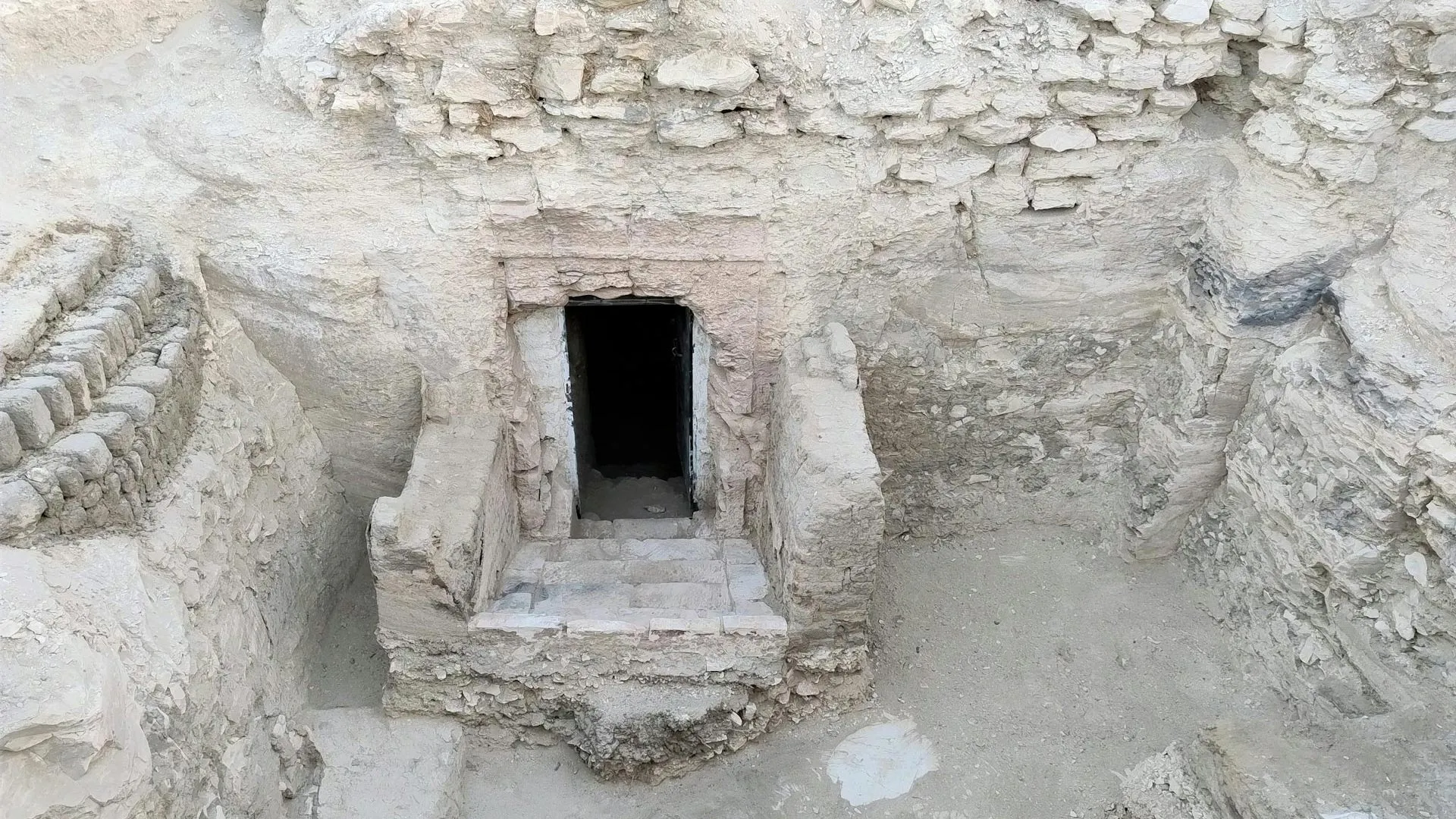
The first moment a researcher peers into the darkened threshold of a newly discovered tomb is an experience that defies simple description. It is a collision of profound excitement and visceral terror—a sudden bridge across three millennia of silence. Recently, while directing an international research team in the Theban necropolis, a UNESCO World Heritage site nestled in the shadow of the mountains near Luxor, Egypt, I had the privilege of crossing that threshold once more. What we found was not just a burial chamber, but a time capsule from the Ramesside era, offering a rare, intimate window into the lives of Egypt’s ancient elite.
Main Facts: A Discovery Amidst Conservation
Our team’s presence in the Lower Sheikh ‘Abd el-Qurna necropolis was not originally intended to hunt for new monuments. Our primary mission is the implementation of a robust conservation and risk management program. This burial ground, situated at the precarious foothills of the Theban mountain, faces an existential threat: flash flooding. Intense, erratic bursts of rain funnel down the slopes, turning desert wadis into destructive torrents that threaten to wash away centuries of history.
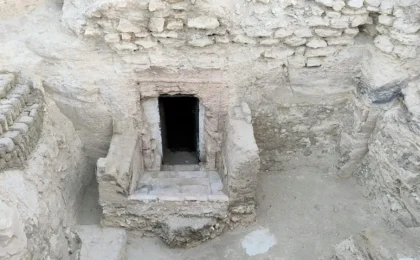
To divert these waters and protect the known monuments, we began a systematic program of debris removal and excavation. It was through these diligent, conservation-led archaeological techniques that we stumbled upon an opening in the bedrock—a tomb that had remained hidden from the modern world for roughly 3,000 years. As we stood before the entrance, the tension was palpable. We had no guarantee of what lay inside; for all we knew, the ceiling could have collapsed, looters might have stripped it bare, or it could have been entirely reclaimed by the desert’s shifting sands.
Chronology: Life and Legacy in the Ramesside Period
The tomb’s architecture is a classic hallmark of the New Kingdom (c. 1550–1069 BC), the era when Thebes served as the beating heart of Egypt’s political and religious life. The site features the traditional layout of the period: an outer courtyard, a rock-cut chapel, and subterranean burial chambers.
The courtyard itself was a remarkable find. It features a well-preserved mudbrick platform complete with a niche for a stela—the upright stone monument that served as a grave marker—and a staircase flanked by ramps, designed to facilitate the complex funerary processions of the time.
Upon entering the chapel, the team was met with a vibrant narrative written in pigment. The walls are adorned with vivid paintings depicting the tomb’s owner in acts of devotion before various deities. Other scenes capture the domestic ideal: the owner and his wife seated before an offering table groaning under the weight of bread, beer, fruits, meat, and flowers. Based on the stylistic nuances of these paintings and the specific iconography used, we have dated the tomb to the Ramesside period (c. 1292–1069 BC). This era, named for the succession of pharaohs bearing the name Ramesses, was a time of immense artistic and cultural production.
Supporting Data: Identifying Paser
The Theban necropolis is a vast, 10-square-kilometer tapestry of history that served as the primary royal and elite cemetery for over half a millennium. While the world’s attention is often monopolized by the neighboring Valley of the Kings and the Valley of the Queens, the private elite tombs of the surrounding hills hold equal, if not greater, value for understanding the social fabric of ancient Egypt.
Our preliminary analysis of the chapel’s iconography has allowed us to identify the tomb’s owner as a high-ranking official named Paser. Currently, the paintings are obscured by a thick, centuries-old layer of dust and dirt. However, as our conservation specialists begin the delicate process of cleaning, we anticipate that the revealed inscriptions will provide a more detailed biography of Paser, his family, and perhaps the later generations who may have repurposed the space.
This discovery is a cornerstone for our broader research questions regarding the landscape of the dead. Why did officials like Paser choose to build or adapt tombs in this specific location? Was it proximity to the tombs of 18th-dynasty ancestors? Was it the layout of processional routes or the influence of specific cultic monuments? These are the questions that define our fieldwork, as we attempt to reconstruct the logic of the ancient Egyptian mortuary landscape.
A Race Against Time: The Environmental Crisis
Our project is, by necessity, a race against time. Climate change is not a distant, theoretical concern for the Egyptian Ministry of Tourism and Antiquities; it is a present-day reality that is accelerating the degradation of these sites. The frequency and intensity of flash floods are projected to rise significantly, creating a high-stakes environment where moisture-activated salt crystals can turn beautiful wall paintings into crumbling dust within a single season.
Structural integrity is also at risk. The pressure of water infiltration can lead to sudden collapses, not only destroying the art but potentially sealing off or burying archaeological evidence forever. Our mission to implement a preventive conservation program is, therefore, a dual-purpose endeavor. We are safeguarding these monuments for future generations while simultaneously conducting a pioneering archaeological survey of an area that has, until now, been largely overshadowed by the grandeur of the Valley of the Kings.
Implications for Future Archaeology
The significance of the Lower Sheikh ‘Abd el-Qurna necropolis cannot be overstated. While famous sites like the temple complexes of Luxor and Karnak receive massive global attention, the "ordinary" cemeteries—the resting places of officials, priests, and their families—offer a more intimate, human-scale perspective on ancient life.
By treating the landscape as a holistic site, we are beginning to see the interconnectedness of these tombs. We are discovering that these spaces were not static; they were lived-in and modified by the ancient Egyptians themselves. The decision to reuse an existing tomb, for instance, tells us as much about the social and economic shifts of the Ramesside era as it does about the original construction.
Our ongoing collaboration with the Egyptian Ministry of Tourism and Antiquities is essential to this work. This partnership ensures that every shovel of sand removed is documented, every painting cleaned is stabilized, and every finding is integrated into the official record of Egypt’s cultural heritage.
As we look toward the next phases of our research, the tomb of Paser stands as a sentinel of our progress. It is a reminder that even after thousands of years, the desert still has secrets to yield. Yet, it also serves as a stark warning. Without the intervention of modern science and international cooperation, these whispers from the past will be silenced by the encroaching climate crisis. We are not just uncovering history; we are ensuring that history has a future.
In the coming months, as the cleaning of the walls progresses, we hope to reveal the personal narratives of Paser and his household. We expect that these images will do more than just document the funerary rituals of the time—they will breathe life into the names, faces, and stories of people who lived, worked, and hoped for eternity in the shadow of the Theban mountains. The excavation is more than a study of the dead; it is a vital reclamation of the human experience.