In a harrowing report released this Thursday, Human Rights Watch (HRW) and the Abdorrahman Boroumand Center for Human Rights in Iran have issued a grave condemnation of the Iranian government, characterizing the state’s current judicial trajectory as a "relentless attack on the right to life." According to the joint report, Iranian authorities are carrying out a systematic campaign of unlawful executions against protesters and political dissidents on a weekly basis, marking a dark chapter in the nation’s contemporary history.
The findings reveal that at least 59 men have been arbitrarily executed over the last five months alone. These state-sanctioned killings are primarily predicated on vague, politically motivated "national security" charges, processed through judicial channels that the international community has repeatedly condemned as grossly unfair.
The Core Facts: A Judicial Apparatus of Terror
The scale of the current crackdown is unprecedented in its intensity. Of the 59 confirmed executions, at least 32 were directly linked to recent civil unrest, including the widespread protests that roiled the country between December 2025 and January 2026, as well as the enduring legacy of the 2022 "Woman, Life, Freedom" movement.
Perhaps most disturbing is the demographic profile of those being targeted. Many of the victims were in their late teens and early twenties—individuals at the threshold of adulthood who found themselves caught in the machinery of an uncompromising regime. In a tactic reminiscent of the darkest periods of political repression, the state has conducted at least five of these executions in public squares, utilizing truck-mounted cranes. Human rights experts assert that these public hangings are not merely punitive; they are calculated psychological operations designed to instill terror, silence potential dissent, and discourage the Iranian populace from exercising their fundamental right to assembly.
Chronology of Crisis: From Economic Collapse to State Violence
To understand the current surge in executions, one must look at the timeline of instability that has defined Iran over the past several years.
The 2022 "Woman, Life, Freedom" Movement
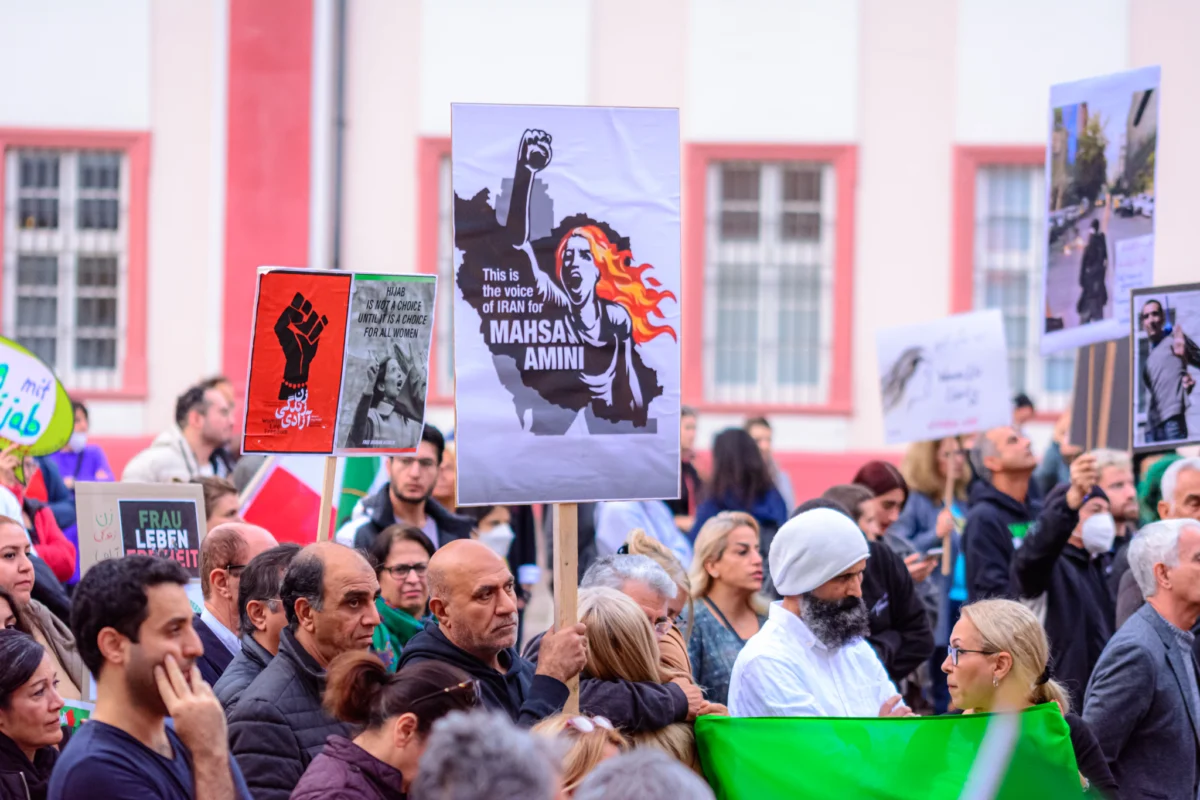
The genesis of the current cycle of repression can be traced back to September 2022, following the death of Jina Mahsa Amini, a 22-year-old Kurdish woman who died in the custody of the "Morality Police" after being detained for allegedly violating mandatory hijab laws. Her death sparked a nationwide firestorm that challenged the ideological foundations of the Islamic Republic. The ensuing crackdown saw thousands of arrests and a string of public and private executions that drew global outcry.
The 2025-2026 Economic Protests
The most recent escalation, however, is linked to the socioeconomic collapse that began in late 2025. On December 28, 2025, Iran’s currency plummeted, triggering an immediate and desperate surge of protests. Citizens, exhausted by hyperinflation and systemic corruption, took to the streets demanding fundamental political reform and the restoration of human dignity.
The government’s response was immediate and lethal. Security forces deployed "extreme violence," utilizing firearms and other prohibited weaponry against unarmed civilians. By January 8, 2026, the state had enforced a near-total blackout of internet access across the country, a strategic move to conceal the mass killings and injuries occurring in the streets from the eyes of the international community.
Supporting Data: Violations of Due Process
The legal framework under which these executions occur is, according to international legal observers, a façade. The report highlights a "decades-long pattern" of procedural abuse. Detainees are routinely denied access to legal counsel from the moment of arrest, and in many instances, are barred from hiring independent lawyers for their trials.
Perhaps most damning is the nature of the charges themselves. In 16 of the documented capital cases, the charges did not involve any allegation of homicide or physical violence by the accused. Under international human rights law, the death penalty is strictly limited to cases of "intentional killing." By applying capital punishment to non-lethal crimes, Iran is in direct violation of the International Covenant on Civil and Political Rights (ICCPR), to which it is a signatory.
A Legacy of Impunity: The Shadow of 1988
The current crisis does not exist in a vacuum; it is the continuation of a decades-old policy of extrajudicial violence. The report draws an uncomfortable parallel to the 1988 mass executions, where, under a fatwa issued by the then-Supreme Leader Ruhollah Khomeini, between 2,800 and 5,000 political prisoners were systematically executed.
In that historical instance, the state did not merely kill its citizens; it erased their existence. Bodies were interred in mass graves, families were denied notification, and any attempt to seek the truth was met with severe harassment and threats from the intelligence apparatus. The fact that many of the architects of the 1988 massacre remained in positions of power for decades suggests that the current Iranian leadership operates under the belief that they remain shielded from global accountability.
International Implications and Demands for Justice
Human Rights Watch and the Abdorrahman Boroumand Center are calling for an urgent, coordinated diplomatic response. The organizations argue that mere condemnations are no longer sufficient to deter a regime that has normalized the use of state-sponsored killing as a tool of governance.
The Call for Universal Jurisdiction
The report specifically urges UN member states to invoke the principle of "universal jurisdiction." This legal mechanism allows national courts to prosecute individuals for serious international crimes—such as torture, enforced disappearance, and crimes against humanity—regardless of where the crimes were committed or the nationality of the perpetrators. By targeting individual officials involved in the current execution campaign, the international community could effectively narrow the travel and operational freedom of those responsible for these atrocities.
The Diplomatic Imperative
The failure to act, human rights advocates warn, emboldens the Iranian regime to continue its campaign of fear. The combination of state-enforced internet blackouts and the total suppression of independent legal defense creates a vacuum where state violence thrives.
"The international community must move beyond statements of concern," the report concludes. "The Iranian authorities have proven that they are willing to ignore normative international pressure unless there is a tangible cost to their actions."
As the families of the executed remain silenced by fear and the state continues to use the gallows as a political instrument, the eyes of the world turn to the UN and global powers. The fundamental question remains: how long can a government maintain its authority through the systematic liquidation of its own youth before the international order intervenes? The events of the last five months suggest that for the people of Iran, the window for dialogue is closing, and the necessity for global intervention has never been more urgent.