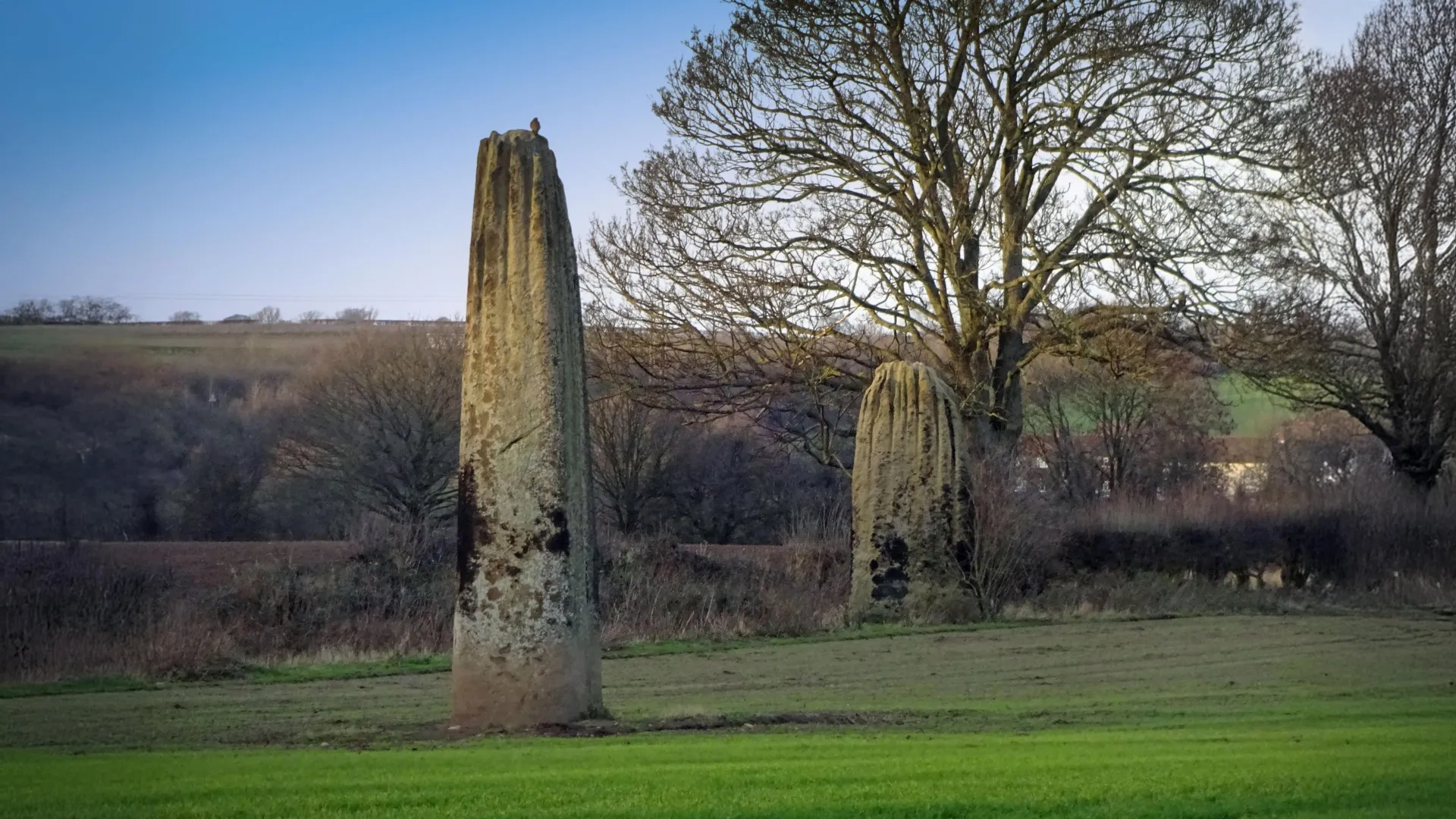
For centuries, the "Devil’s Arrows"—a trio of towering, weather-beaten monoliths standing sentinel near Boroughbridge in North Yorkshire—have confounded archaeologists and casual observers alike. These megaliths, rising up to seven meters (23 feet) above the lowland landscape, represent the tallest surviving prehistoric stone row in Britain. While their imposing presence has long been a subject of local folklore and scientific inquiry, a fundamental question remained unanswered: Where did these massive, 25-tonne pillars originate?
A groundbreaking study, led by Curtin University in Western Australia in collaboration with the University of York, has finally provided a definitive answer. By employing innovative geological "fingerprinting," researchers have traced the stones to Brimham Rocks, a rugged, craggy outcrop located 18 kilometers (11 miles) away. The findings, published in the Proceedings of the Royal Society A, suggest that the prehistoric builders of the Late Neolithic or Early Bronze Age were not merely opportunistic laborers, but sophisticated engineers driven by profound cultural and symbolic motivations.
The Devil’s Arrows: A Monumental Challenge
The Devil’s Arrows stand as a testament to the sheer ambition of ancient societies. Erected roughly around 2000 BC, these stones are not native to the immediate Boroughbridge area. For decades, the prevailing academic theory suggested that the stones had been quarried from Plumpton Rocks, a site significantly closer to the monument’s current location.
However, as lead author Dr. Anthony Clarke of Curtin’s School of Earth and Planetary Sciences explains, the assumption that ancient builders favored convenience over all else was a potential oversight. "Our research shows these stones weren’t simply taken from the nearest available source," Dr. Clarke noted. "They were deliberately chosen from a challenging landscape 18 kilometers away."
The logistical reality of this feat is staggering. Transporting a single 25-tonne stone across 11 miles of uneven, ancient terrain would have required extraordinary levels of planning, social coordination, and structural engineering expertise. The discovery reframes our understanding of prehistoric labor, suggesting that the "cost" of transportation—measured in thousands of man-hours—was a secondary concern to the spiritual or cultural value of the stone’s specific origin.
Chronology of Discovery: From Folklore to Forensic Geology
The history of the Devil’s Arrows is a saga of speculation. Throughout the medieval and early modern periods, the stones were attributed to everything from Roman engineering to supernatural intervention—hence the moniker "Devil’s Arrows."
- The Early Inquiry: Early antiquarians recognized the stones as Neolithic or Bronze Age, but lacked the geological tools to prove their provenance.
- The Plumpton Theory: For much of the 20th century, archaeologists operated under the assumption that the stones were sourced from the nearby Plumpton Rocks, which seemed the most logical geological candidate.
- The Modern Shift: In recent years, advances in "low-impact" sampling techniques allowed researchers to investigate without damaging the fragile surface of the monuments.
- The 2024 Breakthrough: The collaboration between Curtin University and the University of York successfully applied mineral fingerprinting to the monoliths, definitively matching the grain composition of the Devil’s Arrows to the geology of Brimham Rocks.
Mineral Fingerprints: The Science of Sourcing
The methodology behind this discovery is as innovative as the findings are transformative. To maintain the integrity of the protected monument, the research team utilized a non-invasive sampling technique involving adhesive tape. By carefully pressing the tape against the stone’s surface, researchers collected tiny mineral grains—too small to be seen by the naked eye but sufficient for geochemical analysis.
These grains acted as a "fingerprint," revealing the age and mineralogical signature of the stone. When compared against samples from various geological sites across Yorkshire, the Brimham Rocks data matched the Devil’s Arrows with remarkable precision.
Crucially, this analysis allowed the team to rule out natural geological processes. While large stones are often moved by glacial action during the Ice Age, the "fingerprinting" confirmed that the mineral composition of the Arrows was consistent with human-quarried material from a specific, distinct source. There is no geological evidence that a glacier could have deposited these three massive stones in such an intentional, linear alignment. The conclusion is inescapable: the stones were moved by human hands.
Implications: A Landscape of Belief
The choice of Brimham Rocks over closer alternatives is, perhaps, the most profound takeaway from the study. Brimham is a landscape defined by dramatic, wind-sculpted rock formations and imposing cliffs. In a pre-industrial society, such a location would likely have been viewed as a place of immense power, perhaps even considered a sacred site where the spirits of the earth resided.
"This tells us prehistoric people placed real importance on the landscape itself," Dr. Clarke remarked. "It wasn’t just about convenience—the location the stones came from likely held meaning for them."
Dr. Jim Leary of the University of York, a co-author on the study, emphasized that this discovery shifts the focus of archaeological interpretation. "These results show that ancient communities were making deliberate and meaningful choices about where their stones came from," Dr. Leary said. "It highlights the importance of landscape and shared belief systems, as well as the remarkable effort involved in transporting and raising stones of this size."
The project essentially argues that the Devil’s Arrows are not just rocks; they are the result of a "pilgrimage of labor." By selecting stones from a specific, distant location, the builders were likely forging a physical and spiritual connection between their home territory and the sacred landscape of Brimham.
Official Responses and Future Directions
The news has been met with enthusiasm by heritage organizations, who see it as a vital link in the history of Northern England. Justin Scully, National Trust General Manager for Fountains Abbey & Studley Royal and Brimham Rocks, expressed his support for the project.
"We’re incredibly grateful to the researchers for helping us uncover this new chapter in the stones’ story," Scully said. "The Devil’s Arrows are deeply cherished by local communities, and we’re delighted that this discovery adds a new chapter to their story, establishing a direct connection between two of our most distinctive Yorkshire landscapes."
Looking ahead, the research team is not resting on these findings. Dr. Clarke has indicated that the team plans to apply their non-invasive "tape-sampling" technique to other standing stones across Britain whose origins remain a mystery. Many of the UK’s megalithic monuments—from remote moorland settings to the famous circles of the southwest—could potentially have their secrets unlocked through this method.
Furthermore, the team hopes to conduct targeted excavations at both the Devil’s Arrows site and the Brimham Rocks source area. Such excavations could reveal the tools used to move the stones, the routes taken across the ancient landscape, and perhaps even the temporary camps occupied by the laborers who undertook this massive project.
Conclusion: Rewriting the Neolithic Narrative
The story of the Devil’s Arrows is no longer one of mysterious, isolated objects. It is now a story of a connected, highly organized society that possessed the vision to reshape their world according to their spiritual needs.
The fact that these builders were willing to endure the immense hardship of transporting 25-tonne monoliths over 11 miles of difficult terrain proves that prehistoric Britain was not a series of isolated, primitive settlements. Instead, it was a landscape of shared values, sophisticated engineering, and long-distance connectivity. As researchers continue to apply these new forensic techniques, we can expect to see more of these hidden, monumental narratives emerge from the silent stones of the past, forever changing our perception of the people who laid the foundations of the British landscape.