For over a century, the medical community has relied on a process that is as archaic as it is life-saving: harvesting antibodies from the blood of horses and sheep to treat human snakebites. While this method has saved countless lives, it is plagued by high costs, inconsistent quality, and severe, sometimes life-threatening allergic reactions.
Now, a groundbreaking discovery by researchers at the University of Maryland (UMD) suggests that the solution to one of the world’s most neglected tropical diseases has been hiding in plain sight—or rather, inside the snakes themselves. By unlocking the evolutionary secrets of how rattlesnakes survive their own lethal toxins, scientists are paving the way for a new generation of highly effective, synthetic, and safer antivenoms.
The Global Health Crisis: A Neglected Killer
Snakebite envenomation is a silent epidemic. According to the World Health Organization (WHO), venomous snakebites kill between 80,000 and 140,000 people annually, with an additional 400,000 survivors suffering from permanent disabilities, including amputations, blindness, and chronic pain.
The crisis is particularly acute in rural, impoverished regions of the Global South, where healthcare infrastructure is sparse and rapid access to high-quality antivenom is often non-existent. Current antivenoms, known as "serotherapy," involve injecting venom into large animals, allowing their immune systems to produce antibodies, and then purifying those antibodies for human use. Beyond the ethical concerns regarding animal welfare, this process is fraught with logistical hurdles: the resulting treatments are expensive, require cold-chain storage, and are often species-specific, meaning a bite from a misidentified snake can render the treatment useless.
The Evolution of Resistance: A Hundred-Year Mystery
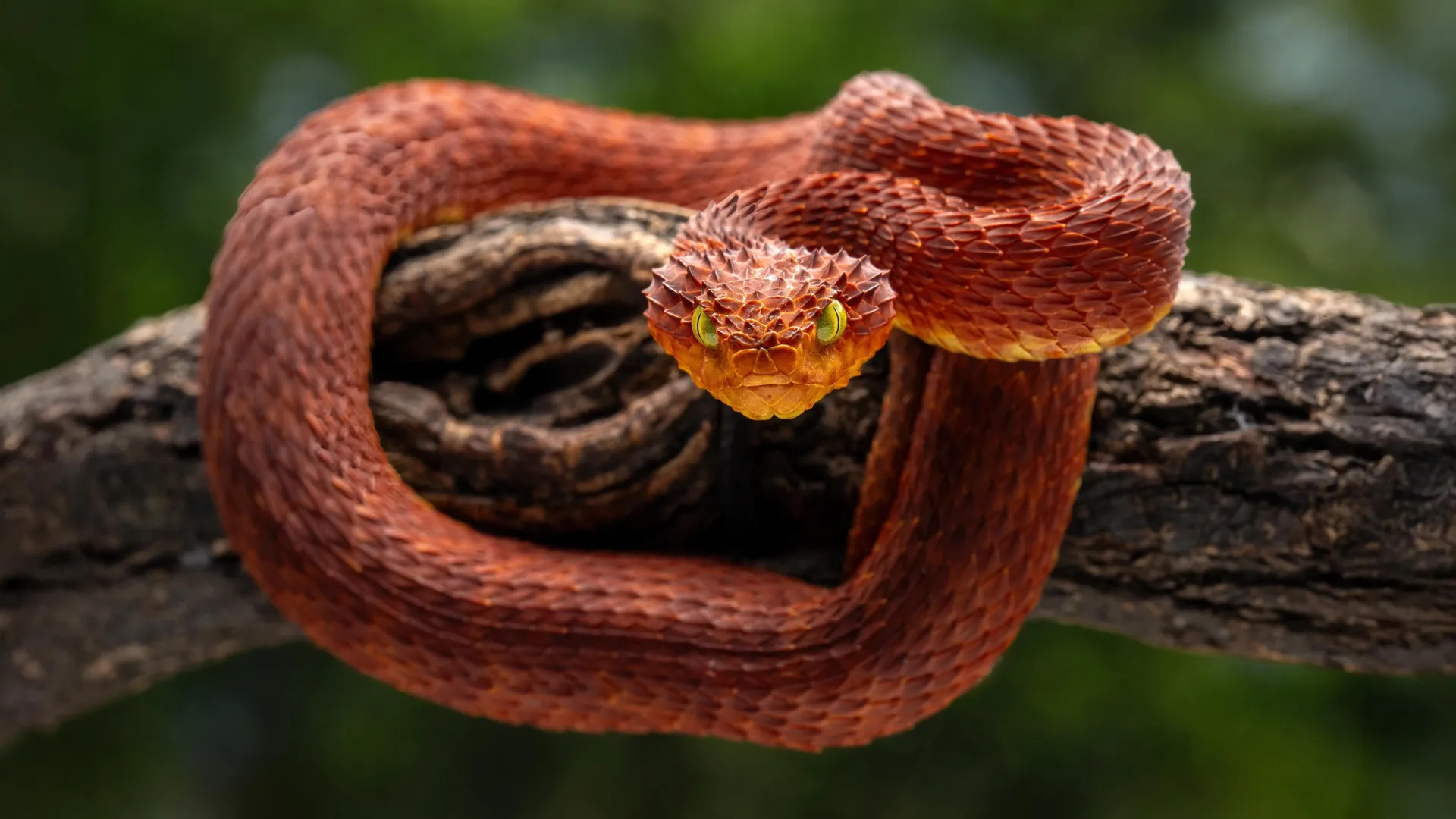
The inspiration for the UMD team’s work stems from a long-standing anecdotal observation: vipers appear naturally resistant to their own venom. "We’ve known from anecdotes for 100 years that vipers tend to be resistant to their own venom," explains Sean B. Carroll, Distinguished University Professor of Biology at UMD and the study’s lead investigator. "But for a long time, nobody knew what exactly was circulating in their blood that protected them."
The mystery began to unravel in 2022 when Carroll’s laboratory identified a protein dubbed FETUA-3. Researchers found that this protein acted as a molecular shield, effectively blocking the activity of metalloproteinase toxins—a primary component of rattlesnake venom. This discovery sparked a fundamental shift in perspective: if evolution had already "solved" the problem of envenomation within the snake’s own physiology, why continue to rely on the inefficient, centuries-old horse-antibody method?
Chronology of Discovery: From Observation to Innovation
The path to this breakthrough was a meticulous, multi-year scientific journey:
- 2022 – The FETUA-3 Breakthrough: Carroll’s team identifies FETUA-3 as a key neutralizing protein in the western diamondback rattlesnake, showing it can inhibit metalloproteinase toxins from various rattlesnake species.
- The Follow-Up Study: Collaborating with Elda Sánchez, director of the National Natural Toxins Research Center at Texas A&M University-Kingsville, the team set out to map the entire FETUA protein family. They investigated how different variants of these proteins contribute to overall venom resistance.
- The Synergy Discovery: Through rigorous lab testing, the team discovered that while individual FETUA proteins provided some protection, none could prevent lethality on their own. However, when combined, the proteins exhibited a "synergistic effect," dramatically neutralizing the venom’s lethal potential.
- Present Day: The team has successfully demonstrated that optimized combinations of these proteins are 10 times more potent than conventional sheep-derived antivenoms, providing broad-spectrum protection against various viper species.
The Science of Synergy: Why Combinations Matter
The complexity of snake venom cannot be overstated. A single drop of venom is a cocktail of nearly 100 different proteins, enzymes, and toxins, each designed to dismantle biological systems in different ways.
"The ingredients are there," Carroll notes. "We just have to keep testing various mixtures."
The UMD team found that while one protein might be adept at preventing hemorrhaging, another might be required to inhibit enzyme-driven tissue necrosis. By creating specific "cocktails" of these lab-produced (recombinant) proteins, the researchers created a synthetic defense system that mimics the snake’s natural blood chemistry.
The results were staggering. In laboratory trials, these synthetic mixtures outperformed current gold-standard antivenoms by an order of magnitude. Even more impressively, the protection held up against venoms from viper species that diverged from one another tens of millions of years ago, suggesting that the "antidote" is evolutionarily conserved and highly robust.
Implications for Global Medicine
The potential shift from animal-derived serum to nature-based recombinant antivenoms could fundamentally alter the landscape of tropical medicine.
1. Enhanced Safety and Efficacy
Because these proteins are produced in a lab, they can be engineered for maximum purity. This eliminates the "batch-to-batch" variability inherent in animal-derived treatments and significantly reduces the risk of serum sickness and anaphylactic reactions, which are common side effects of current antivenoms.
2. Scalability and Accessibility
The current production of antivenom is slow and geographically limited. Recombinant protein production—using bio-engineered bacteria or yeast—is a standard, scalable industrial process used for drugs like insulin. Moving to this model could lower costs, increase supply, and make life-saving treatments accessible in the most remote regions of the world.
3. Broad-Spectrum Protection
Perhaps the most promising implication is the potential for a "universal" antivenom. If researchers can successfully identify and combine the core inhibitor proteins that cover all major toxin families (metalloproteinases, phospholipases, and three-finger toxins), a single vial of medicine could treat bites from multiple species, removing the life-or-death gamble of correctly identifying the snake before treatment.
Looking Toward the Future
The research, published in the Proceedings of the National Academy of Sciences, represents only the first phase of a larger mission. While the current study focused on metalloproteinases, the team is already hard at work applying this same methodology to other venom components.
"We’re getting remarkably close to having effective solutions for the three major toxin families in vipers," Carroll says. "What we’ve learned here, together with research we’re doing now, gives us real confidence that nature-based recombinant antivenoms are within reach."
The road to clinical application is long, involving rigorous safety testing and regulatory approval. Carroll envisions the first applications appearing in the veterinary market, where treatments for pets or livestock bitten by rattlesnakes could be deployed more quickly. Once the safety profile is established in veterinary medicine, the transition to human clinical trials would follow.
Conclusion: A Natural Solution to an Ancient Threat
The irony of the UMD team’s work is that the key to modern medicine was hidden in the blood of the very creature that kills thousands of people every year. By looking at the rattlesnake not just as a source of poison, but as a master of biological defense, the researchers have turned a weapon into a shield.
"Many of our most important medicines have come from nature," Carroll reflects. "I’m delighted that the components for a better-than-commercial antivenom were in these snakes all along."
As the research progresses toward human trials, there is a tangible sense of hope. For the millions of people who live in fear of the strike of a snake, the work of Sean B. Carroll and his colleagues offers a glimpse of a future where a simple, manufactured protein cocktail—a gift from the snakes themselves—can render the most dangerous bites survivable. This is not just a scientific advancement; it is a vital step toward ending a centuries-old health crisis.