Overview: A Constitutional Collision
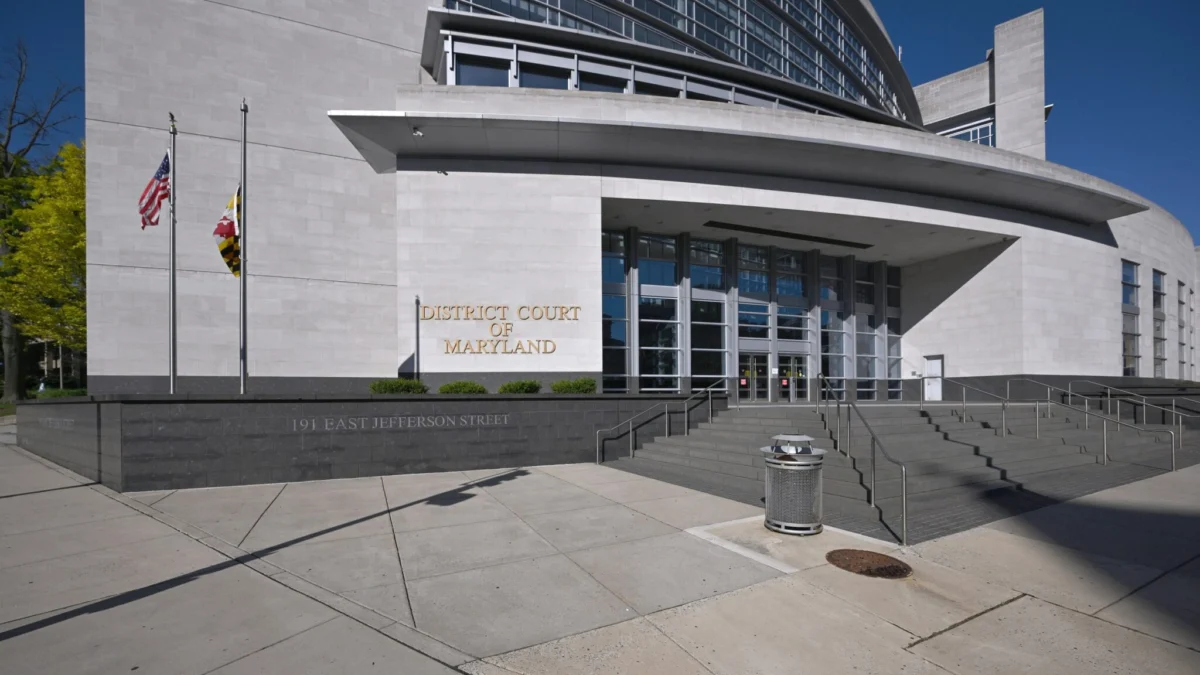
In a significant judicial rebuke to the executive branch, U.S. District Judge Deborah Boardman issued a preliminary injunction on Wednesday, effectively halting the enforcement of two controversial executive orders (EOs) signed by President Donald Trump. The orders, which sought to curtail birthright citizenship under the guise of combating “birth tourism,” were challenged by a coalition of civil rights groups and state officials.
Judge Boardman’s ruling centers on a fundamental principle of American jurisprudence: the supremacy of the Fourteenth Amendment and the binding nature of Supreme Court precedent. By attempting to unilaterally redefine the parameters of citizenship, the administration has once again collided with the judiciary, which maintains that the constitutional guarantee of birthright citizenship is not subject to executive whim.
The Legal Chronology: A Recurring Battle
The conflict over the Fourteenth Amendment’s Citizenship Clause has been a hallmark of the current administration’s immigration agenda. To understand the gravity of Judge Boardman’s ruling, one must examine the timeline of this escalating legal struggle.
The Foundation of Precedent
The central anchor of this dispute is the Supreme Court’s landmark June 2026 ruling in Trump v. Barbara. In that case, the Court unequivocally held that children born in the United States to parents who are present in the country unlawfully or on a temporary basis are, by definition, citizens under the Fourteenth Amendment. This ruling was widely viewed as a definitive end to the administration’s earlier attempts to bypass the Citizenship Clause.
The August Executive Orders
Undeterred by the Supreme Court’s decision, the White House issued two new executive orders in early August 2026. The first order sought to strip citizenship status from specific categories of individuals, including the children of foreign diplomatic staff, those labeled as “alien enemies,” individuals accused of acquiring citizenship through “fraudulent means,” and those born in U.S. territories where citizenship is not conferred by statute.
The second order focused explicitly on “birth tourism”—the practice of foreign nationals traveling to the United States primarily to ensure their children are born on American soil, thereby granting them U.S. citizenship. By mandating that such children be denied citizenship, the administration sought to create a new regulatory framework that directly challenged the Barbara precedent.
The Judicial Intervention
Following the issuance of these orders, plaintiffs filed for a preliminary injunction, arguing that the administration was effectively attempting to legislate through executive decree. Judge Boardman’s decision this Wednesday marks the latest—and perhaps most forceful—judicial intervention in this saga, prohibiting the government from implementing these policies while the broader constitutional challenge proceeds.
Supporting Data and the “Birth Tourism” Myth
A core justification for the administration’s orders has been the alleged prevalence of “birth tourism.” President Trump has repeatedly cited the practice as a major threat to the integrity of American citizenship, claiming that it results in hundreds of thousands of “anchor babies” being born on U.S. soil annually.
Evaluating the Scale
Contrary to the rhetoric emanating from the White House, empirical data suggests that birth tourism is a statistically rare phenomenon. According to researchers at Northeastern University, while the practice exists, it accounts for a minuscule fraction of annual U.S. births. Experts argue that the administration’s focus on this issue is disproportionate to its actual impact on the economy or the social fabric of the nation.
The Fraud Argument
The administration’s position was articulated by Deputy Chief of Staff Stephen Miller, who framed the issue as a matter of national security and border integrity. Miller stated, “If you’re telling a consular officer you’re here as a tourist but your true purpose and intent is to go to a baby mill, give birth and try and mint an American citizen… then you’re committing fraud against the American government.”
Critics, however, point out that using the specter of “fraud” to strip constitutional rights from infants creates a dangerous precedent. They argue that the administration is conflating visa compliance—which is a matter of administrative law—with the fundamental, constitutionally protected status of citizenship at birth.
Official Responses and Public Discourse
The fallout from the executive orders and the subsequent injunction has been swift and polarized.
The Administration’s Stance
The White House remains defiant, signaling that the executive branch has the authority to define the “meaning and value” of American citizenship. Staffers have indicated that the administration views the judiciary’s interference as an overreach that hampers the President’s ability to protect the border and enforce immigration law.
Civil Rights and State Opposition
The American Civil Liberties Union (ACLU) and various state attorneys general have led the legal opposition. New Jersey Attorney General Matthew Platkin, among others, has publicly criticized the orders as inherently unconstitutional. “The President cannot simply declare that a segment of the population is no longer entitled to the rights guaranteed by the Fourteenth Amendment,” said one legal advocate involved in the case.
These groups argue that the orders are designed to sow fear and create a tiered system of citizenship, which they claim is antithetical to the egalitarian spirit of the U.S. Constitution.
Judicial Implications: The Rule of Law
Judge Boardman’s ruling was as much a commentary on the limits of executive power as it was a legal decision on citizenship. Her language in the opinion was notably stern.
“The Supreme Court Has Spoken”
Addressing the administration’s disregard for the Barbara ruling, Boardman wrote: “The Supreme Court has spoken: Children in the certified class are ‘citizens at birth.’ Barbara is the law of the land. The President must follow it.”
This rebuke highlights a growing tension between the executive branch and the judiciary regarding the “law of the land.” Boardman emphasized that denying citizenship to those guaranteed it by the Constitution would cause “irreparable harm” to lawful citizens, as it would strip them of rights they are entitled to by virtue of their birth.
Scope and Ambiguity
In her injunction, Judge Boardman specifically addressed the scope of the order, noting that it applies to all children born after February 19, 2025. However, she also criticized the administration for the “vague nature” of the executive orders, noting that the documents fail to clearly define who they apply to, whether they operate retroactively, or how they are to be enforced in practice. This lack of clarity has left thousands of families in legal limbo, a situation the judge described as untenable and legally unsound.
Future Outlook: What Comes Next?
The legal battle is far from over. While the preliminary injunction provides immediate relief for those affected by the administration’s orders, the case is likely headed for an appellate court review.
The administration is expected to appeal the ruling, setting the stage for a potential showdown that could return the issue to the Supreme Court. Given that the Court recently ruled in Trump v. Barbara, observers are divided on whether the Justices would be willing to revisit the issue so soon or if they would allow the lower court’s ruling to stand.
The Broader Impact on Immigration Policy
Regardless of the ultimate outcome, the controversy underscores the ongoing struggle to define the boundaries of American citizenship in an era of global migration. The administration’s attempt to use executive orders to circumvent constitutional protections suggests that the debate over birthright citizenship will remain a central—and highly contentious—aspect of U.S. political life for the foreseeable future.
For now, the status quo remains: the Fourteenth Amendment stands as a bedrock of American law, and the executive branch, despite its broad authority, remains bound by the Constitution and the judicial precedents that interpret it. The coming months will determine whether this represents a temporary check on executive power or the beginning of a protracted constitutional crisis regarding the very definition of who is an American.