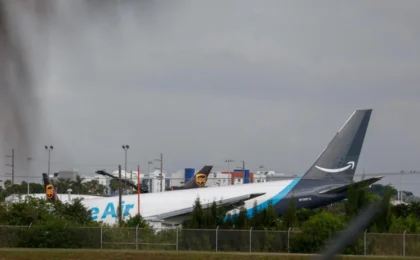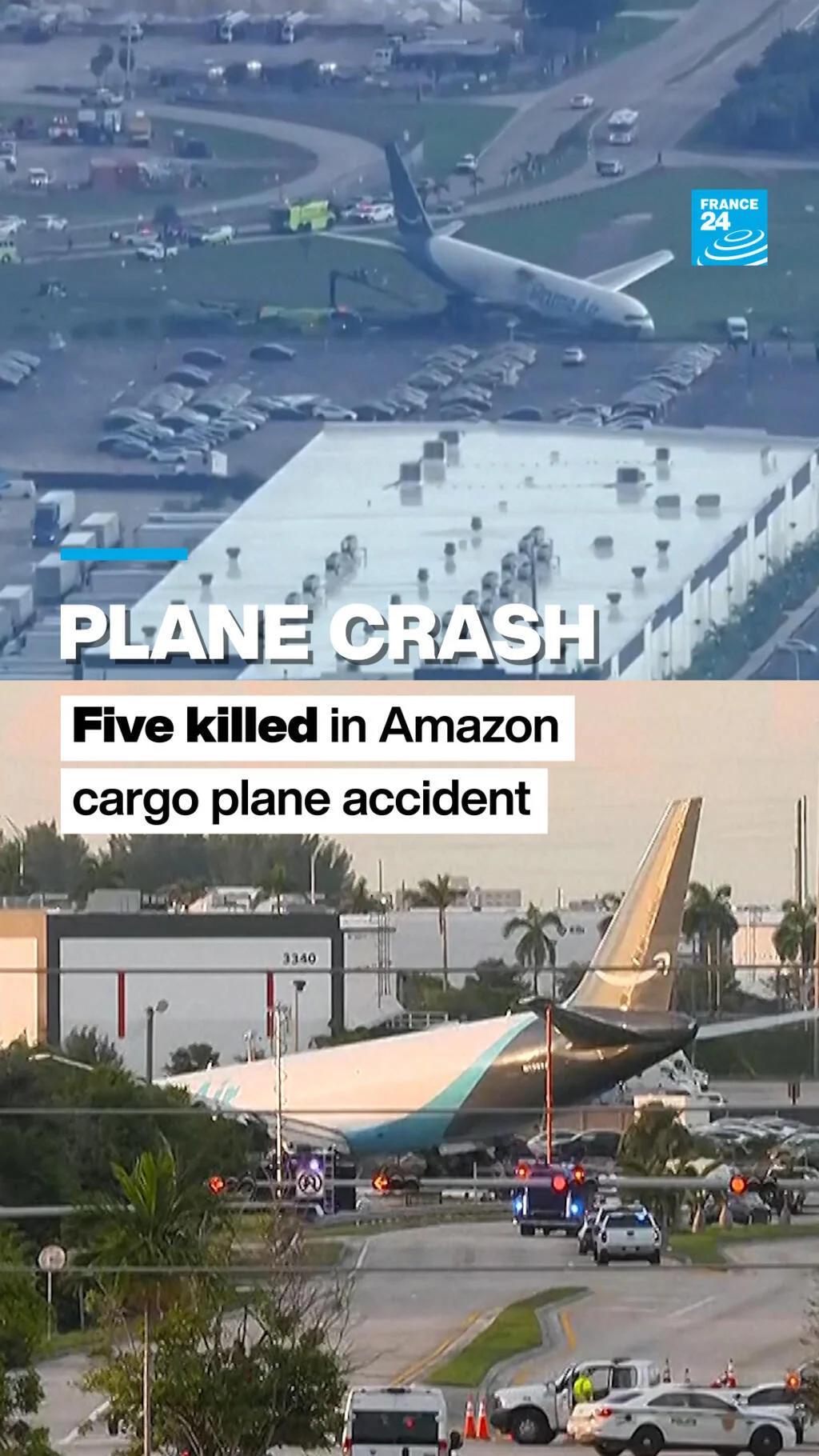
MIAMI, Florida – A devastating aviation disaster unfolded in the early hours of September 7, 2026, when a heavy cargo aircraft, operating on behalf of Amazon Air, veered off the runway at Miami International Airport (MIA), resulting in the deaths of all five crew members on board. The incident, which occurred amidst challenging weather conditions, has triggered a massive federal investigation and raised urgent questions regarding safety protocols for high-frequency cargo logistics operations.
The Main Facts: A Morning of Devastation
The aircraft, a modified Boeing 767-300 freighter operated by a third-party logistics contractor, was performing a routine landing approach at approximately 4:15 a.m. local time. Witnesses and air traffic control logs indicate that the flight, which originated from a regional hub in the Midwest, was cleared for landing on Runway 09.
According to preliminary reports from the National Transportation Safety Board (NTSB), the aircraft touched down significantly further down the runway than intended. Upon attempting to brake, the plane skidded on the rain-slicked tarmac before plowing through the perimeter fence at the eastern edge of the airport. The fuselage disintegrated upon impact with a concrete barrier and a series of support structures, resulting in an immediate, intense fire.
Emergency response teams, including the Miami-Dade Fire Rescue department, arrived within minutes. Despite their rapid intervention, officials confirmed that the intensity of the post-crash fire, fueled by thousands of gallons of aviation fuel, made the cockpit and forward cargo section inaccessible. By 6:00 a.m., authorities confirmed that all five individuals on board—two pilots, one flight engineer, and two loadmasters—had perished in the crash.
Chronological Breakdown: From Descent to Disaster
To understand the mechanics of the tragedy, investigators are currently reconstructing the final fifteen minutes of the flight:
- 04:00 AM: The flight initiates its final descent into Miami International Airport. Air traffic control reports moderate to heavy rain and variable wind gusts in the area.
- 04:08 AM: The flight crew reports standard status checks. No distress calls are logged during this period.
- 04:12 AM: The aircraft makes its final approach. ATC data suggests a slightly higher-than-normal ground speed, likely due to a tailwind component.
- 04:15 AM: The aircraft makes contact with the runway. It is estimated to have touched down at least 3,000 feet past the designated "touchdown zone."
- 04:16 AM: The crew attempts to engage emergency braking and reverse thrust. Due to the reduced friction coefficient caused by heavy rainfall, the aircraft begins to hydroplane.
- 04:17 AM: The aircraft exits the runway surface, traveling through the grass embankment before breaching the airport perimeter.
- 04:18 AM: First responders receive the initial "Mayday" alert from airport ground sensors.
- 04:22 AM: Firefighting units reach the scene, but the aircraft is already fully engulfed in flames.
Supporting Data: Aviation Safety and Cargo Trends
The 2026 incident comes at a time when the global air cargo sector is under unprecedented pressure. With the meteoric rise of "same-day" delivery expectations, the frequency of cargo flights operating during "dead-of-night" hours—when pilot fatigue is statistically highest—has increased by nearly 30% over the last five years.
Data from the Federal Aviation Administration (FAA) reveals that cargo operators are currently flying aging aircraft fleets to keep up with consumer demand. The Boeing 767-300, while a workhorse of the industry, requires rigorous maintenance cycles. Investigators are now scrutinizing the maintenance logs of the specific aircraft involved to determine if a mechanical failure—perhaps related to the anti-skid braking system—contributed to the inability to stop on the short runway.
Furthermore, meteorological data from the National Weather Service confirms that Miami was experiencing a localized severe thunderstorm cell at the time of the landing. While the airport remained open, visibility was oscillating, forcing pilots to rely heavily on Instrument Landing Systems (ILS).
Official Responses and Immediate Aftermath
The scale of the disaster has prompted responses from the highest levels of government and the corporate sector.

The NTSB Investigation
NTSB Chair Jennifer Homendy announced that a "Go Team" has been deployed to Miami to lead the investigation. "We are looking at everything," Homendy stated during a press briefing. "We are examining the black box flight data recorders, the cockpit voice recorders, the maintenance history of this specific airframe, and the decision-making process of the flight crew in the final moments before touchdown."
Amazon’s Official Statement
Amazon issued a brief, somber statement expressing its "deepest condolences to the families and loved ones of the crew members lost in this tragic event." The company stated that it is cooperating fully with the FAA and NTSB. Industry analysts note that while Amazon does not own the planes, its brand association puts significant pressure on the e-commerce giant to ensure the safety standards of its logistics partners.
Airport Operations
Miami International Airport suspended operations for several hours, causing a ripple effect of delays across the southeastern United States. While the airport has resumed near-normal operations, the section of the perimeter fence and the runway area remain cordoned off as a forensic site.
Broader Implications: A Turning Point for Air Cargo?
The crash in Miami is likely to trigger a comprehensive review of air cargo safety regulations. Experts argue that the current regulatory framework for cargo flights is more lenient than that of passenger airlines.
The Fatigue Factor
One of the most pressing concerns involves "duty time" regulations. Pilots flying cargo are often subject to different scheduling rules than those flying passengers, frequently leading to irregular, overnight schedules. Unions representing pilots have long advocated for stricter caps on consecutive flight hours, arguing that the "24/7 delivery culture" prioritizes speed over human endurance.
Infrastructure and Runway Safety
The incident also highlights the risks associated with older airport infrastructure. Miami International, one of the busiest cargo hubs in the world, operates under constraints where expansion is difficult due to the city’s urban density. The proximity of the runway to residential and commercial infrastructure makes the safety margin for errors—such as a runway excursion—extremely thin.
Corporate Accountability
There is growing legislative momentum to hold logistics companies more accountable for the safety of their sub-contractors. If the investigation reveals that the flight crew was pressured to complete the flight despite poor weather, or if the aircraft was pushed beyond its recommended maintenance intervals to meet delivery windows, the legal repercussions for the logistics industry could be transformative.
Conclusion
As the recovery teams clear the wreckage and investigators pore over the flight data, the five lives lost in Miami serve as a grim reminder of the human cost behind the global supply chain. The investigation into this crash will not only determine the specific cause of the accident but will likely redefine the safety standards for the burgeoning air cargo industry. For now, a grieving aviation community and a city shaken by the early morning fire await the answers that will come only after the black boxes have told their final story.
The aviation industry must now confront whether the relentless pace of modern logistics is compatible with the unforgiving realities of flight physics and human limitation.