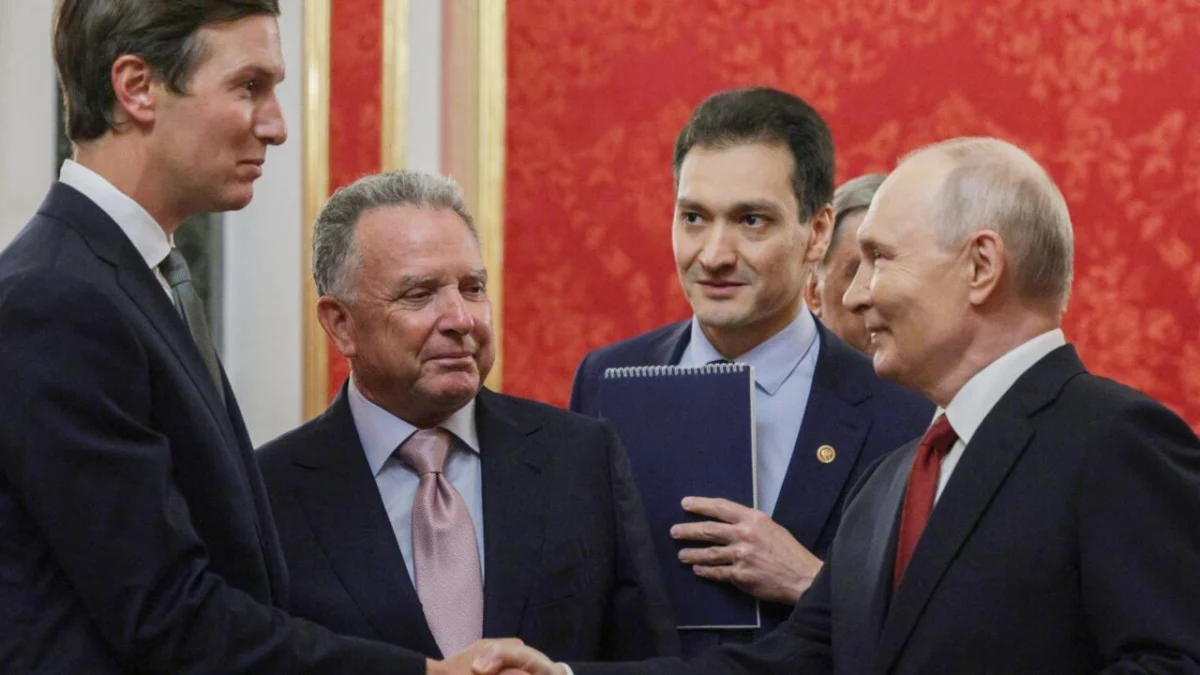
Introduction: A Diplomat Without a Briefing
When Steve Witkoff stepped into the Kremlin for the first time in February of last year, the global diplomatic community was left scrambling to identify him. A prominent real estate mogul and long-time confidant of Donald Trump, Witkoff possessed no background in Eastern European geopolitics, no fluency in Russian, and no formal training in the labyrinthine world of statecraft.
When asked what Witkoff knew about Russia prior to his inaugural mission, President Trump offered a blunt, characteristic assessment: “Nothing.” The rationale for the selection, according to the President, bypassed traditional expertise entirely. “People just love Steve,” Trump remarked, signaling a pivot toward a foreign policy defined by personal chemistry rather than bureaucratic experience. As Witkoff himself succinctly put it, “The professionals haven’t solved it,” positioning himself as the pragmatic disruptor in a conflict that has long defied traditional diplomatic resolution.
The Chronology: From Real Estate to the Kremlin
The transformation of Witkoff from a New York developer to a central figure in the Ukraine peace process has been swift and unconventional.
The Early Missions
Witkoff’s initial foray into the Russian capital was shrouded in intense secrecy. Reports from the Wall Street Journal suggest that the connection was not a standard overture initiated by the White House, but rather a calculated move by Vladimir Putin. Having reportedly commissioned in-depth psychological profiles of the officials surrounding the President-elect, the Kremlin identified Witkoff as a viable, albeit unconventional, conduit—someone whose transactional mindset might bypass the institutional gridlock that had paralyzed formal diplomatic channels for years.
The Evolution of the Role
Today marks the eighth time Witkoff has walked the halls of the Kremlin to meet with President Putin. This latest trip serves as a continuation of a grueling, high-stakes shuttle diplomacy effort aimed at finding a viable off-ramp for the protracted war in Ukraine. In this mission, Witkoff is joined by Jared Kushner, President Trump’s son-in-law and a veteran of the Abraham Accords.
The strategy is shifting. After seven previous meetings focused almost exclusively on the Russian perspective, the duo is slated to travel to Kyiv tomorrow. This will mark the first time Witkoff has set foot in the Ukrainian capital since his appointment, signaling a potential shift from a one-sided consultative phase to a more balanced mediation attempt.
The Mechanics of Shadow Diplomacy
The most striking aspect of the Witkoff-Kushner engagement is the complete abandonment of traditional diplomatic protocol.
The “Solo” Mandate
According to intelligence sources and reporting by the Wall Street Journal, the primary constraint placed upon Witkoff during his early meetings was an absolute mandate of isolation. He was instructed to arrive alone—no CIA handlers, no State Department diplomats, and, perhaps most controversially, no government-vetted interpreters.
This decision, while ostensibly intended to minimize leaks and facilitate a "pure" line of communication, has raised significant alarms within the intelligence community. Operating without a formal record-keeper or an American security detail leaves the negotiator vulnerable to Russian intelligence gathering and makes it nearly impossible for the administration to verify the nuances of the promises made behind closed doors.
The Psychology of the Deal
Witkoff’s approach is rooted in the philosophy of high-stakes real estate negotiation. He views the war not as a clash of ideologies or a defense of sovereignty, but as a "problem" that has been mismanaged by those who focus too heavily on international law and precedent. By stripping away the layers of diplomatic bureaucracy, Witkoff believes he can reach a "common sense" settlement that satisfies the security requirements of both the Kremlin and the Zelenskyy administration.
Supporting Data: The Landscape of the Conflict
The context into which Witkoff is stepping remains grim. Despite the optimism projected by the Trump administration, the conflict has reached a stage of entrenchment that defies simple deal-making.
- Frontline Stagnation: After years of attrition, the frontline in eastern and southern Ukraine has remained largely static, with neither side possessing the decisive force to achieve a total military victory.
- Humanitarian Toll: The civilian impact has been profound, with millions of displaced persons and a critical collapse in infrastructure, particularly within the energy sector.
- Economic Pressures: Sanctions have hindered the Russian economy, but have not yet forced a collapse in state capacity, while Ukraine remains heavily reliant on Western financial aid and military hardware.
Witkoff’s challenge is to find a "territorial compromise" that does not trigger a domestic political collapse in Kyiv, nor a loss of face for Moscow—a balancing act that seasoned diplomats have failed to achieve for over two years.
Official Responses and Internal Tensions
The response to Witkoff’s elevation has been polarized. Within the Trump administration, there is a vocal faction that views his role as a necessary shortcut. "The bureaucracy is a trap," a senior White House aide remarked on condition of anonymity. "By keeping the circle small, we are preventing the ‘Deep State’ from poisoning the well before we even have a deal on the table."
Conversely, career officials at the State Department and within the Pentagon have expressed deep private concerns. The lack of institutional oversight is seen as a major liability. "Diplomacy is not a business deal," noted a former ambassador to the region. "When you remove the professional infrastructure, you remove the guardrails. We are operating in a vacuum where the risks of manipulation are astronomical."
The Kremlin, for its part, has maintained a strategic silence, occasionally praising the "pragmatism" of the current US administration’s approach while refusing to confirm the specifics of the discussions held during Witkoff’s seven previous visits.
Implications: The Future of Global Order
The reliance on figures like Witkoff and Kushner to resolve a conflict of this magnitude represents a fundamental shift in American foreign policy.
A New Model of Statecraft
If the Witkoff mission succeeds, it would likely herald a new era of "CEO Diplomacy," where the complexities of international relations are reduced to private, direct negotiations between proxies of the heads of state. This would relegate the traditional diplomatic corps to a secondary role, focusing on implementation rather than negotiation.
The Risks of Miscalculation
However, the failure of this model could be catastrophic. The absence of a formal diplomatic trail means that if the talks collapse, there is no shared understanding of what went wrong. Furthermore, if Witkoff inadvertently concedes critical security points in his search for a "deal," the long-term impact on NATO stability and European security could be permanent.
As Witkoff prepares for his first meeting in Kyiv, the eyes of the world are fixed on the man who claims that "professionals haven’t solved it." Whether he is the visionary negotiator who brings peace to the Donbas, or a novice who has wandered into a trap set by an expert in global manipulation, remains the most pressing question of the current administration.
Conclusion
The trajectory of Steve Witkoff’s involvement in the Ukraine crisis is a testament to the volatility of modern international relations. By bypassing the expertise of the State Department and the intelligence community, the administration has signaled a willingness to gamble on personal relationships and the power of "the deal." As the mission moves from the isolation of the Kremlin to the urgent atmosphere of Kyiv, the world waits to see if this unconventional approach can produce the peace that has eluded the world’s most seasoned diplomats. Whether this represents a masterstroke of outside-the-box thinking or a dangerous flirtation with diplomatic catastrophe, the results of these upcoming meetings will likely define the legacy of the Trump administration’s foreign policy for decades to come.