Fifteen years have passed since the Eleventh Doctor, Amy Pond, and Rory Williams found themselves trapped in a labyrinthine hotel—a place where the walls shifted, the doors held personal nightmares, and a minotaur stalked the corridors, feeding on the desperate, shattered faith of its captives. While "The Angels Take Manhattan" is famously remembered as the heart-wrenching final bow for the Ponds, the true thematic conclusion to Amy Pond’s journey occurred much earlier.
"The God Complex," which first aired in September 2011, stands as one of the most poignant episodes of the Matt Smith era. It was not merely a monster-of-the-week procedural; it was a profound psychological examination of the cost of traveling with a Time Lord. It served as the moment the Doctor finally recognized that his most loyal companion could no longer survive as the "Girl Who Waited," forcing him to make the most painful sacrifice of his tenure: letting her go.
The Anatomy of a Nightmare: The Facts of ‘The God Complex’
The premise of the episode is deceptively simple: The TARDIS lands in a 1980s-style hotel that shouldn’t exist. The hotel is a prison, a construct designed to house a creature—the minotaur—that feeds on the faith of its victims. Each room contains the specific fear of the person residing within: an abusive father, a clown, a weeping angel, or a ventriloquist dummy.
As the Doctor (Matt Smith), Amy (Karen Gillan), and Rory (Arthur Darvill) navigate this shifting architecture, they encounter a group of survivors. The terror of the episode isn’t just the monster; it is the realization that the creature doesn’t consume fear itself, but rather the faith that individuals turn to when they are afraid. As the Doctor explains, when a person is confronted by their greatest terror, they retreat into the safety of their beliefs. The minotaur feasts on that reliance, effectively "eating" the soul of the victim once they surrender their agency to a higher power.
For the Eleventh Doctor, this is an existential mirror. He is the "higher power" in Amy’s life—the raggedy man who fell from the stars and became her entire world. The episode forces an uncomfortable question: Does the Doctor, in his vanity and his desire to be worshiped, turn his companions into victims of his own influence?
Chronology: The Road to Disillusionment
To understand the weight of "The God Complex," one must look at the trajectory of the sixth season. The episodes leading up to this point were not just adventures; they were a systematic dismantling of the fairy tale life Amy had envisioned.
The Catalyst: ‘The Girl Who Waited’
Just one episode prior, the trio visited Apalapucia, a planet where a misunderstanding resulted in Amy being trapped for 36 years, forced to fend for herself with a sword in a facility designed for the terminally ill. The version of Amy that emerged was hardened, cynical, and deeply resentful of the Doctor. When the younger Amy was saved, the older, broken version was erased from existence.
This experience left a permanent scar on the group’s dynamic. The Doctor’s "cold logic"—his willingness to allow one version of Amy to die to save the other—shattered the romanticized image Amy had cultivated since childhood. "The God Complex" immediately follows this trauma, forcing the characters to inhabit a space where their faith in their hero is actively weaponized against them.
The Doctor’s Dark Reflection: Supporting Data
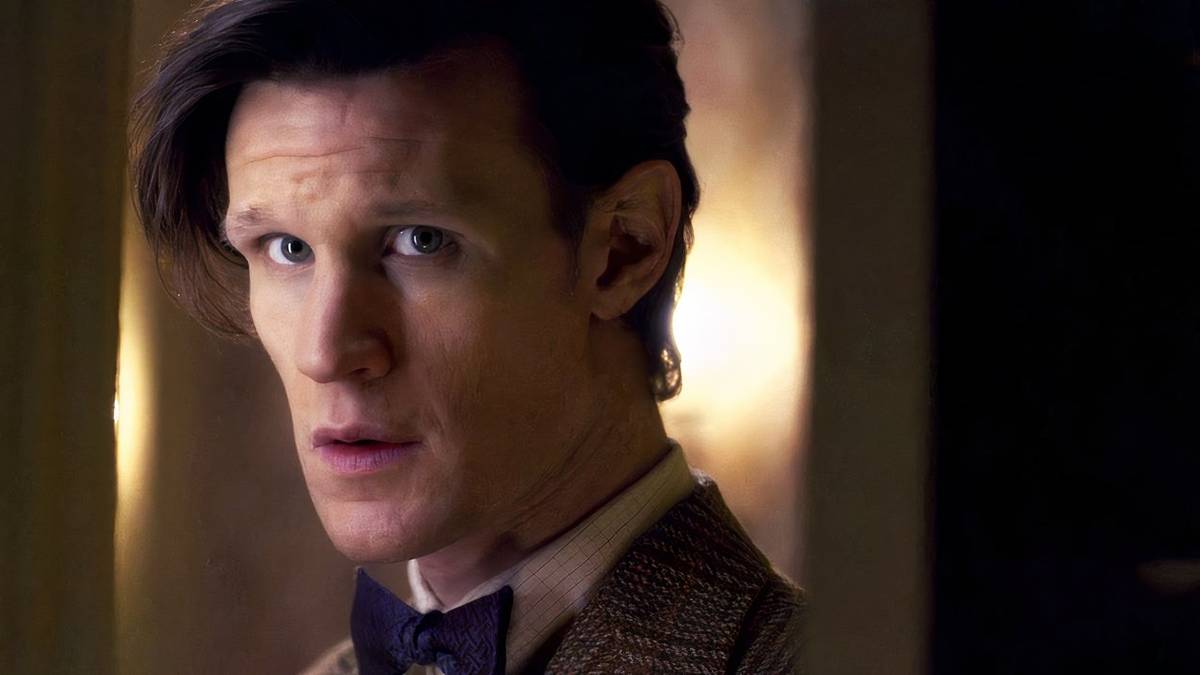
Matt Smith’s portrayal of the Eleventh Doctor is often remembered for its youthful energy, bowties, and penchant for "cool" things. However, "The God Complex" features some of the most mature and menacing acting of his tenure.
When the Doctor finally reaches the room that contains Amy’s greatest fear, he finds the "Girl Who Waited" herself—the child version of Amy, sitting on a suitcase, forever waiting for the man who promised to return in five minutes. It is a haunting image of abandonment.

In a pivotal monologue, the Doctor admits the truth: he didn’t bring Amy along because she was a hero or a warrior; he brought her because he was vain. He confesses, "I took you with me because I was vain. Because I wanted to be adored." This is a rare moment of radical honesty for the character. He acknowledges that he is the minotaur in her life, a figure who consumes her devotion to satisfy his own ego.
Official Perspectives and Behind-the-Scenes Context
Showrunner Steven Moffat, who penned the era, was deliberate in his construction of the Ponds’ exit arc. In various retrospectives and production notes, it has been noted that the Ponds were always intended to have a "civilian" ending. The transition from the high-stakes, mythic status of the Doctor’s companions to the mundane reality of a house, a car, and a mortgage was a specific narrative choice.
By having the Doctor leave them on Earth at the end of "The God Complex," the show effectively signaled the end of their "adventuring" phase. Even though they returned for episodes in Season 7, the dynamic had fundamentally shifted. The "fairy tale" was over; the Ponds were no longer chasing the Doctor—they were living their own lives, with the Doctor merely dropping in as a visitor.
The episode reflects a pivot in the show’s philosophy regarding companionship. The Doctor realizes that by keeping Amy in his orbit, he is effectively killing her—not just physically, but by preventing her from growing up.
Implications: Why ‘The God Complex’ Matters 15 Years Later
The implications of this episode resonate far beyond the conclusion of the Ponds’ arc. "The God Complex" serves as a masterclass in character development, challenging the standard "hero/sidekick" trope found in science fiction.

1. The Deconstruction of Hero Worship
By framing the Doctor as a potential source of harm rather than just a savior, the episode forces the audience to view the TARDIS crew through a lens of critical realism. It asks what happens when the "God" fails the believer.
2. Agency and Maturity
The Doctor’s command to Amy—"It’s time to stop waiting"—is perhaps the most vital piece of dialogue in the series. It is an act of liberation. By forcing Amy to lose faith in him, he empowers her to believe in herself and in her relationship with Rory. He transitions her from "Amelia Pond," the child who waits, to "Amy Williams," the woman who lives.
3. A Legacy of Performance
Matt Smith’s performance during the climax of the episode, where he stares down the minotaur and dissects his own flaws, remains a high-water mark for the show. It demonstrated that the Doctor could be both the most terrifying person in the room and the most vulnerable.
Conclusion: The Finality of the Choice
When we look back at the history of Doctor Who, we often gravitate toward the big, flashy finales: the regeneration scenes, the epic battles, and the dramatic goodbyes. But "The God Complex" proves that the most important endings are often quiet.
Amy Pond’s story didn’t end with a Weeping Angel in a graveyard in Manhattan; it ended in a sterile hotel corridor where she realized that her hero was just a man—and that she was finally ready to stop waiting for him. Fifteen years later, "The God Complex" remains a testament to the fact that the greatest gift the Doctor can give his companions is the freedom to live a life that doesn’t involve him. It was a brutal, necessary, and ultimately beautiful conclusion to a chapter that had defined a generation of fans.