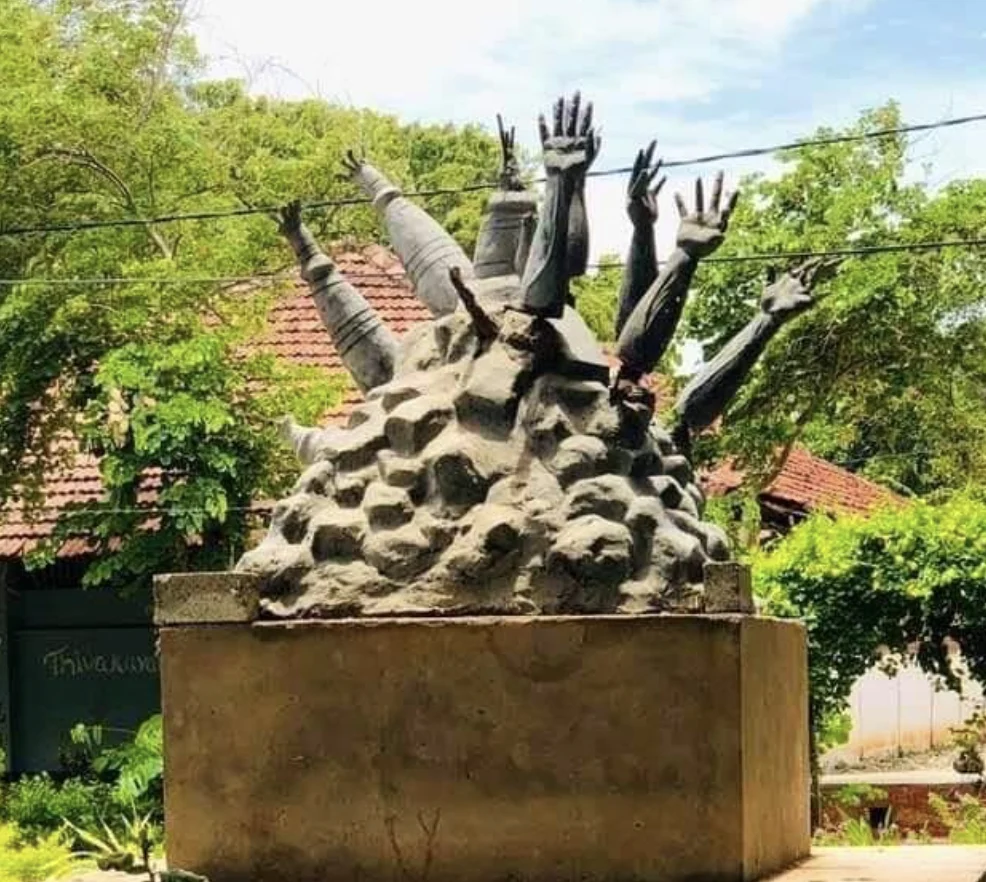
Introduction: A Cycle of Impunity
Twenty-six years after the formal conclusion of the brutal civil war that ravaged Sri Lanka, the nation remains ensnared in a cycle of unaddressed grievances and systemic impunity. Despite promises of reform and reconciliation, the administration of President Anura Kumara Dissanayake is facing mounting pressure from international human rights organizations and grieving families. Human Rights Watch (HRW) has issued a scathing report criticizing the current government for its sluggish approach to prosecuting past grave abuses, suggesting that the "tepid progress" on justice is not merely a bureaucratic failure but a lack of political will.
For the thousands of families whose loved ones were victims of enforced disappearances and extrajudicial killings, the search for truth has become a generational struggle. As excavations at the Chemmani site in the Jaffna peninsula proceed at a crawl—stalled by funding disputes and inclement weather—the frustration of the populace is palpable. This delay is more than a logistical hurdle; it is a symbol of a state that continues to prioritize political preservation over the healing of a fractured society.
Chronology of Conflict and Failure
The history of the conflict, which spanned decades, left a landscape scarred by trauma. While the most intensive phases occurred between 1987 and 1989, the ripples of violence continued until the war’s end in 2009.
- 1987–1989: The initial period of mass violence, characterized by the brutal conflict between the Sri Lankan state and the Liberation Tigers of Tamil Eelam (LTTE). During this time, tens of thousands were abducted, tortured, and murdered.
- 2006: The execution of 17 humanitarian aid workers, a case that remains a flashpoint for international demands for justice two decades later.
- 2011: The UN Secretary-General’s Panel of Experts releases a landmark report detailing credible allegations of war crimes and crimes against humanity committed by both government forces and the LTTE.
- 2023: The government introduces proposals for a "Truth and Reconciliation" mechanism, which rights groups argue is a superficial attempt to appease international donors without providing genuine legal recourse.
- 2026 (July–August): Renewed outcry following reports of state-sanctioned violence in the prison system, leading to 28 inmate deaths and prompting UN experts to demand an immediate investigation.
- September 2026: Human Rights Watch releases a comprehensive report citing the Dissanayake government’s failure to establish a Directorate of Public Prosecution (DPP) and its refusal to engage with the Sri Lanka Accountability Project.
The Weight of Evidence: A Nation Haunted by Graves
The magnitude of the abuses in Sri Lanka is staggering, with estimates suggesting over 100,000 lives lost throughout the conflict. The nature of these atrocities defies easy categorization, ranging from systematic sexual violence and state-sanctioned disappearances to the LTTE’s deployment of child soldiers and suicide bombings.
The current focus on the Chemmani site serves as a grim reminder of the past. For decades, the site has been rumored to hold the remains of those who vanished during the height of the conflict. However, the slow pace of excavation has become a point of contention. Citizens view the government’s excuses—blaming weather and budget constraints—as tactical stalling. When a government fails to prioritize the recovery of remains, it effectively denies families the basic human right to bury their dead and find closure, fueling deep-seated distrust in state institutions.
Official Responses and Administrative Stagnation
President Dissanayake’s administration campaigned on a platform of peace and reconciliation. Central to these promises was the pledge to establish a Directorate of Public Prosecution (DPP). The intended purpose of the DPP was to streamline the legal process, bypass the bureaucratic bottlenecks that have historically shielded perpetrators, and expedite justice for war-era crimes.
Yet, despite these public commitments, the DPP remains an unfulfilled promise. Critics argue that the government’s refusal to cooperate with the Sri Lanka Accountability Project—a vital UN-led initiative—proves that the administration is unwilling to allow external oversight. The Accountability Project was specifically designed to "collect, consolidate, analyze and preserve information and evidence" to build strategies for future prosecutions. By distancing itself from this initiative, the Sri Lankan government has effectively signaled that it prefers to maintain a monopoly on the truth, rather than subjecting its history to international standards of justice.
Supporting Data: Why Ten Commissions Were Not Enough
The failure to achieve justice is not for a lack of investigative attempts; rather, it is a failure of follow-through. Over the past three decades, the Sri Lankan government has commissioned at least 10 separate inquiries into human rights abuses.
The pattern is repetitive:
- Announcement: A high-profile commission is launched to address a specific atrocity or period of violence.
- Investigation: Witnesses are interviewed, and evidence is gathered, often at great personal risk to the victims’ families.
- Report: A document is produced, often containing findings that implicate state actors or high-level officials.
- Stagnation: The report is shelved, suppressed, or partially implemented without any subsequent prosecutions.
This cycle has created a culture of "accountability theater," where the appearance of justice is prioritized over the delivery of it. According to the UN Human Rights Council, few, if any, of these commissions have resulted in the conviction of those responsible for war crimes. The lack of political will to prosecute one’s own security apparatus—coupled with the inability to hold non-state actors like the LTTE accountable for their own violations—has left the justice system hollowed out.
The Broader Implications: A Fragile Peace
The implications of this ongoing impunity are profound. When a government fails to address the crimes of the past, it creates a permissive environment for the crimes of the present. The recent deaths of 28 inmates in the prison system, which have been linked to torture and custodial violence, demonstrate that the methods used during the civil war have not been eradicated; they have simply migrated to the penal system.
Local advocacy groups, such as the Committee to Protect the Rights of Prisoners (CPRP), have drawn direct parallels between the lack of accountability for 1980s-era disappearances and the current indifference toward prison violence. If the state cannot be held accountable for the murder of its own citizens behind bars, there is little hope that it will account for the thousands who vanished in the jungles and detention centers of the past.
Furthermore, the international standing of Sri Lanka remains compromised. The UN’s persistent calls for accountability, particularly regarding the execution of aid workers, highlight that time is not an eraser of crimes. The international community, through mechanisms like the OHCHR, continues to signal that until Sri Lanka demonstrates a "genuine" commitment to prosecution, the country will remain under the scrutiny of global human rights bodies.
Conclusion: The Path Forward
The path to peace in Sri Lanka cannot be paved with empty rhetoric. For the families of the victims, justice is not a political bargaining chip—it is a fundamental requirement for the country to move forward. The Dissanayake government stands at a crossroads: it can continue to ignore the lessons of history and the demands of its people, or it can take the tangible steps necessary to foster a culture of accountability.
Establishing the Directorate of Public Prosecution, cooperating fully with the Sri Lanka Accountability Project, and accelerating the excavations at sites like Chemmani are not just administrative tasks; they are moral imperatives. Until these steps are taken, the "peace" that the current administration claims to have brought will remain, for many, a hollow promise built on the silence of the disappeared. The world is watching, but more importantly, the families of those who perished are waiting—and their patience has long since run out.