In a scathing new report, the United Nations has leveled severe accusations against Israel, alleging that the systematic displacement of over 33,000 Palestinian refugees from three major West Bank camps constitutes a crime against humanity. The findings, released by the UN Office of the High Commissioner for Human Rights (OHCHR), detail a campaign of destruction and forced expulsion that observers warn may amount to ethnic cleansing.
The Core Allegations: A Systematic Campaign
The UN report focuses on the events surrounding "Operation Iron Wall," a military campaign launched by Israel in January 2025. According to the document, the operation was not merely a security maneuver but a coordinated effort to render northern West Bank refugee camps—specifically Jenin, Nur Shams, and Tulkarm—entirely uninhabitable.
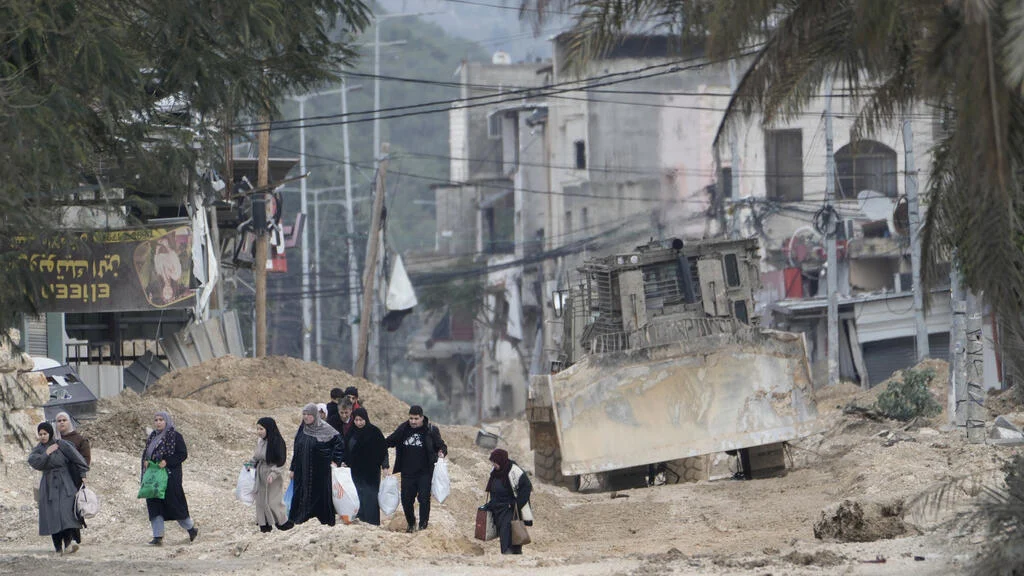
The OHCHR describes a harrowing methodology: Israeli military, police, and security forces entered these densely populated areas, systematically destroying residential homes, vital infrastructure, and essential service hubs. Beyond the physical destruction, the report highlights the deliberate severance of basic utilities, including water and electricity, and the enforcement of a total blockade on humanitarian access.
"The large-scale, long-term and systematic displacement of over 33,000 Palestinian refugees from these camps during Operation Iron Wall raises serious concerns of the crime against humanity of forcible transfer," the report states. By rendering the camps uninhabitable through the use of airstrikes, armored bulldozers, and controlled detonations, the military effectively foreclosed any possibility of a voluntary return for the displaced population.
Chronology of the Crisis
The escalation of violence in the West Bank has been a defining feature of the regional instability that followed the October 7, 2023, attacks in southern Israel. However, the specific timeline of Operation Iron Wall reveals a deliberate intensification of policy.
- January 21, 2025: Operation Iron Wall commences, just 48 hours after a tenuous ceasefire was established along the Gaza Strip. The timing drew immediate international scrutiny, as the operation signaled a major shift in military tactics within the occupied West Bank.
- January – February 2025: Over the course of several weeks, forces conducted door-to-door sweeps, ordering residents to evacuate while simultaneously disabling the infrastructure required to sustain life.
- February 23, 2025: The Israeli military officially announced that the three targeted refugee camps had been "emptied." At this juncture, Defense Minister Israel Katz confirmed that troops were instructed to maintain a "prolonged presence" in the cleared areas to prevent the return of residents.
- July 2026: UN data confirms that more than 33,300 individuals remain displaced, with no permission granted for their return to the ruins of their former homes.
Supporting Data and Evidence
The UN’s assessment is backed by extensive documentation gathered on the ground. The report notes that the destruction was not incidental to urban combat but appeared to be the primary objective of the operation.
Satellite imagery and field reports reviewed by the OHCHR indicate that the destruction of homes and utilities was performed with high-grade military equipment. The agency emphasizes that the "systematic" nature of the displacement—forcing the entire population of the camps to flee—is a clear violation of international humanitarian law.
Furthermore, the report underscores the long-term impact on the affected families. By July 2026, the displaced population remains in a state of indefinite displacement. The absence of a pathway for return, coupled with official statements from Israeli government officials regarding the desire to prevent the "resurgence of terrorism" through permanent displacement, suggests that the evacuation was never intended to be temporary.
Official Responses and Diplomatic Friction
The reaction to the UN report has been as polarized as the conflict itself.
Israel’s Rebuttal
The Israeli mission in Geneva responded with fierce condemnation, characterizing the UN report as a partisan document that lacks objective integrity. In a statement, the mission claimed the OHCHR has "set aside impartiality, independence and neutrality, to serve as the epicentre of vile activism."

Israeli officials argue that the report ignores the context of regional security, specifically the threat of "terrorist attacks" emanating from these camps. The government maintains that the operations were essential security measures designed to neutralize threats that had become entrenched in civilian infrastructure.
The UN Stance
UN High Commissioner for Human Rights, Volker Turk, remained resolute in his briefing. He posited that the scale and method of the operation suggest a broader, more ominous motive. "The way the operation was conducted," Turk said, "suggests its aim was to expel as many Palestinians as possible and to make way for more illegal Israeli settlements, in further violation of international law."
The UN’s stance aligns with a growing body of international criticism regarding the expansion of settlements in the West Bank, which are considered illegal under international law.
Broader Implications and International Law
The implications of the report extend far beyond the borders of the three camps. By invoking the term "crimes against humanity," the UN is signaling that the international community may be approaching a threshold where legal action against specific commanders or policymakers could be pursued.
The Question of Ethnic Cleansing
The UN report explicitly warns that Israel’s actions "appear to amount to collective punishment and raise concerns of ethnic cleansing." Under international legal frameworks, collective punishment is strictly prohibited under the Geneva Conventions. The accusation of ethnic cleansing—a term rarely used in official UN reports—highlights the severity of the institutional concern regarding the demographic alteration of the West Bank.
Impact on Regional Stability
The displacement of 33,000 people exacerbates an already dire humanitarian crisis. As these refugees move into other, already overcrowded areas of the West Bank, the pressure on local resources and the potential for further radicalization increase. Analysts warn that the permanent clearing of these camps could shatter the prospect of a two-state solution, as the geography of the West Bank becomes increasingly fragmented.
Legal Precedents
The release of this report follows a broader trend of international judicial scrutiny. France, for instance, has recently opened a probe into war crimes and torture allegations related to the treatment of activists during a Gaza-bound flotilla. These parallel developments suggest that the window for impunity is narrowing, with international bodies and individual nations increasingly willing to leverage legal mechanisms to challenge the conduct of military operations.
Conclusion: A Turning Point?
The UN report on Operation Iron Wall serves as a sobering indictment of the current trajectory of the Israeli-Palestinian conflict. As the international community digests these findings, the debate centers on whether the language of international law can actually influence the policies of a state engaged in an existential security struggle.
While Israel continues to frame these actions as necessary for survival, the UN’s documentation of the systematic destruction of refugee homes and the indefinite prohibition of return provides a stark, empirical counter-narrative. The case of the 33,000 displaced refugees in the West Bank is now firmly on the global agenda, representing a critical test for the enforcement of international humanitarian norms in the 21st century.
Whether this report will lead to diplomatic sanctions, further international investigations, or a change in military policy remains to be seen. However, the gravity of the "crimes against humanity" label ensures that the events of Operation Iron Wall will remain a focal point of international scrutiny for years to come.