GENEVA/WASHINGTON – A high-level panel of United Nations human rights experts has issued a blistering condemnation of the United States’ ongoing maritime interdiction campaign, labeling the lethal strikes against suspected drug-trafficking vessels in the Caribbean and Pacific as a systematic violation of international law. The statement, released on Tuesday, marks a significant escalation in the global scrutiny of "Operation Southern Spear," a military initiative that has resulted in the deaths of over 200 individuals in just one year.
Main Facts: The Legal and Human Cost
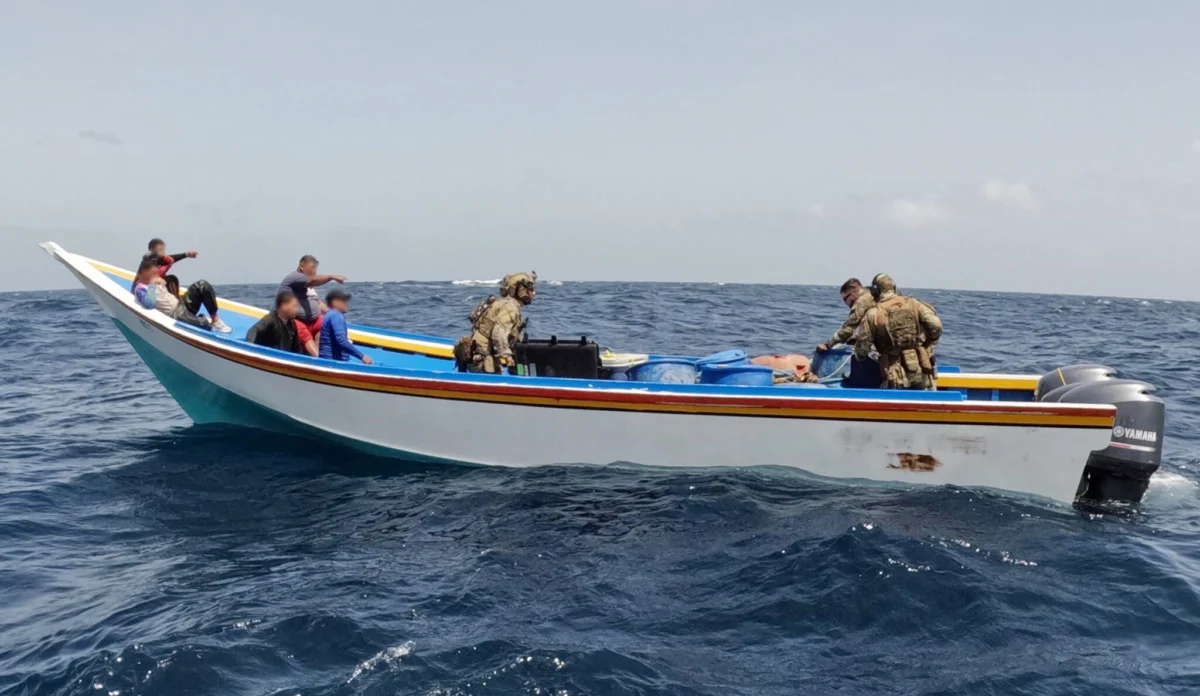
The United Nations report, authored by a collective of special rapporteurs, asserts that the United States military is operating outside the bounds of both international humanitarian law and domestic human rights standards. Since the inception of the operation, the US Department of Defense has employed lethal airstrikes to intercept small vessels suspected of transporting narcotics from Latin American cartels.
The UN experts were unequivocal in their assessment: "These systematic killings gravely violate the fundamental obligation to respect the right to life. International law does not permit governments to simply murder alleged criminals at sea… Just as the police cannot summarily execute people on the street in United States territory, military forces cannot operate as judge, jury, and executioner in international waters."
Central to the dispute is the US government’s classification of drug cartels as "Designated Terrorist Organizations" (DTOs). By framing these criminal entities as combatants in an ongoing "asymmetric war," the US has attempted to justify the use of military force. The UN, however, maintains that drug trafficking, while a serious criminal offense, does not constitute an armed attack under Article 51 of the UN Charter, effectively stripping the US of its self-defense justification.
Chronology of Operation Southern Spear
The escalation of maritime violence began in late 2025, following a shift in US counter-narcotics policy.
- January 2025: President Trump signs an executive order declaring that the activities of transnational criminal organizations constitute an "insurgency and asymmetric warfare" against the United States, providing the legal architecture for expanded military intervention.
- September 2, 2025: The first recorded strike under the banner of "Operation Southern Spear" occurs in the Caribbean. US forces destroy a small vessel, killing all on board, citing the need to "eliminate the threat."
- March 2026: The Department of Defense submits a report to Congress admitting that while the campaign lacked specific legislative authorization, it was justified under the President’s emergency powers to respond to threats to the nation.
- August 2026: After a brief operational hiatus, the strikes resume with renewed intensity, prompting the current UN intervention.
- September 2026: UN experts issue a formal demand for an immediate cessation of the attacks, citing the death toll of 227 individuals, none of whom were provided due process.
Supporting Data and the "War on Drugs"
The scale of the operation is unprecedented in the modern era of maritime law enforcement. According to Pentagon data, 227 individuals have been killed in the last twelve months. Critically, the UN points out that none of these victims were formally charged with a crime, nor were they ever detained or given the opportunity to surrender.
The cartels identified by the US—primarily the Sinaloa Cartel and the Jalisco New Generation Cartel (CJNG)—operate extensively throughout Mexico, Colombia, Ecuador, and Venezuela. These organizations are the primary suppliers of synthetic narcotics like fentanyl and methamphetamine, which have fueled a public health crisis within the United States.
However, legal scholars argue that the solution to this crisis—lethal force—is disproportionate. Under the United Nations Convention on the Law of the Sea (UNCLOS), the suppression of drug trafficking is a law enforcement function. Military force is generally reserved for state-to-state conflict or legitimate self-defense against armed attacks. By substituting police interceptors with aerial combat assets, the US has effectively militarized the high seas in a way that ignores established maritime jurisdiction.
Official Responses and Justifications
The US Department of Defense has remained steadfast in its defense of the operation. In its report to Congress, the Pentagon argued that the "national emergency" created by the influx of lethal synthetic drugs necessitates a departure from traditional law enforcement protocols. Officials have suggested that the cartels’ use of sophisticated, military-grade communication and transportation equipment justifies the deployment of Special Operations Command (SOCOM) assets.
Conversely, the UN’s critique has been bolstered by organizations like Amnesty International, which has called the campaign a "murderous, year-long streak of extrajudicial killings." Amnesty’s recent press release urged Congress to exercise its oversight power to rein in the executive branch, noting that the lack of transparency surrounding the rules of engagement has left the public in the dark regarding how targets are selected and verified.
UN Special Rapporteurs have confirmed they are in ongoing communication with the US State Department regarding the "legal inconsistencies" presented by the operation. However, there has been no indication from the White House that it intends to pivot away from the current strategy.
Global Implications and Legal Precedents
The implications of the US position extend far beyond the Caribbean. If the United States successfully asserts that a domestic drug crisis grants it the right to execute suspects in international waters without trial, it creates a dangerous precedent for other nations to follow.
1. Erosion of International Humanitarian Law (IHL)
The UN experts highlighted that because drug cartels do not meet the criteria for a "Non-International Armed Conflict" (NIAC), the laws of war simply do not apply. By attempting to force this conflict into an IHL framework, the US risks devaluing the protections afforded to combatants and civilians alike in actual war zones.
2. Sovereignty and the Law of the Sea
The reliance on military airstrikes complicates diplomatic relations with countries like Mexico and Colombia. These nations have long been partners in the fight against cartels, but the unilateral nature of the US strikes—often occurring in waters adjacent to these countries—has caused significant diplomatic friction. The US strategy risks undermining years of cooperation by asserting an extraterritorial right to kill that many regional leaders view as a violation of their own national sovereignty.
3. The Due Process Vacuum
Perhaps the most concerning aspect for human rights advocates is the complete abandonment of the right to a fair trial. The "Operation Southern Spear" narrative relies on intelligence-based targeting, where the death of the suspect becomes the final verdict. This "shoot-to-kill" policy effectively removes any possibility for judicial review, rendering the presumption of innocence a nullity in the context of maritime interdiction.
Conclusion: A Call for Accountability
As the death toll climbs, the pressure on the US government is mounting. The UN’s intervention serves as a stark reminder that the fight against the illicit drug trade, no matter how severe the domestic impact, cannot come at the cost of the fundamental rights enshrined in international law.
Whether the US will pivot toward a strategy of surveillance, capture, and prosecution, or whether it will double down on its reliance on aerial strikes, remains the defining question for the coming months. For now, the international community watches with growing alarm as the US continues to treat the high seas as a theater of war, testing the endurance of the very laws that were designed to prevent such violence.