Main Facts: House Passes Symbolic Anti-Socialism Resolution with Voter ID Attachment
In a high-stakes legislative maneuver just two months before the midterm elections, the U.S. House of Representatives adopted a resolution explicitly denouncing "socialism in all its forms." The measure, which passed on a 220–192 vote, was engineered by House Republicans to sharpen partisan contrasts and put moderate Democrats on the record regarding the ideological direction of their party.
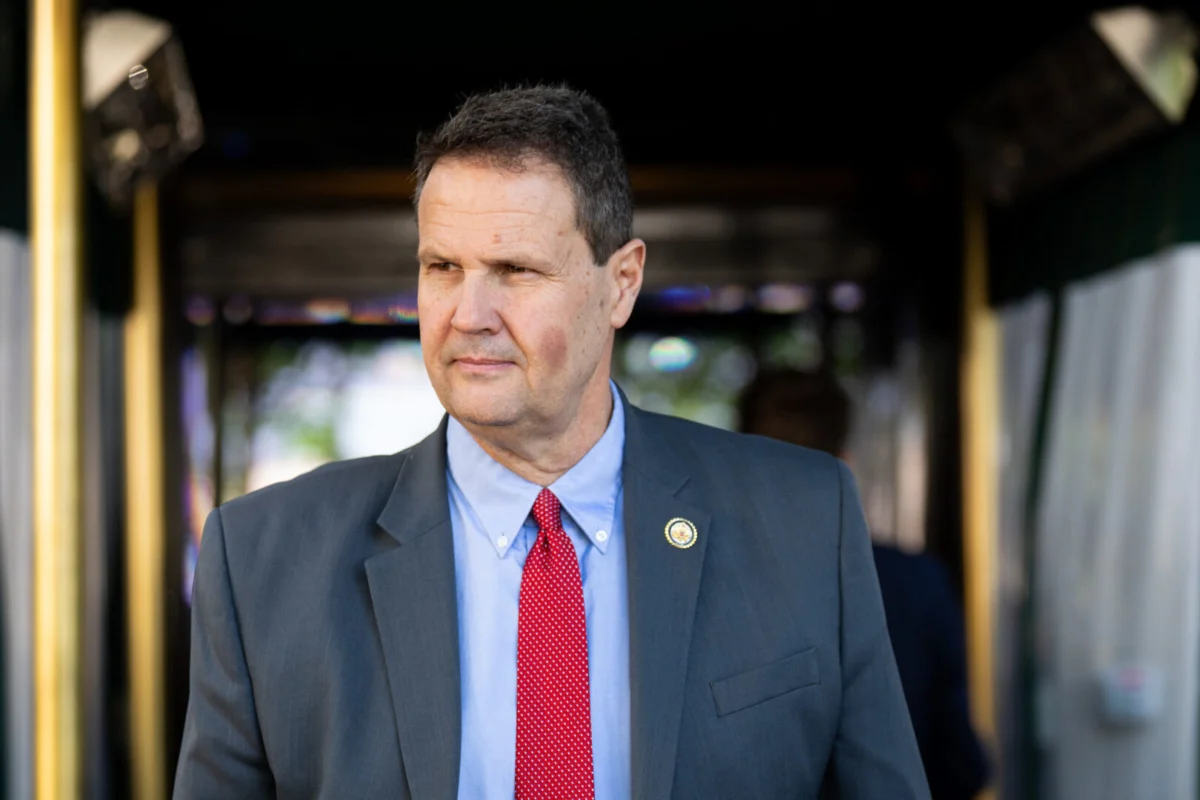
The resolution was sponsored by Representative Jeff Crank, a freshman Republican from Colorado who is himself locked in a competitive reelection battle. While non-binding and carrying no force of law, the document marks an aggressive shift in Republican messaging strategy. Unlike previous generic condemnations of authoritarian regimes, this resolution explicitly targets domestic political developments. Specifically, it warns against the "implementation of socialist policies in the United States," citing the victory of New York City Mayor Zohran Mamdani last fall and highlighting the electoral gains of candidates affiliated with the Democratic Socialists of America (DSA) nationwide.
Crucially, the resolution links its anti-socialist rhetoric directly to election administration by calling for the immediate passage of the SAVE America Act—a sweeping, Republican-backed voter identification bill supported by President Donald Trump. This addition served as a major sticking point during floor proceedings. By inserting strict voter ID mandates into an anti-socialism declaration, Republican leadership effectively alienated moderate Democrats who might otherwise have supported a standalone condemnation of socialist ideology.
Despite the inclusion of the controversial voting language, eight Democrats broke ranks with their caucus to vote in favor of the resolution. Among them was Representative Marie Gluesenkamp Perez, a Democrat from Washington State representing a swing district, along with several other vulnerable incumbents facing formidable Republican challenges in the upcoming midterms.
====================================================================
               HOUSE RESOLUTION VOTE BREAKDOWN (220-192)
====================================================================
  [ Republicans ]   Majority Voted YES (Party Line Push)
  [ Democrats   ]   184 Voted NO | 8 Voted YES (Incl. Gluesenkamp Perez)
====================================================================
  Key Inclusions:
   • Direct condemnation of domestic Democratic Socialists of America (DSA)
   • Explicit citation of NYC Mayor Zohran Mamdani
   • Call for passage of the SAVE America Act (Voter ID legislation)
====================================================================
Chronology: The Evolution of Capitol Hill’s Anti-Socialism Battles
The passage of Tuesday’s resolution represents the culmination of a multi-year effort by Congressional Republicans to force public record votes on political ideology, escalating from historical foreign policy critiques to explicit domestic campaign issues.
CHRONOLOGY OF LEGISLATIVE ACTION ON SOCIALISM & ELECTION LAWS

[ November 2025 ] --------------------------------------------------
  • Rep. María Elvira Salazar (R-Fla.) introduces H. Con. Res. 58.
  • Denounces "horrors of socialism" focusing on foreign regimes.
  • Passes easily with broad bipartisan support (86 Democrats vote YES).

[ Fall 2025 ] ------------------------------------------------------
  • Zohran Mamdani (DSA-backed) wins New York City Mayoral election.
  • Sparks national debate over the momentum of democratic socialism.

[ February 2026 ] --------------------------------------------------
  • House passes the SAVE America Act (sweeping voter ID package).
  • Receives support from only 1 Democrat; stalls in the Senate.

[ Late Summer 2026 ] -----------------------------------------------
  • Centrist Democrats form the "Promise to America" initiative.
  • Brookings study reveals DSA candidate wins remain under 1% in primaries.

[ Present Day (Midterms -2 Months) ] ------------------------------
  • Rep. Jeff Crank (R-Colo.) sponsors House Resolution 1490.
  • Combines DSA/Mamdani condemnation with SAVE America Act demands.
  • Passes House 220-192, securing only 8 Democratic votes.
Foreign Regimes vs. Domestic Politics
Last November, the House considered a separate anti-socialism resolution introduced by Representative María Elvira Salazar, a Florida Republican. That measure, titled "Denouncing the Horrors of Socialism," earned the support of 86 Democrats. Salazar’s resolution focused almost exclusively on international history and foreign totalitarian regimes, such as those in Cuba, Venezuela, and the former Soviet Union. Because it avoided referencing domestic political organizations or contemporary American elections, it allowed moderate Democrats to join Republicans without condemning factions within their own party.
The Rise of Progressive Urban Figures
The political landscape shifted significantly following the election of Zohran Mamdani as Mayor of New York City. Mamdani’s victory, fueled by an energetic coalition of progressive activists and DSA organizers, sent shockwaves through both major political parties. Republican strategists quickly sought to tie national Democrats to Mamdani’s platform, using his high profile to argue that the Democratic Party was being overtaken by left-wing radicals.
Legislative Gridlock and Tactical Fusion
In February, the House passed the SAVE America Act, a strict nationwide voter identification and proof-of-citizenship package. However, the bill received the support of just one House Democrat and quickly hit an immovable wall in the Senate, sparking an inter-chamber feud over election policy.
Recognizing that the voter ID bill was stalled in the Senate and that moderate Democrats were attempting to distance themselves from the far left, Rep. Jeff Crank drafted the new resolution. Introduced on the House floor this week, the measure combined explicit attacks on domestic democratic socialist figures with endorsement of the SAVE America Act, creating a complex political test for swing-district Democrats ahead of the midterms.
Supporting Data: Polls, Primary Results, and the Reach of Democratic Socialism
While Republican campaign committees have sought to paint the Democratic Party as uniformly socialist, political science research and polling data demonstrate a more complicated reality regarding the electoral reach and public perception of progressive candidates.
====================================================================
         ELECTORAL REALITY VS. PUBLIC PERCEPTION OF THE DSA
====================================================================

  BROOKINGS INSTITUTION DATA (2026 Primaries)
  ------------------------------------------------------------------
  DSA-affiliated candidates winning Democratic nominations: < 1.0%
  Assessment: Left-wing socialist insurgencies hit a summer ceiling.

  SIENA UNIVERSITY POLL (Mayor Zohran Mamdani Favorability)
  ------------------------------------------------------------------
  • New York City Residents:     [███████████████████░░░] 69% Positive
  • Suburban & Upstate Voters:   [██████░░░░░░░░░░░░░░░] Steep Decline

====================================================================
The Brookings Institution Analysis
A comprehensive study published by the Brookings Institution analyzed primary election results across the nation leading into the midterms. The data revealed that left-wing socialist candidates faced structural limitations in broad-based primary contests:
- Nomination Share: The number of DSA-endorsed candidates who actually won a Democratic nomination for federal or statewide office remained well under 1 percent.
- Electoral Ceiling: Researchers concluded that socialist candidates hit a firm ceiling during the primary season, largely failing to expand their appeal beyond heavily Democratic, urban districts.
The Siena University Polling Split
Despite their low overall percentage among nominees, progressive figures like Mayor Mamdani command significant media attention and localized popularity. A poll conducted by Siena University highlighted the stark geographic polarization surrounding domestic democratic socialist figures:
- New York City: Mamdani’s popularity inside the city has grown steadily since he took office, with 69 percent of NYC residents viewing him favorably.
- Suburbs and Upstate: Beyond the city limits, Mamdani’s favorability numbers dropped dramatically. In suburban swing counties and rural upstate districts, a majority of registered voters expressed negative views of his platform and political affiliations.
This geographic divide explains why Republicans are eager to broadcast Mamdani’s name in competitive congressional districts, where suburban voters often determine election outcomes.
Official Responses: Sharp Floor Clashes Highlight Deep Party Divides
Floor debate over the resolution was contentious, reflecting deep partisan disagreement over the purpose of congressional resolutions, the state of the economy, and the integrity of American voting systems.
====================================================================
                   KEY FLOOR STATEMENTS & REACTION
====================================================================

  REP. JEFF CRANK (R-Colo.) | Resolution Sponsor
  "This is a chance for them to stand firmly with the American people
   and oppose this insidious movement within their own party."

  REP. JOE MORELLE (D-N.Y.) | House Administration Ranking Member
  "In an ironic twist that would be comical if it weren't so sinister,
   this legislation stokes fears of a repressive, totalitarian
   dictatorship, while in the same breath affirms the Republicans'
   obsession with destroying Americans' right to vote."

  PROMISE TO AMERICA COALITION | Centrist Democrats
  "We are capitalist, not socialist." (Initiative Pledge)
====================================================================
Republican Arguments
Republicans framed the vote as a necessary moment of accountability for House Democrats, arguing that silent acquiescence to progressive messaging poses a long-term threat to free-market capitalism.
Rep. Jeff Crank publicly described the resolution as a test of political courage for moderate Democrats facing competitive races. In an interview with Fox News, Crank stated:
"This is a chance for them to stand firmly with the American people and oppose this insidious movement within their own party."
During floor debate, Republican lawmakers spoke sequentially to criticize socialist economic models, pointing to rising government spending, regulatory expansion, and urban municipal policies as evidence that radical ideas are taking root in American governance.
Democratic Pushback
House Democrats overwhelmingly denounced the resolution as a cynical political stunt designed to divert voter attention from everyday economic challenges, such as food costs and energy prices.
Representative Joe Morelle of New York, the ranking Democratic member on the House Administration Committee, led the opposition on the floor. Morelle emphasized that he had previously supported Rep. Salazar’s anti-socialism resolution, but argued that Crank’s version was structured in bad faith due to the inclusion of the SAVE America Act.
Speaking during a Rules Committee meeting prior to the floor vote, Morelle issued a scathing assessment of the GOP maneuver:
"In an ironic twist that would be comical if it weren’t so sinister, this legislation stokes fears of a repressive, totalitarian dictatorship, while in the same breath affirms the Republicans’ obsession with destroying Americans’ right to vote."
On the floor, Morelle argued that Republicans were attempting to manipulate procedural rules to force Democrats into endorsing restrictive voting laws under the guise of condemning socialism.
Centrist Democratic Resistance
The resolution forced centrist Democrats into a delicate defensive posture. Earlier in the summer, a group of moderate Democratic lawmakers and candidates formed an initiative dubbed the "Promise to America." Designed to insulate members in purple districts from Republican attacks, the group’s core pledge explicitly declares:
"We are capitalist, not socialist."
However, because Crank’s resolution combined anti-socialist language with the SAVE America Act’s voting mandates, the vast majority of these centrist Democrats chose to vote "no." They cited the voter ID provision as an unacceptable poison pill, leaving only eight Democrats—including Rep. Marie Gluesenkamp Perez—willing to cross party lines to support the final text.
Strategic Implications: Electoral Maneuvers and Party Cohesion Ahead of the Midterms
The passage of the resolution underscores the distinct messaging strategies both parties are deploying as the midterm elections approach.
====================================================================
                  MIDTERM STRATEGIC IMPLICATIONS
====================================================================

  REPUBLICAN STRATEGY
  ------------------------------------------------------------------
  • Force votes on ideological messaging to define swing-district Dems.
  • Pair popular conservative causes (voter ID) with anti-socialism.
  • Elevate urban progressive figures (Mamdani) in suburban districts.

  DEMOCRATIC STRATEGY
  ------------------------------------------------------------------
  • Focus campaign messaging on cost-of-living, food, and gas prices.
  • Frame Republican messaging bills as political distractions.
  • Maintain caucus unity against GOP election law changes.
====================================================================
Republican Campaign Strategy
For the GOP, the vote provides immediate campaign material. By structuring the resolution around both the Democratic Socialists of America and strict voter ID requirements, Republicans created a dual-purpose messaging tool:
- Attacking Opponents: National Republican campaign committees can now target the 192 Democrats who voted "no," alleging in campaign ads that they refused to denounce socialism and opposed election security measures.
- Mobilizing the Base: Emphasizing voter ID policies aligns with President Trump’s central platform, driving conservative turnout in critical battleground districts.
Impact on Democratic Cohesion
The vote highlights ongoing friction within the Democratic Party between its progressive urban wing and its moderate suburban members:
- Progressive Identity: High-profile figures like Mayor Mamdani provide energy and fundraising capacity among younger, urban voters, but create political vulnerabilities in competitive suburban districts.
- Moderate Vulnerability: Centrist Democrats must constantly navigate Republican efforts to brand their entire party under a single ideological label. The addition of the SAVE America Act to the resolution succeeded in keeping the vast majority of Democrats unified in opposition, but exposed swing-district members to targeted attack ads.
Broader Congressional Landscape
The resolution also reflects the broader legislative gridlock defining the current Congress. With substantive legislation stalling due to tight majorities and Senate filibuster rules, both parties are increasingly relying on floor resolutions to drive political narratives. As the midterms draw near, symbolic votes of this nature are expected to dominate the House agenda, serving primarily as blueprints for campaign advertising rather than actionable policy changes.